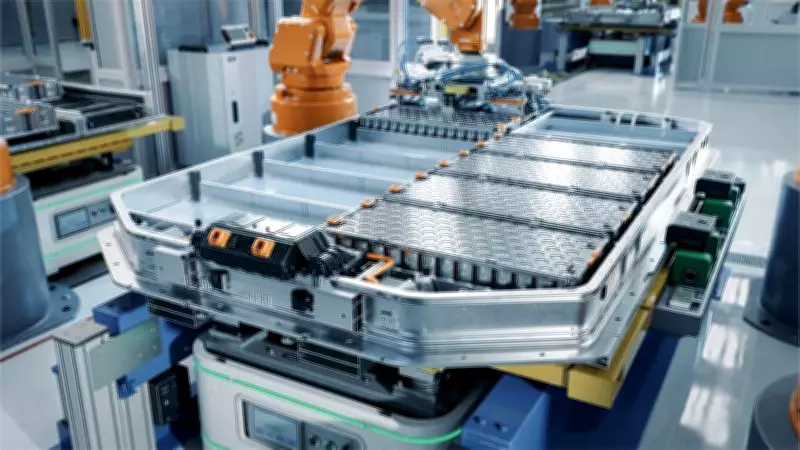
Reliance Industries Limited (RIL) has been forced to scale down its ambitious plans for indigenous lithium iron phosphate (LFP) battery manufacturing due to China's restrictions on technology transfer. The company, which announced a facility in Gujarat in 2021 to manufacture LFP chemicals, cells, packs, and energy storage solutions, has shifted focus to packaging Chinese pre-made cells after failing to secure technology licensing from CATL and Xiamen Hithium Energy Storage.
China's Export Controls Derail Indian Battery Plans
Beijing's updated export controls since July 2025 now cover battery systems and components, further disrupting RIL's alternate plans. This pattern is common across India's battery storage ecosystem, where all major domestic conglomerates face restricted access to components and technology licensing.
China's dominance in global clean energy supply chains has been weaponized through new legal frameworks that shield its entities from foreign sanctions, safeguard supply chains, and govern overseas investments. The structural asymmetry in India-China economic relations persists despite the downturn in ties after the 2020 Galwan incident.

Domestic Weaknesses and Lack of R&D Investment
India's own economic weaknesses exacerbate the problem. According to the Government of India's Economic Survey 2025-26, the business sector contributes only 41% of total R&D expenditure, compared to 77% in China and 75% in the US. This risk aversion leaves Indian companies dependent on Chinese manufacturers.
Indian corporates, despite strong balance sheets and government capital expenditure, lack enthusiasm for sharing the burden of industrial development. Increasing diversification into sectors like retail, entertainment, and hospitality prioritizes profit maximization over long-term national interests in manufacturing.
'Missing Middle' in Manufacturing Ecosystem
The government's privileging of a few large industrial houses as national champions has skewed India's industrial trajectory, leading to growth reliant on skill-intensive services and a handful of large firms rather than broad-based labor-intensive manufacturing. The manufacturing ecosystem is bifurcated between low-productivity micro-enterprises and large firms, with an underdeveloped layer of medium-sized enterprises—the 'missing middle'.
Indian startups in battery systems are making efforts to produce cells from scratch, including building purpose-built machinery. However, they need recognition, easier access to bank credit, and regulatory and infrastructure support to scale up.
Lessons from China's Holistic Innovation Model
Successful Chinese companies like Geely and Chery emerged through intense competition, local experimentation, and decentralized provincial initiatives. Mutually beneficial partnerships between local governments and non-state manufacturers led to commercial success later replicated nationally. India's advanced manufacturing transformation requires a federal approach that provides a level playing field for firms of all sizes, not just big players.