

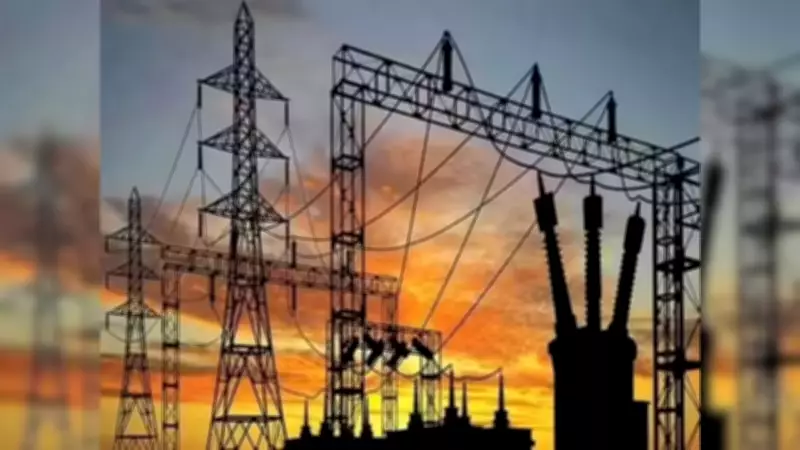
India's Power Infrastructure Primed for Record Summer Demand
With power demand projected to reach 265-270 gigawatts (GW) this year, Central Electricity Authority (CEA) chairman Ghanshyam Prasad has declared the national power system "well-prepared" to handle the anticipated surge. The responsibility now shifts to distribution companies (discoms) to ensure reliable electricity supply reaches consumers across the country.
Capacity Expansion and Monsoon Impact
In an exclusive interview, Prasad revealed that the government had actually prepared to meet 270 GW demand as early as 2025, but favorable monsoon conditions kept actual requirements lower than expected that year. "The system was ready for higher demand last year itself," Prasad explained, "but good rainfall meant consumption remained below the previous year's peak of 250 GW."
The power sector has seen substantial capacity addition, with nearly 52 GW of new generation capacity commissioned in just the first ten months of the 2025–26 financial year. An additional 10 GW is expected to come online in the remaining two months, further strengthening India's power infrastructure.

Record Demand Patterns and Distribution Challenges
Peak demand during summer 2025 reached 242.8 GW, while January of the current financial year witnessed demand crossing 245 GW—the highest recorded so far in 2025–26. Despite India being a power-surplus nation at the generation level, many urban areas continue experiencing outages primarily due to local distribution network faults.
Prasad emphasized that discoms have received comprehensive resource adequacy plans and must now take proactive measures. "Distribution companies must not only secure sufficient electricity through agreements with generation companies but also invest significantly in strengthening their distribution networks," he stated.
Network Reliability and Investment Requirements
The CEA chairman outlined specific expectations for discoms: "It is their responsibility to allocate capital expenditure, strengthen distribution infrastructure, and achieve N-1 compliance wherever possible. This ensures power supply continuity even during contingency situations."
Some private discoms in major cities including Ahmedabad, Mumbai, and Delhi have already implemented N-1 compliant networks at the 33 kV substation level, resulting in minimal power interruptions for consumers in these areas.
However, Prasad cautioned that achieving zero outages requires substantial investment in distribution networks, which inevitably affects electricity tariffs. Using data centers as an example—facilities requiring uninterrupted, high-quality 24x7 power typically connected through dual feeders—he noted: "Reliability always comes at a cost. If residential areas desire similar supply quality, they can petition state electricity commissions. I'm confident discoms would need to address such legitimate demands."
Despite this, the CEA chairman acknowledged that most consumers prioritize lower tariffs over perfect reliability, accepting brief outages of 5-30 minutes in exchange for more affordable electricity.
Safety Initiatives and Financial Improvements
The authority is intensifying efforts to educate linemen in both transmission and distribution segments about proper safety equipment usage during duty. Recognizing these workers as critical to maintaining reliable supply, Prasad announced an event scheduled for 'Lineman Diwas' on March 7, where workers from across states will share best practices and safety protocols.
Regarding discoms' financial health, Prasad reported significant improvement, crediting the Revamped Distribution Sector Scheme (RDSS). This program mandates timely subsidy releases by state governments and has contributed to discoms posting a cumulative profit of ₹2,700 crore for the first time.
Smart prepaid meter installation under RDSS is proving particularly beneficial, enabling better revenue collection in advance while helping curb electricity theft. States like Bihar and Assam have shown notable progress in implementation, setting examples for others to follow. Of the approximately 20 crore smart meters targeted under the scheme, over 5.2 crore have already been installed nationwide.






