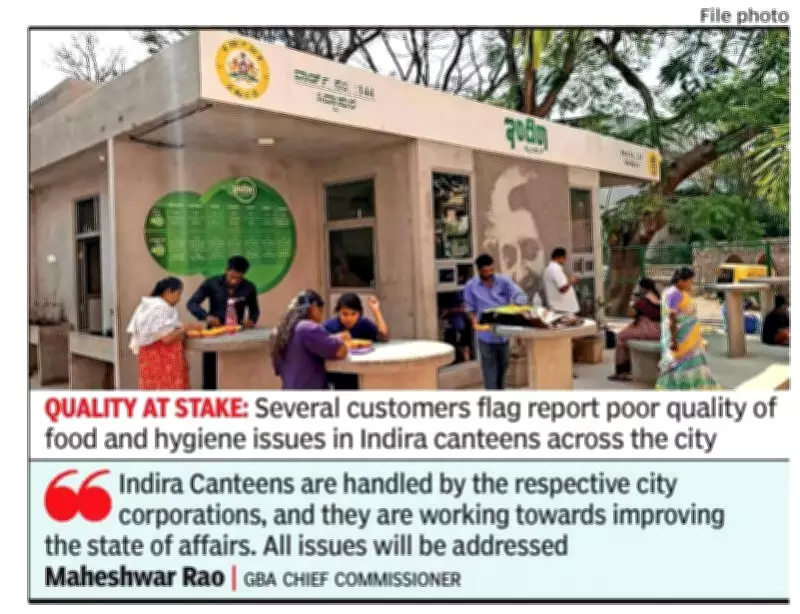
Bengaluru's Indira Canteens Grapple with Declining Standards Amid High Demand
Once celebrated as a vital resource for the urban poor, Bengaluru's Indira Canteens are now confronting a crisis marked by widespread complaints over food quality, severe staff shortages, and deteriorating infrastructure. A recent inspection of multiple canteens across the city has unveiled a distressing reality, with issues such as watery sambar, inadequate meal portions, locked restrooms, and unreliable water supply becoming alarmingly common.
Affordable Meals at a Cost: Customer Dissatisfaction Grows
Launched in 2017 with the noble aim of offering budget-friendly nutrition, the canteens provide meals at Rs 5 for breakfast and Rs 10 for lunch and dinner, serving thousands of patrons daily. According to official guidelines, breakfast should weigh 225 grams and main meals 300 grams, but many customers report that these standards are frequently ignored.
In Bengaluru, out of 198 Indira Canteens, 169 are currently operational, while 29 have been suspended due to various operational challenges. Regular users, often daily wage workers, express frustration over the declining quality. Manjunath Gowda, a frequent visitor at the Rajajinagar canteen, shared, "We continue to come here because it's affordable, but the idlis are often hard, and the sambar is watery. For Rs 10, we don't expect luxury, but basic quality should be upheld."

Echoing these sentiments, Rajanna Byali, a sanitation worker at the KR Market canteen, highlighted persistent issues. "Sometimes the rice is undercooked, and vegetables are scarce. Yet, we eat here as we cannot afford restaurants," he explained, adding that the canteens' poor maintenance makes it a painful necessity for many like him who struggle with time and cost constraints for home-cooked meals.
Staff Overburdened and Under-Resourced
The cooking staff at these canteens are facing immense pressure due to limited manpower and resources. Shobha Murthy, a six-year veteran at the Chalavadi Palya canteen, described the daily struggle: "We serve hundreds with very few staff. If someone is absent, the entire system falters. We do our best, but resources are insufficient." She further revealed that provisions sometimes run out, forcing employees to pool money to buy supplies, all while dealing with delayed salary payments from the corporation.
Infrastructure and Hygiene Challenges Worsen
Water supply problems are rampant across many canteens. At Chalavadi Palya, for instance, Cauvery water is unavailable, and tankers provide intermittent supply. Ramesh GK, a kitchen helper, lamented, "The motor pump is faulty, so we manually draw water from the sump. How long can this continue?" Hygiene is another critical concern, as seen at the Dharmarayaswamy temple ward canteen, where a foul smell from a nearby garbage dump deters customers and lack of proper handwashing facilities due to water issues exacerbates the problem.
Lack of Modern Amenities Adds to Inconvenience
Adding to the operational woes, none of the visited canteens offer digital payment options, a stark contrast to even roadside vendors who accept UPI. Arif Khan, an auto driver who eats at the Banashankari canteen, questioned, "Why can't Indira Canteen adopt such basic technology?"
Official Response and Future Outlook
In response to these issues, GBA chief commissioner Maheshwar Rao stated, "The Indira Canteens are managed by the respective city corporations, and efforts are underway to improve conditions. All concerns will be addressed." However, with the canteens playing a crucial role in feeding Bengaluru's low-income population, urgent action is needed to restore their original purpose and ensure reliable, quality service for those in need.