

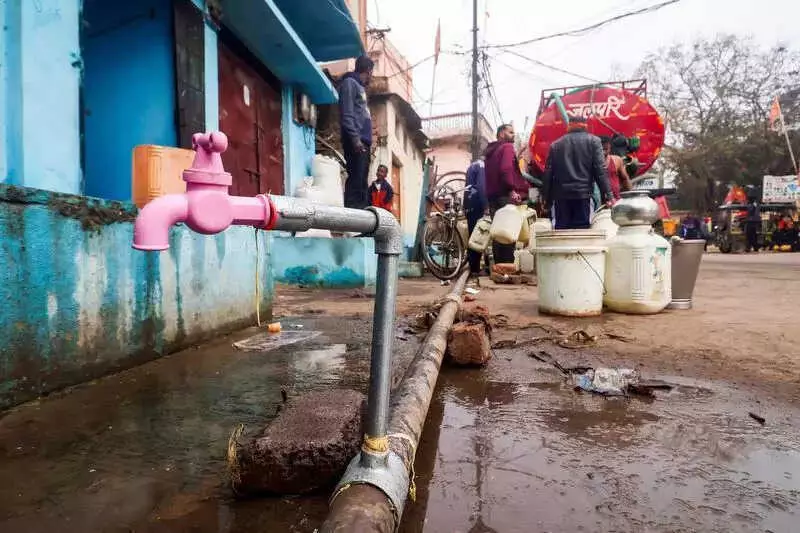
Indore, a city celebrated for its urban development and cleanliness, is currently facing a severe and paradoxical water crisis. Despite holding the prestigious 'Water Plus' certification, residents are burdened with the country's highest water tariffs while simultaneously worrying about the safety and quality of the water flowing from their taps.
The High Cost of Water from Afar
The root of the financial strain lies in Indore's geography. The city's primary water source is the Narmada river, situated 70 kilometres away in Jalood. To meet daily demand, the municipality must pump a massive 440 million litres per day (MLD) uphill, lifting it 500 metres above sea level. This Herculean task incurs a staggering monthly electricity bill of Rs 25 crore.
Mayor Pushyamitra Bhargava has openly acknowledged this logistical nightmare, stating that it directly makes Indore's water among the most expensive in India. This colossal operational cost is passed on to citizens, who currently pay a steep rate of Rs 21 per 1,000 litres.

Water Plus Status Under Scrutiny Amid Quality Fears
Indore earned a place in history in 2021 by becoming India's first city to receive the "Water Plus" certification. This tag signifies that all domestic and industrial wastewater is treated to satisfactory standards before release, supported by a Sewage Treatment Plant (STP) capacity of 402 MLD against a generation of 320 MLD.
However, this achievement is now facing serious challenges from experts and residents alike. Critics argue the certification represented a "statistical peak," with STPs operating at maximum capacity only during the survey period. On the ground, the grim reality is different. Residents frequently report receiving "toxic" water, a problem linked to the city's ageing and corroded pipeline network, which often runs perilously close to sewage lines, causing systemic contamination.
Green Bonds for Solar Power: A Ray of Hope
To tackle the crippling electricity costs, the Indore Municipal Corporation (IMC) has embarked on an innovative project. It is constructing a 60 MW solar park in Jalood. What makes this initiative groundbreaking is its funding mechanism—it is financed through India's first municipal "Green Bonds," which raised Rs 244 crore.
While this solar plant is projected to save the city approximately Rs 5 crore every month starting in March 2026, the current financial pressure is intense. Additional Commissioner Deodhar Darwai revealed that the IMC has already paid Rs 60 crore in interest to bondholders and faces a significant principal repayment instalment of Rs 61 crore this February.
The situation in Indore presents a complex urban dilemma: balancing the high cost of essential infrastructure with the urgent need to provide affordable, safe, and clean water to all its residents, even as it strives to maintain its hard-earned environmental accolades.






