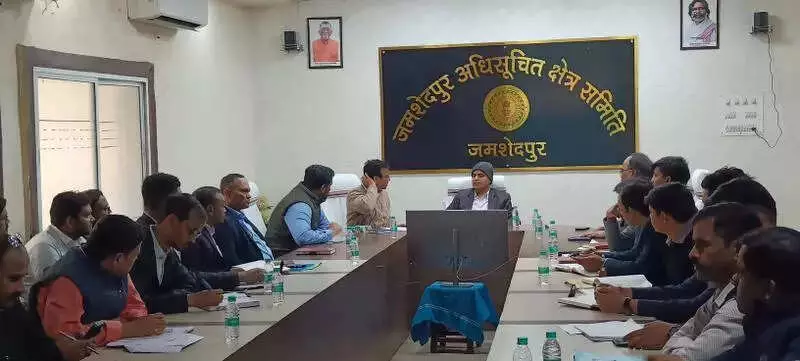
Jamshedpur Sets Sights on 7-Star Garbage Free City Certification in National Cleanliness Survey
The Jamshedpur Notified Area Committee (JNAC) has announced ambitious plans to apply for the prestigious 7-star Garbage Free City (GFC) certification as part of Swachh Survekshan 2025. The urban civic body aims to secure the 'cleanest city' title in the population category of three to seven lakh residents, marking a significant step forward in the industrial town's sanitation journey.
Strategic Decision Based on Comprehensive Assessment
This strategic decision emerged following a thorough review of the new evaluation framework and marking system introduced for Swachh Survekshan 2025. JNAC officials conducted a detailed assessment of the city's performance in Swachh Survekshan 2024, identifying gaps and opportunities for improvement.
"We carried out a detailed assessment of the city's performance in Swachh Survekshan 2024. Based on the review and gap analysis, we took a major decision to apply for the 7-Star Garbage Free City (GFC) certification," stated Krishna Kumar, Deputy Municipal Commissioner of JNAC.

Citizen Participation as Key Success Factor
While Jamshedpur already boasts strong sanitation infrastructure and service delivery systems, officials emphasize that the success of Swachh Survekshan 2025 will largely depend on active citizen participation. The daily behavior of residents regarding waste handling at home, on streets, and in public spaces will play a crucial role in determining the city's final ranking.
"Daily behaviour of citizens, and how waste is handled at home, on streets, and in public places, will determine the city's final ranking," Kumar explained, highlighting the community-driven approach required for this initiative.
Focus on Bulk Waste Generators and Source Segregation
Special attention has been directed toward bulk waste generators, including:
- Hotels and restaurants
- Hostels and marriage halls
- Large institutions and commercial establishments
These entities have been advised to process wet waste at source and ensure full compliance with Solid Waste Management (SWM) rules throughout the year-long cleanliness initiatives.
Residents have been strongly urged to:
- Segregate waste at source into wet, dry, and domestic hazardous categories
- Hand over only properly segregated waste to door-to-door waste collectors
- Avoid littering in markets, roads, parks, and public spaces
- Use community bins responsibly and appropriately
Comprehensive Awareness Campaign and Community Engagement
JNAC has launched a sustained campaign to promote responsible waste management practices across the city. The initiative extends beyond individual households to include broader community engagement strategies:
- Residents, community groups, and social media users are encouraged to responsibly share cleanliness-related activities and improvements
- Schools and educational institutions are being mobilized to involve students in cleanliness awareness programs
- Segregation practices and community outreach efforts aim to create long-term behavioral change
These collective efforts are designed to position Jamshedpur as a leading example of urban cleanliness at the national level, showcasing how industrial cities can achieve exceptional sanitation standards through coordinated action between municipal authorities and engaged citizens.