Omar Abdullah Presents Jammu and Kashmir's 2026-27 Budget with Major Welfare Schemes
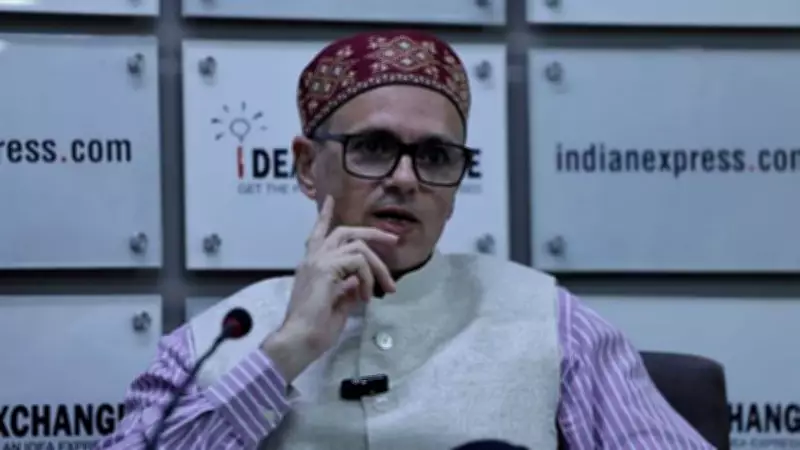
Chief Minister Omar Abdullah, who also holds the Finance portfolio, presented the Jammu and Kashmir Budget for the fiscal year 2026-27 on Friday, unveiling a comprehensive plan with a total estimated gross expenditure of Rs 1,27,767 crore. The budget emphasizes social welfare, economic growth, and fiscal sustainability, targeting key sectors such as agriculture, tourism, and health.
Key Welfare Proposals and Expenditure Breakdown
Among the standout proposals are six free LPG cylinders per year for all households under the Antyodaya Anna Yojana (AAY), aimed at supporting the poorest families. Additionally, the budget introduces a monthly sponsorship of Rs 4,000 through Direct Benefit Transfer to assist 6,000 orphaned children with education, nutrition, and basic living needs, provided they are not covered under the Mission Vatsalya framework.
Other initiatives include incentives for government employees posted in remote areas and a self-certification scheme for MSMEs, offering a three-year grace period for clearances to boost entrepreneurship. The expenditure is divided into Rs 80,640 crore for revenue and Rs 33,127 crore for core capital, with revenue and capital receipts projected at Rs 90,018 crore and Rs 23,749 crore, respectively.

Fiscal Challenges and Reform Measures
Abdullah highlighted that nearly 60% of J&K's outlay is committed to salaries, pensions, and debt servicing, with own tax and non-tax revenues covering only 25% of budgetary needs. He attributed this to geographical difficulties, structural constraints, and inefficiencies, particularly in the power sector, leading to reliance on Central support of Rs 42,752 crore and Rs 13,400 crore from Centrally sponsored schemes.
To address fiscal stress, the government is pursuing reforms to enhance revenues, rationalize spending, and improve transparency. Measures include debt management to lower high-cost liabilities, enforcing austerity for non-priority spending, and power sector reforms to reduce losses. The fiscal deficit for 2026-27 is estimated at 3.69%, up from 3.69% in 2025-26, while the tax/GDP ratio is projected at 6.6%, down from 7.5%.
Sectoral Allocations and Economic Growth
The budget allocates significant funds across various sectors to drive development. Key allocations include:
- Rs 3,456 crore for the Rural sector
- Rs 2,809 crore for Housing & Urban Development
- Rs 1,866 crore for Health & Medical Education
- Rs 1,718 crore for Power Development
- Rs 1,513 crore for School & Higher Education
- Rs 472 crore for Tourism and Youth Affairs
- Rs 461 crore for Industry and Handicrafts
- Rs 244 crore for Labour & Employment
- Rs 235 crore for Tribal Affairs
- Rs 170 crore for Social Welfare
- Rs 351 crore for Disaster Management
- Rs 331 crore for Planning and Food & Civil Supply
- Rs 155 crore for Sports & Youth Affairs
- Rs 177 crore for Science & Technology
- Rs 109 crore for Culture Department
Abdullah noted that J&K's economy is estimated to grow at 11%, supported by sustained initiatives and policy interventions, helping tackle challenges from recent events like the Pahalgam terror attack and floods.
Focus on Agriculture, Tourism, and Health
In agriculture, the budget proposes setting up seven milk processing plants with a capacity of one lakh liters per day, costing Rs 770 crore, to benefit 11 lakh dairy farmers and increase milk processing from 4% to 25%. It also includes a Restructured Weather-Based Insurance Scheme for crops like apple, saffron, mango, and litchi, with an insured sum of Rs 6,594.93 crore.
For tourism, Abdullah aims to build a sustainable, year-round economy with an outlay of Rs 180 crore to modernize pilgrimage infrastructure for Amarnath pilgrims and develop new destinations. In health, plans include establishing Emergency Medicine Departments in all Government Medical Colleges, cath labs in Rajouri and Baramulla, and two Emergency and Accident Hospitals in Uri and Poonch, along with bullet-proof ambulances for border districts.
The budget underscores a commitment to transforming Jammu and Kashmir into a modern, progressive region through strategic investments and welfare measures.