

Karnataka Government Initiates Doorstep E-Khata Distribution Drive Across Bengaluru
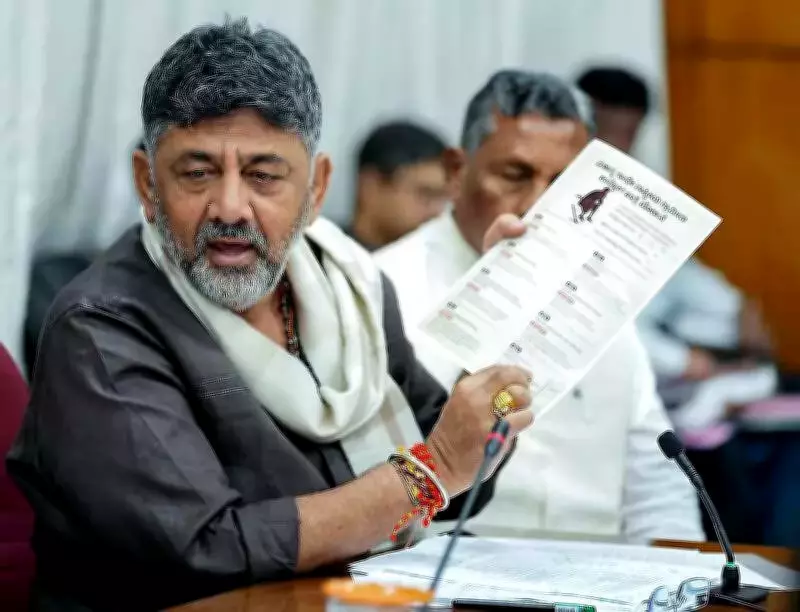
In a significant move to modernize urban property management, Karnataka Deputy Chief Minister DK Shivakumar announced on Monday the launch of a special e-khata drive across the Greater Bengaluru Authority (GBA) limits. This initiative will involve officials personally visiting property owners to issue digitized khatas directly at their doorsteps, aiming to enhance accessibility and efficiency in property documentation.
Digitization Efforts and Current Progress
Shivakumar emphasized that this drive is part of the state government's broader strategy to digitize property records throughout Bengaluru, a step intended to curb tax evasion and improve transparency. To date, authorities have successfully digitized documents for an impressive 25 lakh properties, with e-khatas being issued as a core component of this ongoing exercise. "So far, we have issued e-khatas for 9.5 lakh properties within the GBA," Shivakumar stated, highlighting the scale of the digitization effort.
Expansion Plans and Legalization of Properties
The deputy CM revealed that the special drive will be rolled out across all five Bengaluru corporations, with plans to later extend this facility to other cities in Karnataka. Additionally, the government has commenced the conversion of B-khatas, which denote semi-legal properties, to fully legal A-khata status. "The GBA has received 7,000 applications for khata conversion," Shivakumar noted. "Currently, we are limiting the conversion of B-khata to A-khata for land parcels only, not buildings. Officials will conduct on-site visits to each property before approving any khata conversion to ensure accuracy and compliance."

Addressing Documentation Gaps and Tax Collection
Shivakumar pointed out that many property owners possess only sale deeds without formal khatas, making them eligible for this new initiative. The GBA has received 1.2 lakh applications from such individuals. After thorough verification, khatas have been issued to 60,000 applicants, while 15,000 applications remain under process. However, approximately 45,000 applications have been rejected, and these cases are currently under audit to resolve any discrepancies.
In a related effort to boost revenue collection, the government introduced a one-time settlement (OTS) scheme for property tax defaulters. This scheme has already benefited over 2.6 lakh property owners, enabling the GBA to recover Rs 1,200 crore in outstanding dues, thereby strengthening municipal finances.
Infrastructure Development and Future Investments
Beyond property records, Shivakumar outlined ambitious infrastructure plans for Bengaluru. The state government is set to invest over Rs 1.4 lakh crore over the next three to four years on urban development projects. These include road upgrades, double-deck flyovers, tunnel roads, and water supply expansion to address the city's growing needs.
Specifically, the government plans to allocate Rs 45,000 crore for tunnel road projects, including north-south and east-west corridors. Administrative approval has already been granted for the north-south corridor, estimated to cost Rs 17,780 crore, with a loan secured from HUDCO to fund this critical infrastructure initiative.
Streamlining Approvals and Enhancing Governance
Shivakumar also highlighted progress in streamlining building approvals through the 'Nambike Nakshe' scheme, under which the GBA has issued more than 12,000 online building plan approvals. This digital approach aims to reduce bureaucratic delays and foster a more responsive governance framework for urban development in Bengaluru.






