Kochi's Transport Paradox: Modern Metro, Outdated Buses Spark Citizen Revolt
Kochi's urban mobility landscape is undergoing a dramatic transformation with the introduction of elevated Metro corridors and the innovative Water Metro system. However, this progress has starkly highlighted the severe deficiencies of the city's oldest and most essential public transport link: its bus network. Despite the shiny new infrastructure, the bus system remains largely outdated, fragmented, and poorly integrated, creating a critical gap in the city's overall transport ecosystem.
A Network in Crisis: Overlaps, Gaps, and Daily Ordeals
The coexistence of private buses, Kerala State Road Transport Corporation (KSRTC) services, and Metro feeder buses has failed to effectively bridge the disconnect between traditional routes and the new transport nodes. Residents across Kochi report that poor integration has severely weakened first- and last-mile connectivity to both Metro and Water Metro stations. Compounding this issue are persistent route overlaps and redundancies that continue unchecked, leading to inefficient service and wasted resources.
The result is a growing, city-wide demand for a comprehensive overhaul that realigns bus services with Kochi's rapidly evolving mobility patterns and urban expansion.

Citizen-Led Movements: From Petitions to Practical Solutions
In the Elamakkara area, where unreliable and poorly connected bus services have become a daily hardship, citizens have taken matters into their own hands. The Senior Citizen Friends Welfare Association (SCFWA) has launched a mass signature campaign seeking urgent reforms. Their memorandum, submitted to Kochi Metro Rail Ltd (KMRL) and the Ernakulam Regional Transport Office, advocates for an integrated, commuter-focused network.
"We face severe travel difficulties as only a few private buses operate through Elamakkara. We need better connectivity to Metro stations and major city centres, including circular or feeder services," emphasized M C Sasidharan Nair, president of SCFWA. "We have submitted our petition to the KMRL managing director and the Ernakulam RTO for immediate action."
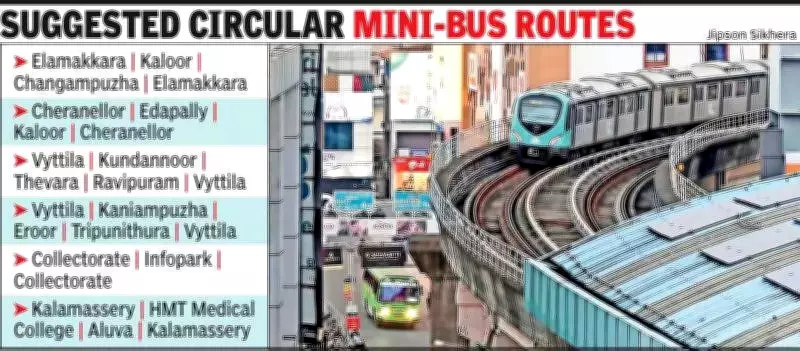
This sentiment is echoed city-wide. The Tripunithura Rajanagari Union of Residents Association (TRURA) has urged authorities to introduce new routes that reflect current travel demands. "If redeploying existing buses is not feasible, the administration should operate small electric buses on circular routes within Tripunithura municipality and nearby areas, linking them to Metro stations," proposed V C Jayendran, TRURA secretary.
Resident associations in Panampilly Nagar, Ponnurunni East, Chilavanoor, Chathiath Road, Kadamakudy, and Thevara have all joined the chorus calling for reform.
Systemic Flaws and the Path Forward
Ernakulam District Residents' Associations' Apex Council president, P Rangadasa Prabhu, pinpointed a core issue: most city buses concentrate only on major corridors, leading to intense competition and unsafe driving practices. "Interior areas desperately need connectivity through smaller, more agile e-buses," he asserted.
A revealing study by the Delhi-based Urban Mass Transit Company, prepared for KMRL, underscored the critical need for route rationalization. The study found that a staggering 22% of city bus routes have more than 60% overlap with others. The last major rationalization effort occurred two decades ago, leaving many routes unchanged despite Kochi's rapid geographical and demographic growth.
D Dhanuraj, chairman of the Centre for Public Policy Research, highlighted the shifting commuter landscape. "Commuting patterns have transformed significantly. It is now imperative to identify new routes and introduce short-loop circular services that match present-day demand," he stated.
In response to mounting pressure, a senior motor vehicles department official indicated that the transport department is considering permitting minibuses on new interior routes. However, the official noted that many currently proposed services still focus predominantly on rural areas, suggesting that urban core reforms require more dedicated attention.

The collective voice of Kochi's residents signals a clear mandate: for the city's public transport revolution to be truly complete, its foundational bus network must be urgently and intelligently reinvented.