

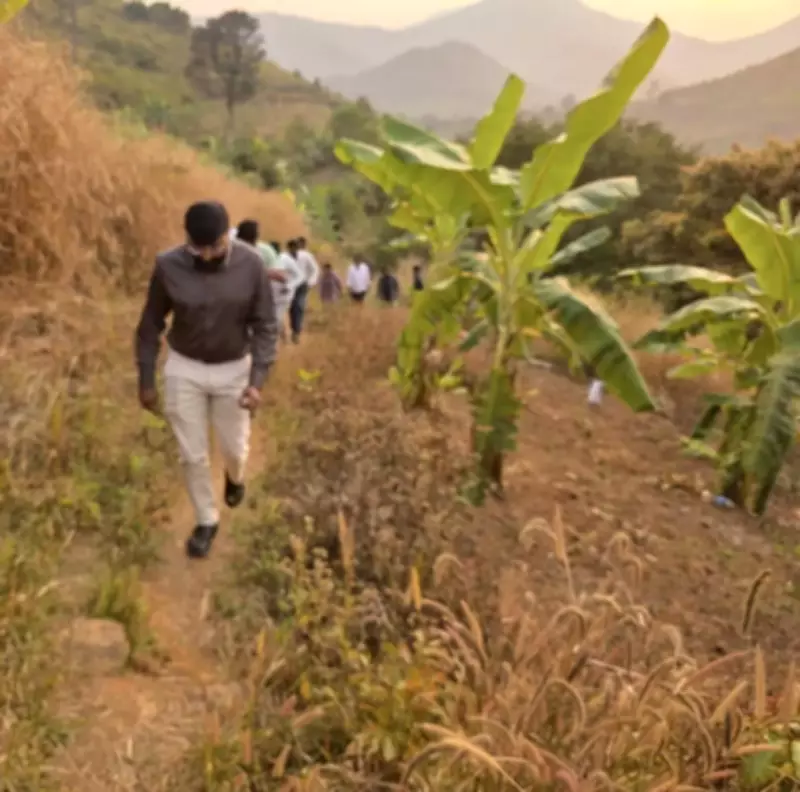
Koraput Collector Undertakes Challenging Trek to Assess Development in Remote Border Area
In a significant display of administrative commitment, Koraput Collector Manoj Satyawan Mahajan embarked on a demanding 3-kilometer trek through the rugged hills of Kotia gram panchayat on Saturday. This outreach initiative, conducted in the Pottangi block, aimed to personally review ongoing development and livelihood activities in this remote border region that has been embroiled in a territorial dispute for over sixty years.
Historic Border Dispute and Development Push
Kotia's geographical position along the Odisha-Andhra Pradesh border has placed it at the center of a complex legal battle spanning six decades. The dispute specifically concerns ownership claims over 21 out of Kotia's 28 villages. Despite this longstanding jurisdictional uncertainty, the Koraput district administration has significantly intensified its development efforts in recent years. The focus has been on strengthening critical infrastructure, improving educational facilities, and creating sustainable livelihood opportunities for the local tribal communities.
Comprehensive Review of Livelihood Initiatives
During his extensive field visit, Collector Mahajan conducted thorough inspections of multiple livelihood projects specifically designed for tribal populations. His review encompassed several agricultural and processing initiatives:

- Chamomile and strawberry cultivation projects aimed at introducing high-value crops
- Hill broom cultivation and processing activities leveraging local resources
- Tamarind processing unit operations focused on value addition
"Greater emphasis is being laid on the sustainable economic development of Kotia residents alongside infrastructure strengthening," Mahajan emphasized. "Several initiatives have been taken up for the economic uplift of the people in the panchayat."
Direct Interaction with Beneficiaries and Strategic Focus
The collector engaged directly with project beneficiaries to assess implementation progress and identify grassroots challenges. "Our priority is to ensure sustainable livelihood opportunities for people of Kotia," Mahajan stated. "The focus is on income generation through locally suitable crops and value addition activities."
He specifically highlighted the need for improved marketing linkages and enhanced capacity building to ensure better financial returns for local farmers and Self-Help Groups (SHGs). This strategic approach aims to create self-sustaining economic ecosystems rather than temporary interventions.
Educational Infrastructure Assessment and Student Motivation
Mahajan extended his review to educational institutions, visiting both Kotia High School and Odisha Adarsha Vidyalaya (OAV) in Kotia. He meticulously examined academic infrastructure and discussed development initiatives with school authorities. During interactions with students, he delivered an inspiring message: "Education is the strongest tool for transformation. Students from Kotia must dream big and work hard to achieve their goals."
He encouraged students to fully utilize available government schemes and educational opportunities. The collector was accompanied by BDO (Pottangi) Ramnath Nayak and other district-level officials throughout this comprehensive assessment mission, demonstrating coordinated administrative effort.
This hands-on approach by senior administration in challenging terrain underscores the commitment to development in regions facing both geographical isolation and historical jurisdictional complexities. The visit represents a tangible effort to bridge administrative gaps and ensure that border communities receive focused attention for sustainable progress.






