

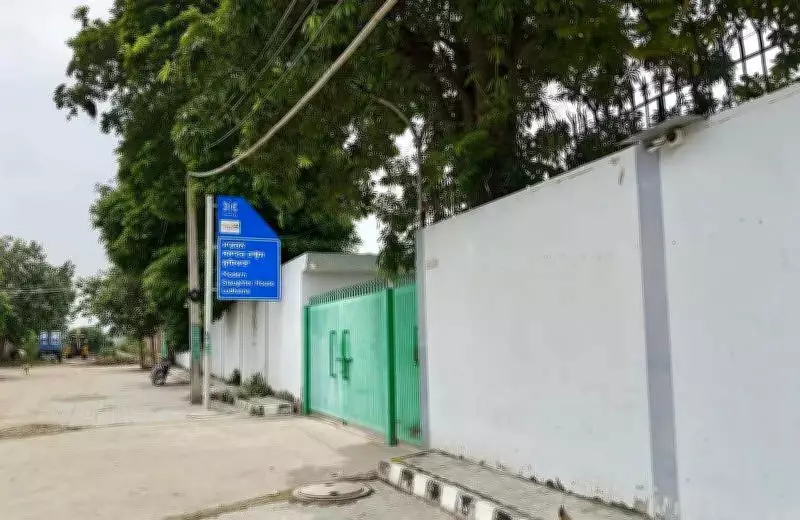
Ludhiana's Modern Slaughterhouse Fails to Curb Illegal Slaughtering in Residential Areas
The Ludhiana Municipal Corporation's ambitious modern slaughterhouse, established with significant investment, has effectively become a white elephant as illegal slaughtering of animals and birds continues unabated across residential neighborhoods. Despite being designed to centralize these activities and improve urban hygiene, the facility now stands nearly non-functional while civic authorities struggle to control the widespread unauthorized operations.
Residents Face Persistent Nuisance and Unhygienic Conditions
Residents across multiple localities have raised serious concerns about the persistent nuisance and filthy conditions resulting from illegal slaughtering activities. Jayant Puri, a resident of Jassian Road, recently documented blood and flesh scraps discarded on public roads through video evidence. He emphasized that shopkeepers routinely clean their premises each morning by throwing waste directly onto streets, creating an extremely unhygienic environment.
"The blood entering the sewer system is particularly problematic and creates serious health hazards," Puri stated, noting that his repeated complaints to authorities have yielded no substantial results. Similarly, Harish Sharma of Chander Nagar highlighted ongoing illegal slaughtering along the banks of Buddha Dariya, where waste is regularly discarded into drains, further polluting the water system.

Contractor Seeks Exit Amid Heavy Financial Losses
Sources reveal that the slaughterhouse contractor has offered to relinquish operation and maintenance responsibilities due to severe financial losses. The facility receives minimal birds and animals, rendering it almost completely non-functional. The contractor alleges that authorities failed to provide adequate support in management and enforcement, while political pressure frequently halted necessary actions against illegal operations.
The modern plant, established at a cost of Rs 19.5 crore, boasts impressive capacity specifications with the ability to slaughter 16,000 birds and 1,000 large animals per shift. However, fixed rates of Rs 10 for poultry, Rs 100 for pigs, and Rs 150 for goats have failed to attract customers away from traditional slaughtering methods.
Market Preferences Undermine Modern Facility
During previous meetings, shopkeepers explained that customers prefer watching meat being chopped in person at traditional shops, creating a significant barrier to adopting the centralized facility. There's also widespread fear that meat slaughtered at the modern plant wouldn't sell out within a single day, leading to potential wastage and financial losses for vendors.
This consumer preference for traditional methods has created a perfect storm where the modern facility remains underutilized while illegal operations flourish in residential areas, shops, near Buddha Dariya, and various open spaces throughout the city.
Municipal Corporation's Response and Enforcement Challenges
MC Medical Health Officer Dr. Vipal Malhotra responded to concerns by stating, "We carry out drives at regular intervals and direct shopkeepers to utilize the slaughterhouse." He assured that another enforcement drive would begin soon to address the ongoing issues.
However, residents report that while officials occasionally remove illegal shops following complaints, vendors typically return shortly thereafter, indicating a pattern of temporary solutions rather than permanent resolution. The situation highlights significant enforcement challenges faced by municipal authorities in balancing traditional market practices with modern infrastructure implementation.
The continued illegal slaughtering not only creates immediate hygiene concerns but also represents a substantial waste of public resources invested in the modern facility. As blood and waste continue to pollute residential areas and water systems, the need for effective solutions becomes increasingly urgent for Ludhiana's urban management and public health authorities.






