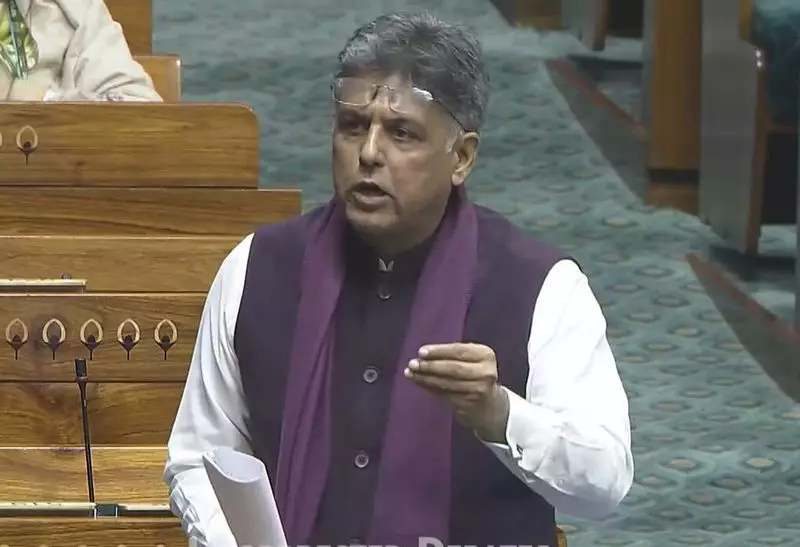
Member of Parliament Manish Tewari has raised serious concerns about the prolonged stagnation and unclear future of the Semiconductor Laboratory (SCL) in Mohali. The parliamentarian has called for immediate intervention, demanding a forensic audit and clear answers on the proposed upgrade plan for the state-owned chip manufacturing facility.
Decades of Drift and Mismanagement
In a detailed representation, Tewari highlighted what he termed as "decades of drift" at the prestigious facility. He pointed out that the SCL, which was once at the forefront of India's semiconductor ambitions, has suffered from prolonged neglect and strategic confusion. The MP emphasized that the laboratory has failed to keep pace with rapid technological advancements in the global chip industry, leaving its infrastructure and capabilities outdated.
The core of the issue, according to Tewari, lies in the absence of a clear and actionable roadmap for the facility's modernization. Despite being under the administrative control of the Department of Space and with the Prime Minister's Office taking a direct interest, the SCL's revival plan remains shrouded in ambiguity. Tewari's intervention underscores a critical gap between policy announcements and ground-level execution in India's semiconductor self-reliance mission.

Demand for Forensic Audit and Transparent Upgrade Plan
The MP has formally demanded a forensic audit of the SCL's operations and finances over the years. This audit, he argues, is essential to understand the reasons behind the facility's decline, identify past missteps, and ensure accountability. The call for an audit is aimed at peeling back the layers of administrative and technical failures that have plagued the laboratory.
Furthermore, Tewari has sought absolute clarity on the much-discussed upgrade plan for SCL Mohali. He has posed specific questions regarding the technology partners involved, the nature of the technology transfer, the detailed project report, and the definitive timelines for implementation. The lack of transparent information on these fronts, he contends, raises doubts about the seriousness and feasibility of the proposed revival.
Key questions raised include:
- Who are the proposed technology partners for the SCL upgrade?
- What is the exact nature of the technology to be transferred?
- Where is the detailed project report (DPR) for the modernization plan?
- What are the concrete milestones and deadlines for the project's completion?
Implications for India's Semiconductor Ambitions
The state of SCL Mohali is not just a local issue but a significant one for India's national semiconductor strategy. In an era where chip sovereignty is crucial for economic and national security, the underutilization of a government-owned asset like SCL represents a major strategic setback. The facility's potential revival is tied to larger goals of reducing import dependence and building domestic capacity in a critical sector.
Tewari's actions bring the spotlight back on the challenges of translating high-level policy initiatives into tangible outcomes. The SCL saga serves as a case study in the complexities of managing high-tech public sector enterprises. The MP's demand for a forensic audit and a transparent plan is a push for greater governance, accountability, and strategic clarity in India's quest to become a player in the global semiconductor market.
The ball is now in the court of the concerned ministries and departments. How they respond to these demands for audit and clarity will be closely watched by industry stakeholders and policymakers alike, as it will signal the government's approach to reviving dormant industrial assets with strategic importance.