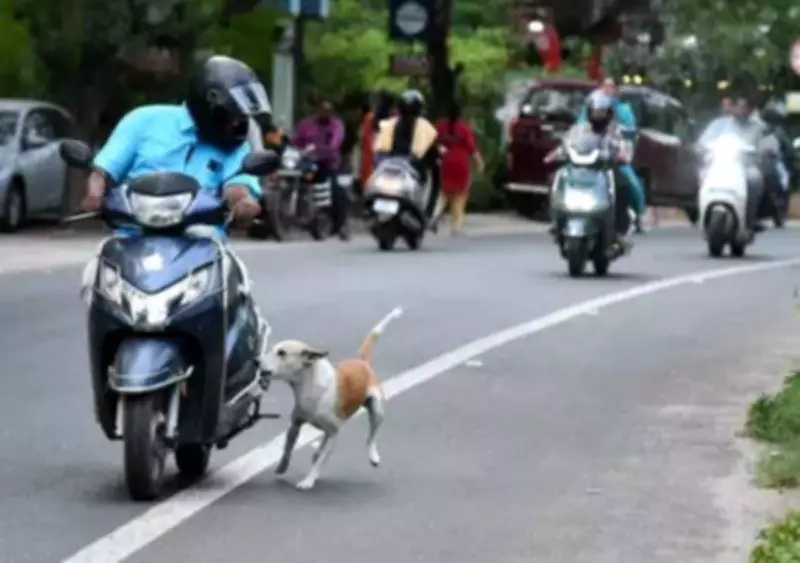
Mohali Municipal Corporation Adopts Zonal Strategy to Combat Stray Dog Menace
In a significant move to address the growing stray dog problem, the Mohali Municipal Corporation (MC) has decided to implement a decentralized approach by dividing the city into four distinct zones for catching and sterilizing stray dogs. This decision, announced during a recent MC House meeting, marks a shift from the previous practice of awarding the work to a single agency, aiming to improve effectiveness and public safety.
Decentralization for Enhanced Efficiency
Mayor Amarjit Singh Sidhu emphasized the necessity of this new strategy, citing the city's substantial geographical expansion. With the inclusion of new sectors and villages within MC limits, managing stray dog populations has become increasingly challenging for a single entity. "We need to deliver to the public and rid them of the stray dog menace. In view of the expansion of the city, it may not be possible for one agency to manage work effectively," the mayor stated during the House address.
The proposed plan involves appointing at least two agencies, with efforts to engage up to four different non-governmental organizations (NGOs)—one for each zone. "We will try if we can engage four NGOs to carry out the work. We believe NGOs can perform this task in a better, more systematic manner and deliver tangible results," Mayor Sidhu added. This approach is expected to boost efficiency, accountability, and humane animal handling, while accelerating sterilization efforts under the Animal Birth Control (ABC) programme.

Support for Rabies Control Initiative
Concurrently, the House approved an agenda related to corporate social responsibility (CSR) support for the "Rabies Free Punjab" project, with a pilot phase focusing on "Rabies Free Mohali." Mayor Sidhu highlighted the critical need for this initiative, noting that rabies, though 100% preventable, remains a deadly threat in Punjab due to a large population of unvaccinated stray dogs and the absence of a continuous mass vaccination programme.
A proposal from Inder Pal Sandhu, chairman of Peedu's People NGO, seeks CSR funding of approximately Rs 29.02 lakh for specialized vehicles and personal protective equipment (PPE) required for large-scale vaccination efforts. These resources are projected to remain usable for eight to 10 years, ensuring long-term impact.
The House recommended approaching Indian Oil Corporation Limited (IOCL) on Madhya Marg, Chandigarh, for CSR participation in this vaccination and PPE support. The approval was granted subject to the finalization and signing of a Memorandum of Understanding (MoU) between the Mohali MC and IOCL, outlining the scope of work and fund utilization.
Implications for Public Health and Safety
This dual strategy of zonal sterilization and rabies vaccination aims to create a safer and healthier environment for Mohali residents. By decentralizing operations and leveraging NGO expertise, the MC hopes to achieve more systematic and humane animal management. The integration of CSR support further strengthens the initiative, providing essential resources for comprehensive rabies control.
The move reflects a proactive stance by local authorities in tackling urban challenges, with potential lessons for other cities facing similar stray animal issues. As implementation progresses, monitoring and community engagement will be key to ensuring the success of these measures in reducing stray dog populations and preventing rabies outbreaks.