

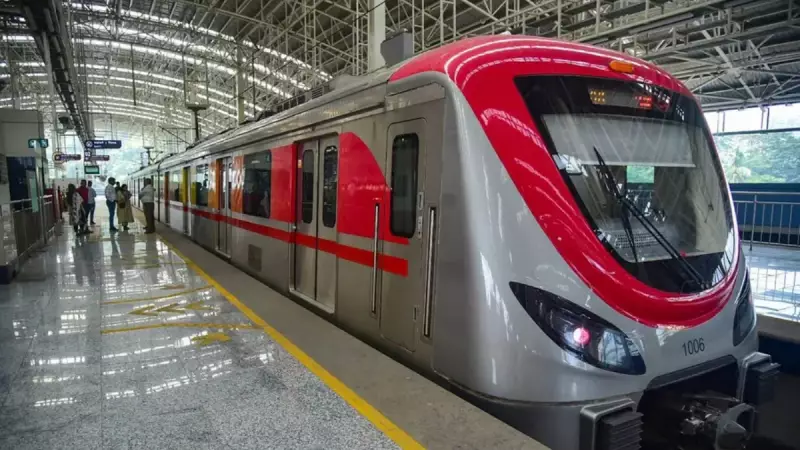
Commuters in Mumbai faced significant disruption on Saturday as a technical glitch brought services on two key metro corridors to a crawl. The issue, which emerged in the early hours, affected operations on Mumbai Metro Line 2A (Yellow Line) and Line 7 (Red Line), leading to widespread delays and crowded stations.
Details of the Technical Disruption
The problem was first reported in the morning of December 7, 2024. According to officials from the Mumbai Metro One operation team, the disruption was caused by a technical fault in the communication-based train control system. This critical system is responsible for managing train movement, signaling, and ensuring safe distances between trains. When it malfunctions, operations must shift to a manual, slower mode for safety, drastically reducing the frequency of services.
As a result, trains on both lines began running late, with headways—the time gap between consecutive trains—increasing substantially. Passengers at major stations like Dahanukarwadi, Andheri West, and Gundavali experienced long waiting times and packed platforms. The ripple effect of the delay was felt across the network, impacting thousands of daily riders who rely on these lines for their commute between the western suburbs and other parts of the city.

Official Response and Passenger Advisory
The metro authorities promptly acknowledged the issue and initiated standard operating procedures to manage the situation. An official statement confirmed that engineers and technical teams were working on an urgent basis to identify and rectify the fault. While restoration efforts were underway, services continued to run in a restricted manual mode, leading to the persistent delays.
Passengers were advised to plan for extra travel time and to check for real-time updates through the metro's official channels. The authorities also urged commuters to avoid non-essential travel during the peak hours until normalcy was restored. The incident highlights the vulnerability of urban mass transit systems to technical failures and the immediate impact on a city's daily rhythm.
Broader Implications for Urban Transit
This is not the first time Mumbai's metro network has faced operational hiccups, though the scale of this disruption, affecting two lines simultaneously, was notable. Such incidents bring into focus the need for robust maintenance protocols and redundant backup systems to ensure higher reliability. For a city grappling with traffic congestion, the metro has become an indispensable artery, and its smooth functioning is crucial.
The disruption on Lines 2A and 7 serves as a reminder of the challenges in maintaining complex urban infrastructure. It underscores the importance of continuous investment in system upgrades and skilled technical manpower to prevent similar occurrences in the future. As Mumbai continues to expand its metro network, ensuring the resilience of these systems will be key to sustaining public trust and efficient urban mobility.






