

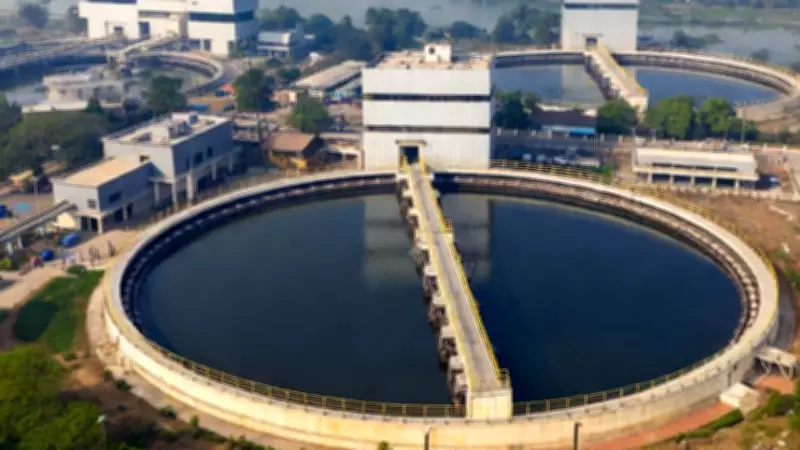
Mumbai's Water Revolution: New Treatment Plants to Transform Supply by 2030
Mumbai residents can anticipate a significant upgrade in their daily water experience, with safer drinking water, enhanced taste, reduced incidence of water-borne illnesses, and a substantial step toward achieving 24x7 water supply. This transformation is set to materialize once the state-of-the-art water treatment plants at Bhandup and Panjrapur become fully operational by the 2029–30 timeframe.
Major Contract Awarded to Welspun Enterprises
In a pivotal development for the city's infrastructure, Welspun Enterprises Ltd (WEL) has secured a monumental Rs 3,145 crore contract from the Brihanmumbai Municipal Corporation (BMC). This contract entails the design, construction, and operation of a massive 910 million litres per day (MLD) water treatment plant at Panjrapur. The project also includes a comprehensive 15-year operations and maintenance (O&M) component valued at approximately Rs 1,156 crore.
The Panjrapur facility will work in tandem with the 2,000 MLD Bhandup water treatment plant, which is currently under construction and will replace an aging existing facility. Executed by Welspun in collaboration with global water management leader Veolia as the technology provider and O&M partner, these two plants will collectively boast a capacity of 2,910 MLD. This combined capacity is poised to form the foundational backbone of Mumbai's future water security strategy.

Advanced Technology with Smaller Environmental Footprint
Unlike conventional water treatment plants that depend on large sedimentation tanks and energy-intensive systems, the new facilities will employ cutting-edge, high-rate compact technologies. These include Actiflo for clarification, TGV-DMF for advanced filtration, and Actidyn for sludge thickening.
The Actiflo technology utilizes microsand ballast to settle impurities up to 50 times faster than traditional methods, enabling world-class water purification within a significantly reduced physical footprint. This compact design is particularly advantageous in land-scarce Mumbai, where space optimization is crucial.
These advanced systems are projected to reduce chemical usage by up to 50% and slash energy consumption by at least 30% compared to older plants. Furthermore, sludge treatment employing lamella-based systems eliminates the necessity for massive gravity tanks, thereby conserving valuable urban land and enhancing overall operational efficiency.
The integration of digital tools, including AI-enabled monitoring, digital twins for real-time simulation, and camera-based surveillance, will facilitate predictive maintenance and ensure stable output even during monsoon periods when turbidity levels typically spike.
Direct Benefits for Mumbai Households
Civic officials have emphasized that the advanced treatment processes will dramatically reduce contaminants and pathogens relative to older systems, resulting in safer and more consistent drinking water for residents.
"For households, this means improved taste, lower risk of water-borne diseases, and greater confidence in the safety of tap water," stated a senior BMC official. "The enhanced reliability of production is also a key step towards continuous, pressurized supply."
By 2030, the Bhandup and Panjrapur plants are expected to meet approximately 65% of Mumbai's potable water demand, thereby enhancing supply resilience in the face of rapid urbanization and climate variability. Veolia will oversee the production and treatment of drinking water, while distribution management and the reduction of non-revenue water (NRW) losses will remain under the purview of the Municipal Corporation of Greater Mumbai (MCGM).
Cost Efficiency and Long-Term Stability
Officials have indicated that the improved energy and chemical efficiency of the new plants could lower the cost of producing treated water over time. This cost reduction would provide the municipality with fiscal flexibility to either moderate water tariffs or reinvest savings into strengthening pipeline networks, promoting rainwater harvesting, and developing water reuse infrastructure.

Guillaume Dourdin, CEO and Country Director for Veolia in India, remarked: "For more than 25 years, Veolia has partnered in India's urban transformation, proving that 24x7 water supply is not a distant dream but a fundamental standard for cities facing water stress. We bring this expertise to Mumbai's Bhandup (2,000 MLD) and Panjrapur (910 MLD) plants, securing 65% of the city's drinking water needs by 2030."
Dourdin added that optimized operations at the new facilities would significantly improve water quality while ensuring efficient plant performance over decades under the 15-year O&M contract.
Part of a Broader Water Sustainability Push
The Panjrapur project is scheduled for completion within 48 months, after which it will undergo a 15-year operation and maintenance phase. The Bhandup plant is anticipated to be operational by 2029, with Panjrapur following by 2030.
Welspun Chairman BK Goenka highlighted that upon completion of both projects, the company would be treating nearly 65% of Mumbai's freshwater requirements. Managing Director Sandeep Garg further noted that the focus would be on delivering a world-class facility with the smallest possible footprint in a land-scarce city.
With an order book exceeding Rs 16,000 crore and multiple water and wastewater projects in progress—including the 418 MLD Dharavi Wastewater Treatment Facility—Welspun's expanding portfolio aligns seamlessly with Mumbai's broader initiatives for sustainability, water reuse, and circular water management.
For Mumbai's residents, the most tangible outcome will be straightforward: cleaner, safer, and more reliable water flowing directly from their taps, bringing the vision of 24x7 water supply closer to becoming an everyday reality.





