

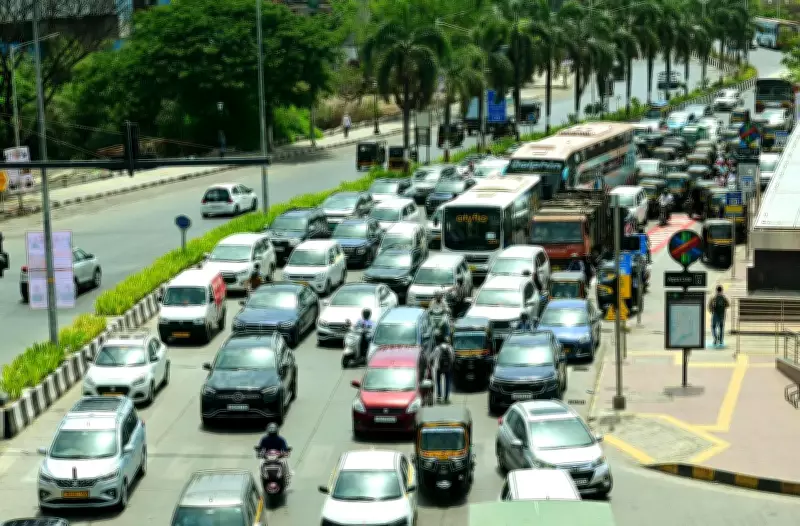
Mumbai: The Mumbai Metropolitan Region Development Authority's (MMRDA) maiden Public Transport Day initiative in Bandra-Kurla Complex (BKC) on Friday received a tepid response from the city's residents. The scorching summer heat, inadequate bus frequency, rogue auto-rickshaw drivers, and the daunting prospect of walking a kilometer or two to the nearest railway station deterred many from participating. The fear of overcrowded buses and trains further discouraged commuters. As a result, there was no significant reduction in traffic congestion or noticeable increase in public transport usage compared to a typical weekday.
Limited Impact on Ground
While several organizations issued advisories encouraging employees to use public transport and Cityflo enhanced feeder bus services, on-ground conditions remained largely unchanged. Social media users pointed out that improving the public transport system would serve the cause better than sporadic pop-up campaigns. Traffic police reported that vehicle volume in BKC appeared 15-20% lower on Friday morning but returned to normal by evening. An officer admitted that not many people seemed to have used public transport.
TOI reporters visited BKC in the afternoon and during evening peak hours, finding that the campaign gained limited traction. Most motorists continued to use their cars and SUVs. Madhvi Andhare, an employee at Nivoda, stated she would only consider public transport if her driver was unavailable, citing persistent issues in BKC regardless of the day.

Challenges Faced by Public Transport Users
Those who did use public transport described Friday as particularly punishing. Kiran Patil of Cushman & Wakefield, a regular public transport user, reported waiting 15 minutes for an auto to Powai, which usually takes five minutes. Surge pricing was a recurring grievance. One commuter paid about Rs 200 for a ride home to Ghatkopar, compared to under Rs 100 in the morning. Another, living just 3.5 km from BKC, typically pays Rs 250, with fares inflated further during peak hours. Passengers at crowded bus stops complained of waiting 30 minutes to an hour.
Listing infrastructure gaps, an executive from the Wockhardt building in G Block remarked, "And this is the city's premier business district!" The G Block members' association partnered with the Friday initiative. A senior executive from an infrastructure finance company said they shifted working days to Monday, Wednesday, and Thursday and would evaluate the experiment in a few weeks.
Mixed Reactions from Businesses
MMRDA thanked the diamond merchants of Bharat Diamond Bourse (BDB) for supporting the initiative. Ashok Gajera of Laxmi Diamonds claimed private vehicle entry into BKC was down by 40%, though security figures showed only a 10% reduction in car entries at BDB. Some diamond merchants dismissed the exercise as a publicity stunt, questioning why the responsibility fell on citizens while political convoys continued to occupy significant road space. Diamantaire Mehul Shah said he saw no noticeable difference in traffic jams.
Several large events were underway in the business district, including a major SAP users' conference at the Jio World Convention Centre with around 10,000 invitees, and the diamond industry hosting international visitors from Italy and the Mayor of Antwerp. Most attendees traveled by private vehicles.
Social Media and Public Demands
Social media users demanded improved discipline. Pratik Shinde tweeted about an auto driver at Tilak Nagar station refusing to use the meter and demanding Rs 300 to BKC. Activist Zoru Bhathena said reopening the Sion Station Road bridge would help decongest BKC traffic, calling other efforts "time-pass." Deven Nimkar urged authorities to stop PR stunts and complete projects on time.

However, some support emerged. Private bus service Cityflo doubled its capacity during peak hours on the Aqua Line Metro feeder loops from three to six buses, said an MMRCL spokesperson. Organizations like the Insurance Institute of India, Naman Group, SEBI, SIDBI, and Tata Communications issued internal circulars encouraging employees. Central government offices, Trident, and G Block members did likewise. An MMRDA spokesperson said all their employees came by public transport that day. Metropolitan Commissioner Sanjay Mukherjee thanked corporates and individuals for the "positive response" and hoped numbers would grow next Friday.





