

Mysuru Community Takes Action for Safer Public Spaces
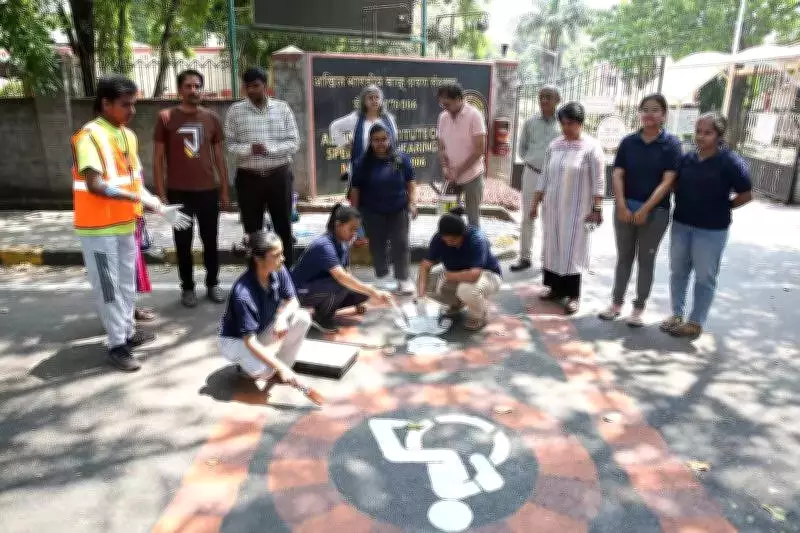
In a powerful display of grassroots urban activism, diverse stakeholders in Mysuru came together on Sunday to symbolically reclaim the Bogadi Road Junction adjacent to the All India Institute of Speech and Hearing (AIISH). This collaborative effort aimed to transform the area into a safer and more inclusive public space through direct community participation.
Symbolic Reclamation Through Art and Advocacy
The initiative saw civil society groups, local residents, caregivers, students, and representatives from Greenpeace India join forces. Participants actively painted a zebra crossing and a distinctive "empathy line" along the Bogadi Road stretch and the roadway leading towards SJCE. This artistic intervention served as a symbolic act of reclaiming the street as a shared, communal asset.
The newly painted empathy line is a visual marker designed to highlight the essential space required for pedestrians and persons with disabilities to navigate the area safely and with dignity. It underscores the need for infrastructure that accommodates all users, not just vehicles.

Formal Submission of Community-Driven Design Proposals
This action coincided with a critical juncture in the city's development timeline. As the Mysuru city administration prepares to undertake significant white-topping work on the Bogadi Road stretch, the citizen groups formally submitted a set of detailed design recommendations to the authorities.
Selomi Garnaik of Greenpeace India emphasized the timeliness of this advocacy. "The upcoming infrastructure work presents a vital opportunity," Garnaik noted. "It is the perfect moment to integrate people-led ideas—such as safe crossings, accessible footpaths, and clear signage—directly into the official engineering and construction plans."
Expert and Civic Voices Champion Inclusive Planning
The initiative received strong backing from academic and civic leaders who champion a more humane approach to urban design.
Champa, director of the Mysuru School of Architecture, praised the effort, stating it demonstrates how urban planning can meaningfully respond to everyday needs when communities are actively involved in the design process. She made a specific, practical request to the authorities: "Provide a coordinated 20-second stoppage of vehicles on all four sides of the junction at a time. This simple measure would allow pedestrians to feel comfortable and cross the road without excessive hassle or fear."
Echoing the call for immediate, actionable solutions, Roy Joseph of the Mysore Grahakara Parishat spoke on behalf of various civic groups. He urged the concerned authorities to "immediately come out with solutions or measures that are simple, low-cost, and can be implemented quickly." Joseph stressed that such steps would bring immediate relief to parents and disabled children who face daily struggles and dangers at this busy junction.
Highlighting the Daily Struggle for Accessibility
The campaign powerfully highlighted the real-world challenges faced by vulnerable road users. Rathna, a local resident who regularly visits AIISH for her daughter's treatment, shared her urgent plea. She emphasized the critical need for safe road-crossing arrangements, particularly during peak traffic hours, to protect those with mobility challenges and medical needs.
This community-led action in Mysuru stands as a compelling model for participatory urban governance. It showcases how collective citizen action, combined with expert input, can directly influence infrastructure projects to create public spaces that are truly safe, accessible, and designed for people first.






