

Nagpur's AMRUT 2.0 Road Restoration Crisis Deepens After Unseasonal Rains
The Nagpur Municipal Corporation's persistent failure to ensure proper restoration of roads excavated for sewer line works under the AMRUT 2.0 scheme has been starkly exposed by recent unseasonal rainfall. Despite previous crackdowns and substantial financial penalties imposed on contractors, the civic body's oversight mechanisms appear to have collapsed, leaving residents grappling with dangerous and impassable conditions.
Residents Trapped as Beltarodi Road Turns Hazardous
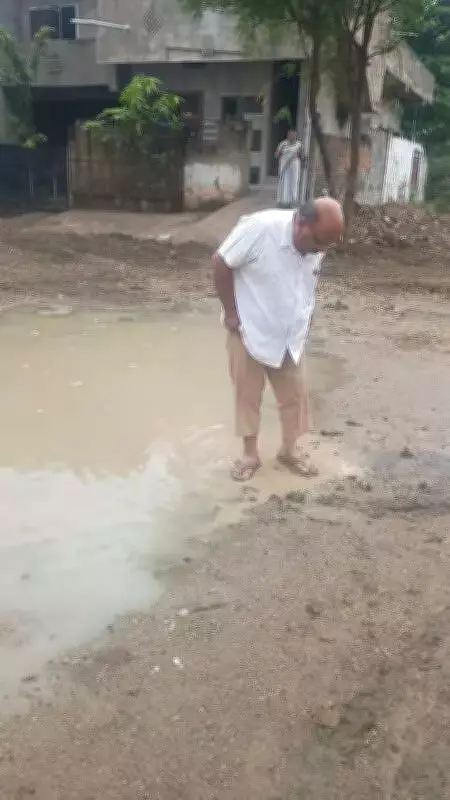
In Rajarshi Nagar along Beltarodi Road, which falls within Chief Minister Devendra Fadnavis's South West Nagpur constituency, continuous pipeline and sewer works spanning nearly four months have rendered the thoroughfare virtually unusable. Initial excavation for an underground cement pipeline was left incomplete and unrestored, while subsequent digging for drainage lines further degraded the road surface.
Following heavy showers on Wednesday night, the already battered stretch transformed into a treacherous, waterlogged mess. Local residents report being effectively trapped indoors, with vehicles unable to navigate the area and even pedestrian movement becoming perilous due to deep potholes, unstable loose soil, and stagnant water accumulation.

"Instead of resolving drainage issues, the road itself has become a serious hazard," stated resident Shrikant Zadgaonkar, echoing the frustration of many in the community.
History of Penalties Fails to Bring Improvement
This latest episode mirrors earlier lapses that were formally flagged within the civic administration. In June 2025, under the tenure of then Municipal Commissioner Abhijeet Chaudhari, the NMC had imposed penalties exceeding Rs 1 crore on three contractors—Abhi Engineering Pvt Ltd, Goodwill Constructions, and SM Constructions—for failing to restore roads excavated for AMRUT sewer projects.
Those failures had directly led to multiple accidents and severe public inconvenience. Despite the substantial financial penalties, both residents and civic observers note that little substantive change has occurred on the ground. The public health engineering department continues to demonstrate inadequate monitoring of contractors and lax enforcement of restoration timelines.
Contractor Promises Versus Ground Reality
Local corporator Nagesh Mankar has attributed the ongoing delays to labor shortages during the Holi festival period and the recent unseasonal rains. He added that the contractor has provided assurances that restoration work will be completed within one week.
However, for weary residents who have heard similar promises repeatedly, these latest assurances ring hollow. With the monsoon season rapidly approaching, concerns are mounting that neglected restoration work could transform extensive sections of the city into accident-prone zones, potentially endangering public safety on a larger scale.
The situation underscores systemic failures in municipal oversight and contractor accountability within critical infrastructure projects, raising urgent questions about the effectiveness of penalty systems and the NMC's commitment to protecting citizen welfare through proper urban management.






