Nagpur Fire Department Sounds Alarm Over Critical Access Issues at Temporary Station
Nagpur: A significant administrative failure has been exposed within the Nagpur Municipal Corporation (NMC) as the fire department raises urgent concerns about critical access problems at the temporarily relocated Ganjipeth Fire Station. This situation poses serious risks to emergency response capabilities in one of Nagpur's most densely populated commercial districts.
Temporary Relocation Creates Operational Nightmare
The Ganjipeth fire station was temporarily moved to a vacant municipal school building near Model Mill Chowk in the Gadikhana area while its original, dilapidated structure undergoes reconstruction. However, this interim location has proven operationally unsuitable due to severe entry restrictions that compromise emergency response effectiveness.
In a formal letter dated March 11, station officer in-charge S Sayyed informed the assistant municipal commissioner of the Gandhibagh zone about the critical situation. The main gate of the premises is too narrow for standard fire engines to enter, forcing all three of the station's firefighting vehicles to remain parked outside the compound throughout most of the day.

"This arrangement severely affects our operational readiness," explained a fire department official who requested anonymity. "When every second counts during an emergency, having our vehicles parked outside creates unnecessary delays that could prove catastrophic."
Urgent Requests Ignored Despite Clear Risks
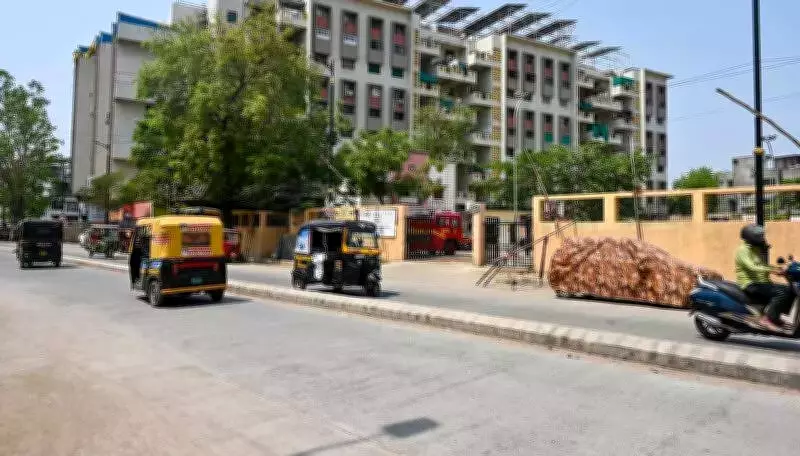
The fire department has formally requested the Gandhibagh zone office to widen the gate and remove the road divider outside the premises to allow smooth movement of fire tenders. Despite the clear urgency highlighted in the official communication, the Gandhibagh zone administration has failed to initiate any corrective action.
"We submitted our concerns in writing with specific recommendations," said the fire department representative. "The lack of response demonstrates a concerning coordination gap within the municipal corporation that puts public safety at unnecessary risk."
Real-World Consequences Emerge During Actual Emergency
The practical dangers of this administrative failure became evident during a recent fire incident. On Sunday afternoon around 1pm, a blaze erupted at a two-storey building in the Handloom Market complex within the Gandhibagh area. The office of advocate Shrichand Kundwani was completely gutted, destroying computers, furniture, and important documents.
Alert residents and local traders managed to prevent the flames from spreading to adjacent establishments through coordinated efforts before professional firefighters arrived. After receiving the alert from the control room, station officer S Sayyed rushed to the scene with his team.
Given the congestion in the locality and the operational limitations of the temporary station, additional fire tenders had to be called from the Cotton Market and Civil Lines fire stations to assist in the operation. The blaze was eventually brought under control through the coordinated efforts of multiple firefighting teams.
Political Response and Investigation
Local political leaders, including corporator Sanjay Balpande and BJP city president Dayashankar Tiwari, visited the fire site to assess the damage and speak with affected business owners. A formal case has been registered at Tehsil Police Station, though investigators have not yet determined the exact cause of the fire.
"This incident highlights the critical importance of properly functioning emergency services," said a local business owner who witnessed the fire. "We rely on these services to protect our livelihoods and our community."
Broader Implications for Public Safety
Fire officials emphasize that the continued inaction of the Gandhibagh zone administration exposes a dangerous coordination gap within the civic body. With the Ganjipeth station serving densely populated commercial areas including markets, offices, and residential buildings, delays in addressing basic operational requirements could significantly hamper emergency response times.

"The Ganjipeth area represents one of our busiest commercial zones," explained a senior fire department official. "Any delay in our response capabilities directly puts lives and property at increased risk. We need immediate administrative action to resolve these access issues before a more serious incident occurs."
The situation raises broader questions about municipal preparedness and inter-departmental coordination within the Nagpur Municipal Corporation. As reconstruction of the original fire station continues, the temporary facility's operational limitations remain unaddressed despite clear warnings from emergency professionals.