

Nagpur's Transport Budget Unveils Expansion Amid Financial Concerns
The Nagpur Municipal Corporation's transport wing has once again presented an ambitious yet financially precarious roadmap for the city's public bus system. On Monday, the transport committee submitted a Rs575.58 crore budget proposal for the fiscal year 2026-27, emphasizing significant expenditure increases while offering little clarity on new revenue streams to support the expansion.
Budget Details and Structural Imbalance
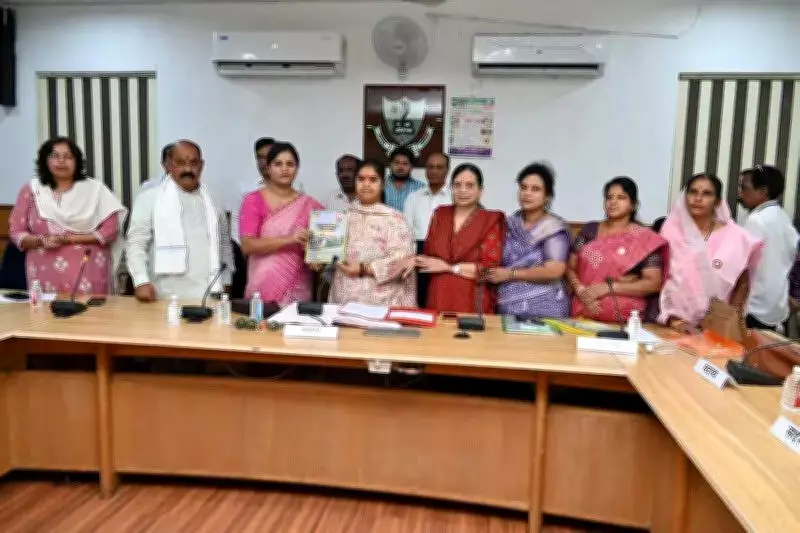
Transport committee chairperson Mangala Khekre presented the proposal to standing committee chairperson Shivani Dani Wakhare, revising upward the earlier administrative draft of Rs524.58 crore by Rs51 crore. Despite this jump in outlay, income projections remain stagnant at Rs190 crore, exposing a widening structural imbalance. The numbers reveal a stark reality: operational and capital expenditure is projected to reach nearly Rs575 crore, but the department expects to recover barely half that amount through its own earnings.
The resulting Rs200 crore deficit is set to be bridged through increased dependence on NMC subsidies. The committee is now seeking Rs200 crore in support, which is Rs50 crore more than the administration's earlier estimate. This reliance on civic backing underscores persistent financial vulnerabilities in Nagpur's public transport system.

Lack of New Revenue Avenues
What raises further concern is the absence of any fresh revenue avenues in the budget. Several income generation ideas, including commercial exploitation of depot land and kiosk redevelopment, have been carried forward from previous budgets but remain largely unimplemented. Proposals to develop commercial complexes at key depots such as Mor Bhavan, Patwardhan ground, Lakadganj, Hingna, Wadi, and Khapri have resurfaced, with Rs40 crore earmarked, despite facing execution hurdles for years.
Similarly, plans to convert bus stop kiosks into small commercial hubs offering coffee outlets, utility services, and photocopy centres have been reiterated as a means to boost non-fare revenue, but without a clear execution timeline. This repetition of old proposals highlights ongoing challenges in translating ideas into actionable income streams.
Expansion and Modernization Plans
Even as revenue concerns persist, the budget pushes aggressively for expansion and modernization. The current fleet of 580 buses is set to grow significantly with the induction of electric buses under multiple schemes. This includes:
- 250 AC e-buses backed by state funding
- 150 buses under the PM e-Bus Sewa scheme
- 144 midi buses under the 15th Finance Commission
- 25 high-capacity articulated buses based on a flash-charging model
Infrastructure upgrades form another major component, with Rs40 crore allocated for depot road and premises development and Rs10 crore for land acquisition and expansion works. The department has also proposed CCTV surveillance at all bus stops, rationalization of fare structures, and the introduction of new routes to enhance service coverage.
Financial Sustainability in Question
Despite the push for cleaner mobility and capacity expansion, the financial blueprint lays bare a persistent concern: Nagpur's public bus service continues to run on civic backing rather than sustainable revenue. Officials maintain that efforts will be made to augment income beyond ticketing, but whether those efforts translate into execution remains the key question. The budget's closing balance is projected at a negative Rs63-68 lakh, further emphasizing the financial strain.
In summary, while the Nagpur Municipal Corporation aims to modernize and expand its transport network, the 2026-27 budget reveals a heavy reliance on subsidies and a lack of innovative revenue strategies, posing challenges for long-term sustainability.






