

Nagpur's Waste Management Crisis Deepens with 446 Garbage Vulnerable Points
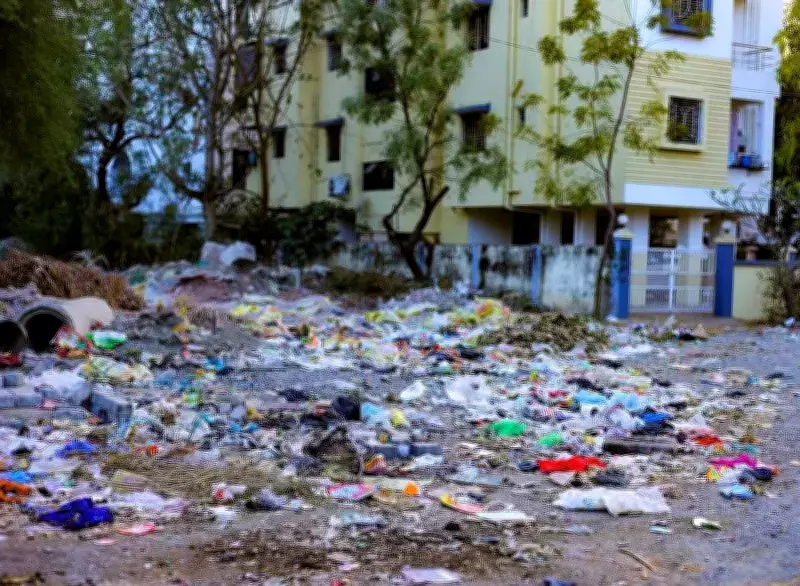
The Nagpur Municipal Corporation (NMC) has announced a new initiative to install 15 underground garbage bins across the city, funded by Rs1.5 crore from the district planning development cell. However, this move has starkly highlighted the persistent and severe waste management crisis in Nagpur, with official data revealing a staggering 446 garbage vulnerable points (GVPs) spread across all 10 zones of the city.
Limited Intervention Amidst a Massive Problem
NMC plans to spend Rs10 lakh per site to tackle some of the most visible dumping hotspots, but the scope of just 15 locations is minimal compared to the magnitude of the issue. This raises significant concerns about the effectiveness of the intervention, as it addresses only a small fraction of the total GVPs.
According to NMC records, 229 out of the 446 GVPs have been officially "closed," including 39 that were converted into cleaner utility spaces. Yet, 217 locations remain actively problematic. On the ground, citizens and local observers dispute these claims, arguing that many "closed" GVPs continue to witness waste dumping, indicating a failure in proper management.

Residents Report Relocation Rather Than Elimination
Residents express frustration, noting that the issue is less about elimination and more about relocation. In several cases, garbage dumping has simply shifted a few metres away from earlier points, creating new black spots in the same vicinity. A resident from north Nagpur stated, "The problem is never solved, garbage dumping just moves one place to another. After NMC cleans one corner, within days another nearby spot becomes a dumping ground."
Widespread Crisis Across All Zones
The crisis is widespread, cutting across all zones of Nagpur. Lakadganj tops the list with 73 GVPs, followed by Laxmi Nagar with 61, Dharampeth with 56, and Mangalwari with 50. This distribution highlights that the issue is not confined to any single pocket of the city but is a pervasive urban challenge.
- Laxmi Nagar: 61 GVPs
- Dharampeth: 56 GVPs
- Hanuman Nagar: 34 GVPs
- Dhantoli: 47 GVPs
- Nehru Nagar: 43 GVPs
- Gandhibagh: 25 GVPs
- Satranjipura: 32 GVPs
- Lakadganj: 73 GVPs
- Ashi Nagar: 25 GVPs
- Mangalwari: 50 GVPs
Background of Failed Initiatives
The latest proposal comes against the backdrop of earlier failed initiatives. In 2023, NMC procured 2,400 twin-litter bins at a cost of Rs2.21 crore to promote waste segregation, while the smart city agency installed 200 smart bins worth Rs2 crore. Most of these are now either missing, damaged, or non-functional, underscoring a pattern of ineffective solutions.
Officials and Experts Weigh In
Chief sanitation officer Gajendra Mahalle stated that the underground bins would be installed at "worst-affected and highly visible" locations. Unlike the Rs19 lakh hydraulic underground bin near the Civil Lines fire station, these units will not have hydraulic systems due to maintenance concerns.
Urban planners and civic activists warn that infrastructure-driven solutions alone cannot address the crisis. Weak enforcement, inconsistent waste collection, and lack of behavioural change among citizens continue to fuel the recurrence of GVPs, suggesting a need for more comprehensive strategies.
Risk of Another Cosmetic Intervention
With all 446 GVPs effectively persisting in one form or another, NMC's latest plan risks being seen as another cosmetic intervention. Experts emphasize that sustained monitoring, accountability, and systemic reforms on the ground are essential to make any real impact in tackling Nagpur's waste management crisis.






