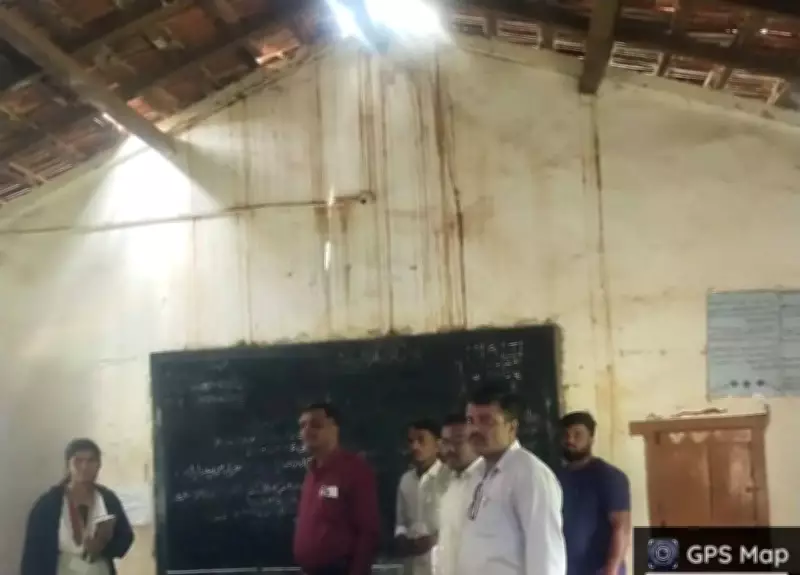
The decision of several southern states, including Karnataka, to stay away from the implementation of the new National Education Policy (NEP) has triggered concerns over worsening infrastructure in government schools. Officials and education experts point to a sharp decline in the Centre’s assistance for school development works.
Funding Cuts Hit Hard
A retired education commissioner claimed that Karnataka alone lost nearly Rs 1,200 crore from the Centre’s funding last year after refusing to implement the NEP. According to him, the impact is now visible across government schools, particularly in North Karnataka, where thousands of classrooms are in poor condition and awaiting urgent repairs. “The situation has worsened in Karnataka, Kerala and Tamil Nadu after the respective state governments halted NEP implementation and introduced their own policies,” the retired official alleged.
Severe Crisis in North Karnataka
The crisis is most severe in the Kalyan Karnataka and Kittur Karnataka regions, where nearly 38% of classrooms in government schools are dilapidated. Parents and education activists have expressed concern as several classrooms have already been declared unsafe for conducting classes. Karnataka has 46,174 government schools, but infrastructure deficiencies continue to affect a large number of them. Official data indicates that nearly 8,000 classrooms across close to 20,000 government schools in Belagavi and Kalaburagi divisions require immediate repairs or reconstruction.

Funding Shortage Hampers Repairs
Shortage of funds has emerged as the biggest hurdle. Deputy director at the additional commissioner’s office Girish Padaki stated that in Belagavi division, the school education department sought Rs 105.9 crore for constructing 618 additional classrooms but received only Rs 10.4 crore. Similarly, against a demand for Rs 22.9 crore to repair 1,057 damaged classrooms, only Rs 75 lakh was sanctioned.
Dharwad district alone requires nearly Rs 15.4 crore for repair and reconstruction works. Officials identified 338 classrooms for demolition and rebuilding last year, while another 173 classrooms have been added to the list this year.
Raichur and Koppal Districts Affected
Raichur district has 1,667 school buildings. “We have identified 2,009 classrooms in dilapidated condition and have instructed headmasters and teachers to prevent students from entering these structures. Proposals have been submitted for the repair of around 1,300 classrooms, with funding expected from the KKRDB,” said Raichur deputy director of school education Mallikarjun. In Koppal district, officials have identified 364 classrooms for demolition and reconstruction. The buildings have been taken out of use and warning boards installed to prevent entry.
Temporary Measures and Student Concerns
As a temporary measure, two classes are simultaneously running in one room. With several rooms declared unsafe, many schools have been forced to run two classes in a single classroom. Student organisations have also raised concerns over deteriorating infrastructure. SFI leader Basavaraj S alleged that nearly 46% of government schools and colleges lack basic facilities, while 38% of high schools do not have separate toilets for girls. Education activists warned that unless urgent investments are made and funding gaps are addressed, thousands of rural students will continue to study in overcrowded and unsafe classrooms.