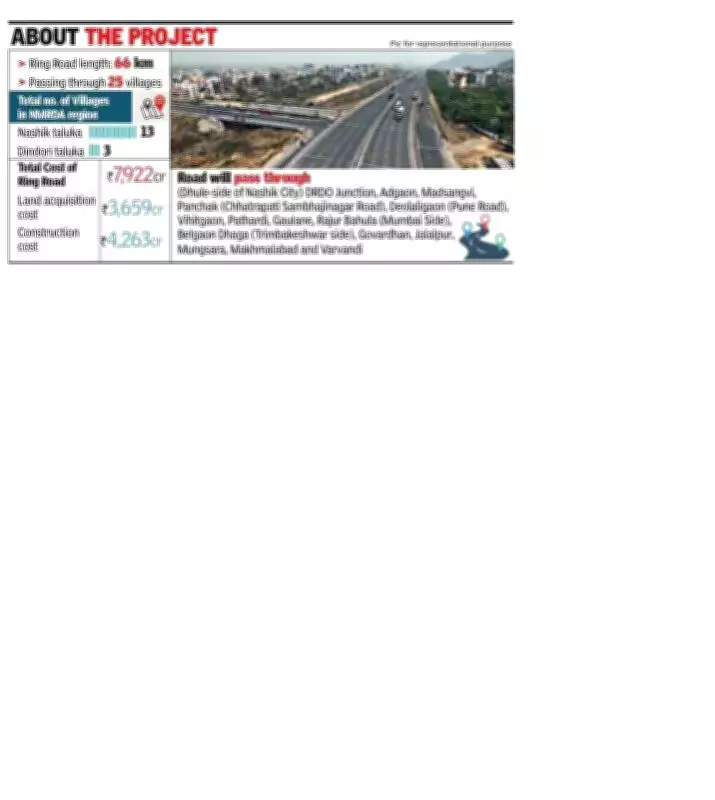
The Nashik Metropolitan Region Development Authority (NMRDA) has launched a pioneering initiative for landowners along the 66-kilometre Ring Road project. By presenting three distinct development models, the authority seeks to establish an inclusive fringe area road network, ensuring every parcel of land within its jurisdiction has equal access to growth and infrastructure.
Three Models for Land Development
NMRDA commissioner and CEO Jalaj Sharma stated, "While the priority is to create a cohesive road network, the flexibility of these options allows property owners to choose the level of participation that best suits their individual goals."
Model 1: Traditional Town Planning Scheme
The first model follows a conventional town planning approach where NMRDA takes the lead on all major infrastructure. The authority bears the entire cost of developing roads ranging from 12 to 30 metres in width and installing essential public amenities. After official plotting, NMRDA returns 60% of the land to the original holders. A key benefit is that landowners are not required to pay any premium, as development costs are absorbed by the government in exchange for utility space, according to joint metropolitan planner Dipak Varade.

Model 2: Collaborative Approach
The second option offers a more collaborative land-use arrangement. Under this plan, NMRDA assumes control over 40% of the total space to facilitate road construction and public facilities. The remaining land stays with the holder, who can develop their portion according to their own ideas and requirements. Like the first option, this scheme exempts the landholder from paying any premium, balancing public infrastructure needs with private development rights.
Model 3: Maximum Landowner Control
The final option is designed for owners who wish to maintain maximum control over their property. In this case, NMRDA intervenes only to develop the necessary road network. The landholder retains the rest of the property but takes on the responsibility of securing and preserving spaces designated for public amenities. These spaces must be handed over to the authority when the owner decides to proceed with development. This is the only option where the landholder is required to pay a premium to the authority, Varade explained.
Shift in Urban Planning
By presenting these choices to Chief Minister Devendra Fadnavis during a recent high-level meeting, NMRDA has signalled a shift towards a more frictionless style of urban planning. Varade said, "This is the first time such options have been offered to the public. The goal is to unlock the economic potential of the region by ensuring proper road dimensions are established early, paving the way for efficient development."