

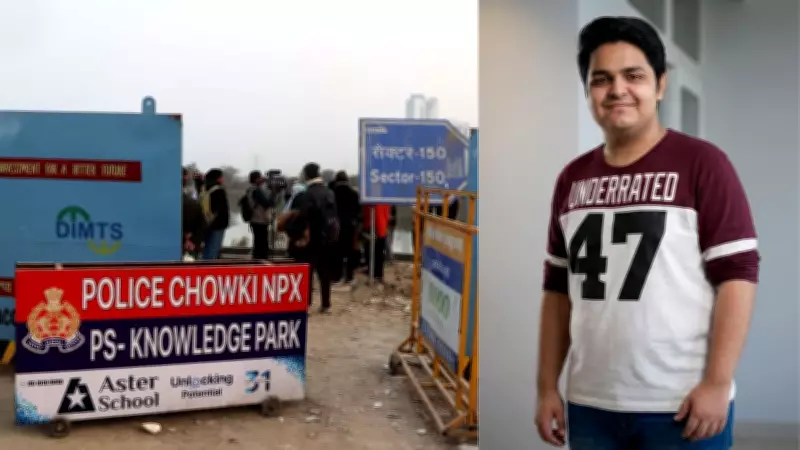
Noida Drain Tragedy: A Stark Reminder of Urban Planning Failures
More than three weeks have passed since the tragic incident in Noida, where a young man lost his life after his car plunged into a water-filled pit. Yuvraj Mehta, 27, was returning home when his vehicle drove into a drain at Noida Sector 150, leading to a fatal drowning as he reportedly stood atop the sinking car. This event underscores a series of abdications in urban governance and safety protocols that demand urgent scrutiny.
Road Design and Safety Violations
The accident site is part of Noida's planned development in Sector 150, not a semi-rural area. Satellite imagery from Google Earth reveals alarming facts about the road where the incident occurred. It was not at a traffic junction but on a fairly wide four-lane main road that abruptly turns 90 degrees into a two-lane single road. This geometry violates norms set by the Central Road Research Institute and the Indian Road Congress, which mandate that four-lane roads with central verges should transition via slow curves based on monitored traffic speed.
Additionally, there was no visible crash barrier on the side of the road, a critical safety feature that should have been installed by planning and execution agencies. In dense fog, these lapses contributed to the car driving into what is labeled as the "Sector lake" on maps.

The Origin of the Hazardous Water Body
Why was there a water body or lake at the accident site? The plot was originally allotted or sold by the Noida Authority for a building project with a double basement, but construction never commenced. Reports indicate the land changed hands between developers, yet the project remained incomplete. Over time, water accumulated in the deep pit, which was not properly cordoned off, especially along the adjacent road.
The pit filled with water due to its proximity to the Hindon river's floodplains, where groundwater levels are naturally high. Underground channels seep into river basins, and without intervention, the neglected basement pit became a 20-foot-deep hazard, sufficient to drown a car and its occupant.
Accountability and Systemic Abdications
Will there be accountability for this tragedy? Some actions have been taken, such as notices to builders and the Noida Authority CEO being placed on a "wait list," but the likelihood of meaningful responsibility remains low. The incident implicates multiple parties:
- Noida Authority: Failures in planning and road departments.
- Developers: Negligence in securing the plot and preventing water accumulation.
- Rescue Operations: Delayed response that hindered saving the victim.
- Local Police: Overwhelmed by other duties, leading to inadequate site attention.
- Citizenry: Accustomed to irregularities, potentially overlooking trivial omissions until tragedy struck.
This case highlights a broader pattern of abdication in urban management, where lapses in enforcement and planning recur without consequence. It calls for a dispassionate review to prevent such incidents in the future, emphasizing the need for stricter adherence to safety norms and proactive governance in India's rapidly developing cities.






