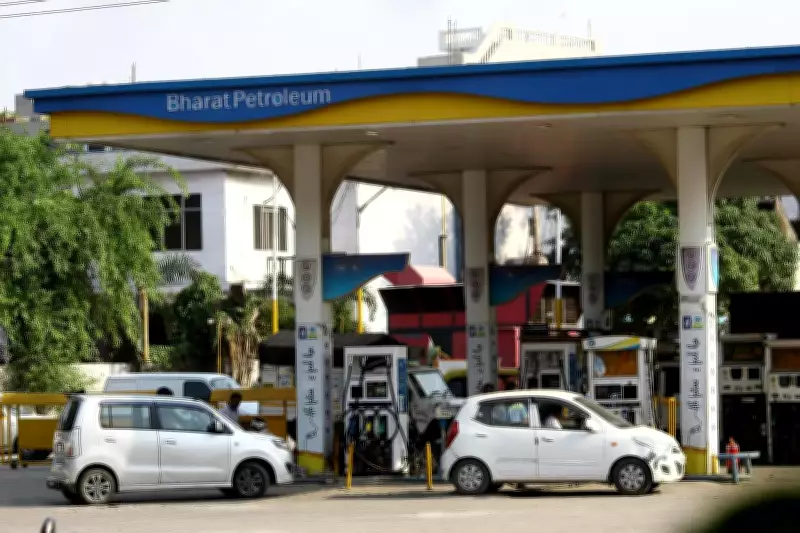
Over the past two weeks, several petrol pumps across the National Capital Region (NCR) have been experiencing fuel shortages by late evening. While the issue has been observed in parts of Noida, it is more prevalent in Ghaziabad, where 90% of petrol pumps are dealerships.
New Payment System Causes Supply Disruptions
According to sources, there is no actual shortage of fuel, but a recent change in the supply mechanism is causing the problem. Dealers are now required to pay in advance for a tanker, unlike the earlier system that offered credit. This change is attributed to tightened supply lines due to the conflict in West Asia and disruptions in energy supplies to India via the Strait of Hormuz.
Rationing Measures Implemented
As a result, petrol pumps have imposed limits on fuel purchases to ration supplies. Most pumps now restrict petrol to 20 litres and diesel to 40 litres per vehicle.

Manoj Kumar, a resident of Officer City in Raj Nagar Extension, experienced the crunch firsthand. On Monday, he struggled to find fuel for his trip to Delhi's Malviya Nagar. "My relatives live in Malviya Nagar. Since schools are closed, I thought I would drop my children there. But I was running low on fuel and it took me almost half an hour to find a petrol pump that could provide petrol," he said. Before that, two pumps informed him that fresh supplies would arrive only after a delay. "At the last petrol pump, I was given only 20 litres and told that I could not get the tank filled completely," Kumar added.
Rising Costs Impact Dealers
At a Hindustan Petroleum (HP) petrol pump in Vasundhra, the manager explained that the price of crude oil has increased, raising procurement costs by almost Rs. 2.5 lakh. The pump gets its fuel from a depot in Meerut. Small tankers with a capacity of 12,000 litres, which earlier cost Rs. 11 to 12 lakh, are now priced at Rs. 13 to 15 lakh. The price of 24,000-litre tankers has risen similarly.
Higher fuel prices have reduced footfall at stations. Fearing losses, dealers have stopped providing fuel on credit. Stocking up on 12,000 litres of oil now requires upfront payment of up to Rs. 12 lakh, rather than paying after selling the procured oil. "We have to ensure sufficient stock because the new system leads to delays in supply," the manager said.
Challenges for Emergency Vehicles
A staff member from a Bharat Petroleum Corporation Limited (BPCL) dealership spoke of similar challenges, requesting anonymity. "We provide a full tank to ambulances and other emergency vehicles. You cannot deny them fuel," he said. For others, the station has capped fuel at 20 litres for petrol vehicles and 40 litres for diesel vehicles. This pump gets its fuel from a Mathura refinery.
Industry Association Confirms Crisis
Dharam Veer Chaudhary, general secretary of the Uttar Pradesh Petroleum Traders Association, told TOI that there is a constraint, but no written notice was given to dealers. "There is a crisis, and demand is high, but supply is on the lower side. It has not been cut fully, but depots have reduced historical supplies by 1,000 to 1,500 litres," he said.
He explained that several dealer-owned petrol pumps in Noida and Ghaziabad have been operating below capacity with no tankers on standby. "The petrol pumps dry out by 8 to 9 pm and are refilled by 12 am only. A three-hour gap is a long time for petrol pumps to not have fuel," he said.
Similar Pattern in Mohan Nagar
The same pattern was reported at Mohan Nagar, where a BPCL manager said storage levels are being carefully managed due to irregular replenishment. "Our capacity is around 7,000 litres. Currently, we are operating at about 5,500 litres for petrol," he said. The outlet has imposed limits of 40 litres per vehicle and restricted fuel dispensing in cans to conserve stocks.