

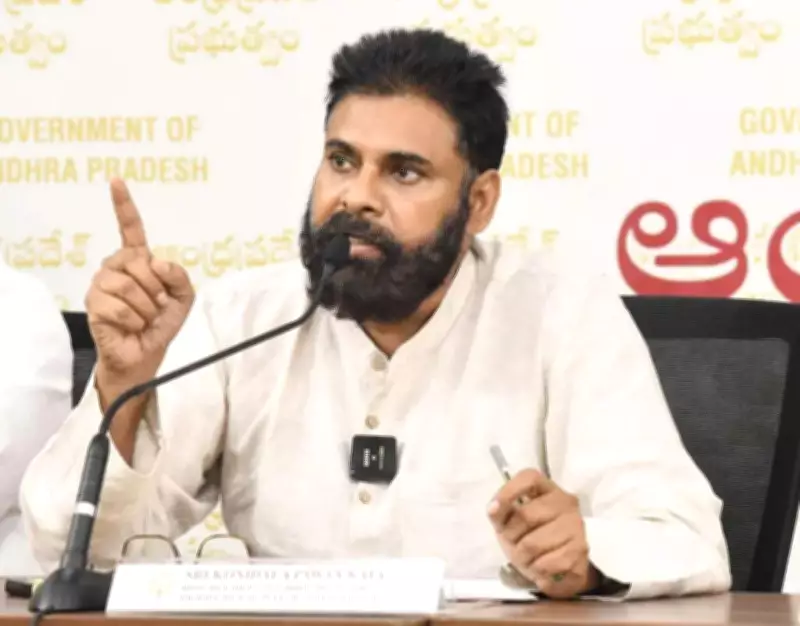
Vijayawada: Deputy Chief Minister Pawan Kalyan on Friday unveiled the 'Clean Godavari – Sacred Pushkarams' action plan, aiming to make the River Godavari clean and free from effluents, ensuring devotees can take a holy dip in pristine water during the sacred Godavari Pushkarams. He directed officials to implement comprehensive measures to prevent sewage, industrial effluents, and aquaculture waste from entering the river.
Key Initiatives Under the Plan
As part of the initiative, the government has identified 262 Pushkar panchayats across six districts and instructed officials to transform them into sewage-free villages before the commencement of the Pushkarams. Chairing a high-level review meeting with the Panchayat Raj and Rural Development Department, Forest and Environment Department, and the Pollution Control Board (PCB) on Friday, Pawan Kalyan emphasized the need for a coordinated action plan to protect the sanctity of the Godavari.
Pollution Statistics and Concerns
According to PCB estimates, the Godavari receives nearly 104 million litres of municipal sewage, 8.38 million litres of rural wastewater, 32 million litres of industrial effluents from Andhra Paper Mills, and 13.24 million litres of aquaculture-related waste every day. The PCB noted that pollution levels in the river basin have reached alarming proportions, posing a threat to public health and the environment.

Measures for Rural Sewage Management
To address rural sewage management, Pawan Kalyan directed officials to construct magic drains, community soak pits, and individual household twin pits under various government schemes. He also ordered the formation of dedicated monitoring teams to ensure that wastewater from drains and canals does not flow directly into the river.
Urban Wastewater Treatment
Expressing concern over untreated municipal sewage being discharged into the Godavari by urban local bodies, including Rajamahendravaram, Tanuku, Bhimavaram, Narasapuram, and Kovvur, Pawan instructed municipalities to establish sewage treatment plants (STPs) based on their respective capacities and ensure that wastewater is treated before release into the river.
Funding and Implementation
Pawan also instructed urban local bodies and officials to utilize funds from the Rs 100 crore sanctioned by the PCB, along with Swachh Andhra and other available resources, to implement pollution-control measures in a phased manner.
Industrial Pollution Control
Pawan Kalyan directed PCB officials to intensify inspections of industries located in the Godavari basin and ensure the installation of modern effluent treatment systems. Industries have been asked to enhance green cover and adopt stricter environmental safeguards.
Real-Time Monitoring System
Furthermore, Pawan proposed establishing an RTGS-style control room to facilitate round-the-clock monitoring of sewage treatment, waste disposal, and industrial pollution along the river basin. He stated that the proposed control room should be equipped with CCTV-linked monitoring screens to track sewage treatment and industrial waste management in real time. The responsibility for operating the facility will be entrusted to the state-level Environmental Protection Task Force, which has been constituted to curb pollution in major rivers.






