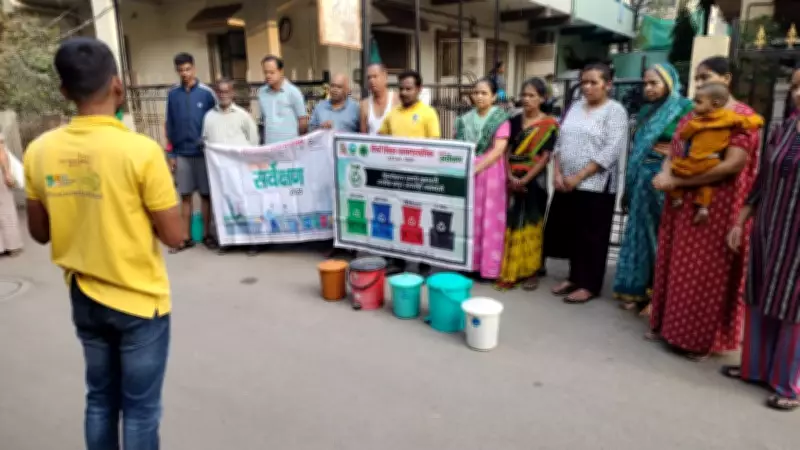
PCMC Introduces Mandatory Four-Colour Bin System for Household Waste Segregation
In a significant move to revolutionize urban waste management, the Pimpri-Chinchwad Municipal Corporation (PCMC) has mandated that all residents must now segregate their household waste into four distinct categories using specifically colored bins. This new directive replaces the previous two-bin system and comes with the warning of potential fines for non-compliance.
Comprehensive Waste Segregation Categories
The municipal corporation has established clear guidelines for the four-way segregation system, each designated with specific color codes to facilitate proper waste disposal:
- Blue Bins for Dry Waste: These containers are designated for non-biodegradable, non-soiled items including paper products, plastic materials, glass, metal scraps, wood pieces, and rubber items.
- Green Bins for Wet Waste: Residents must use green bins for organic waste such as food scraps, used tea bags, coffee grounds, eggshells, and garden waste including leaves and plant trimmings.
- Red Bins for Sanitary Waste: This category includes solid or liquid waste contaminated with bodily fluids, specifically used sanitary pads, diapers, medical disposables, and tampons.
- Black Bins for Hazardous Waste: Household items that are toxic, ignitable, corrosive, or reactive must be placed in black bins, including paints, cleaning chemicals, motor oil, batteries, pesticides, and electronic waste.
Municipal Officials Emphasize Environmental Benefits
Pradeep Thengal, Deputy Commissioner of the Health Department at PCMC, elaborated on the initiative's objectives, stating that the four-way segregation system will significantly enhance scientific waste processing. "This comprehensive approach will help reduce pressure on landfills, promote recycling initiatives, control garbage accumulation in residential areas, arrest environmental pollution, and minimize foul odors," Thengal explained to The Indian Express.

The official further emphasized the critical importance of waste segregation at the source, noting that proper separation reduces processing complexity at later stages. The collected waste will subsequently be directed to appropriate facilities, including waste-to-energy plants and bio-composting units.
Awareness Campaigns and Implementation Strategy
The PCMC health department is spearheading this initiative across all city wards, conducting extensive awareness campaigns through multiple channels. "We are currently educating residents through social media outreach, banner displays, door-to-door programs, and pamphlet distribution conducted with support from non-governmental organizations," Thengal detailed.
He specifically highlighted the growing concern regarding biomedical and electronic waste, noting that improper mixing with regular household waste poses significant health risks to sanitation workers. "The volume of such specialized waste is increasing, and proper segregation is essential for safe handling," he added.
Mandatory Compliance and Penal Provisions
The municipal corporation has made it clear that compliance with the new waste segregation system is mandatory for all Pimpri-Chinchwad residents. "We urge all residents to cooperate by properly segregating their domestic waste and handing it over to municipal collection vehicles during scheduled pickups," Thengal stated. "There will be penal action in cases of non-compliance with these waste management guidelines."
The initiative is being implemented under the guidance of Pimpri-Chinchwad Municipal Commissioner Shravan Hardikar and Additional Commissioner Vijaykumar Khorate, with direct supervision by Deputy Commissioner Dr. Pradeep Thengal and Assistant Commissioner Amit Pandit. The program aims for comprehensive rollout across all city wards in Pimpri-Chinchwad, marking a significant step toward sustainable urban development and environmental conservation.