

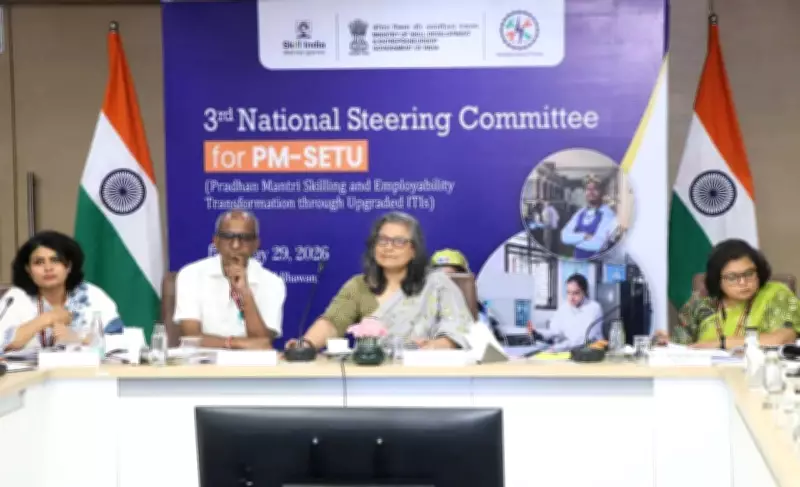
In a major development under the Pradhan Mantri Skilling and Employability Transformation through Upgraded ITIs (PM-SETU) scheme, the national steering committee has approved the strategic investment plan for the Visakhapatnam ITI cluster, submitted by ArcelorMittal Nippon Steel India (AM/NS India). This approval marks the first-ever Strategic Investment Plan (SIP) to be cleared under PM-SETU and makes Andhra Pradesh the first state to operationalise an industry partnership under the scheme.
Approval Process and Participants
The approval was granted during the third national steering committee meeting convened by the Ministry of Skill Development and Entrepreneurship. The meeting was chaired by Debashree Mukherjee, secretary of the ministry, and attended by Dilip Kumar, director general of the Directorate General of Training, along with other members of the national steering committee.
Senior representatives from various organizations participated in the deliberations, including the Capacity Building Commission, National Council for Vocational Education and Training, Ministry of Commerce and Industry, Ministry of Heavy Industries, Ministry of Labour and Employment, participating state governments, industry leaders such as Hindustan Aeronautics Limited, Hero MotoCorp, Bajaj Auto, ITC Limited and AM/NS India, as well as development partners like the Asian Development Bank (ADB) and the World Bank.

Key Outcomes and Significance
A key outcome of the meeting was the approval of the SIP for the Visakhapatnam ITI cluster in Andhra Pradesh, submitted by AM/NS India. This initiative is expected to transform ITIs into industry-managed, outcome-oriented institutions capable of responding to evolving workforce requirements. The approval of this proposal is anticipated to serve as a model for other states seeking to strengthen industry participation in vocational education and training and accelerate the implementation of PM-SETU interventions across the country.
About PM-SETU Scheme
PM-SETU is a flagship initiative of the Union government with an outlay of Rs 60,000 crore. It aims to transform 1,000 government ITIs through an industry-led hub-and-spoke model. The scheme seeks to modernize infrastructure, strengthen industry engagement, improve employability outcomes, and establish national centers of excellence in high-growth sectors. So far, 32 states and Union territories have constituted their state steering committees, while 12 states and UTs have floated their requests for proposals to invite industry participation in the selection of anchor industry partners.






