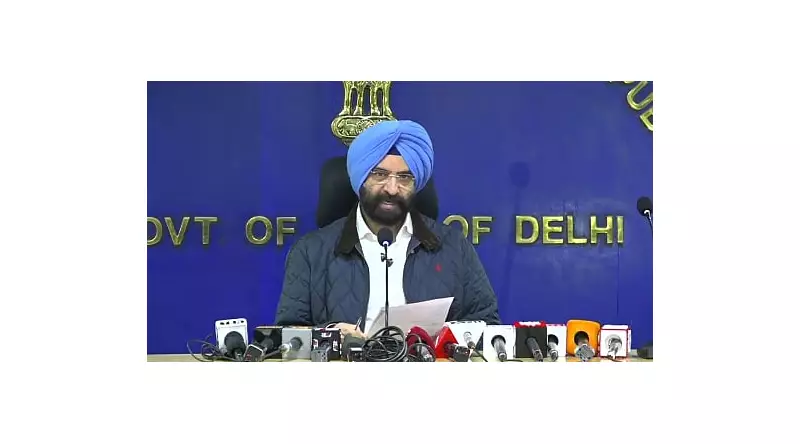
In a decisive move to maintain pressure on vehicular pollution, the Delhi government has announced that the mandatory requirement for a valid Pollution Under Control (PUC) certificate will continue unabated even after the stringent Stage-IV measures of the Graded Response Action Plan (GRAP) are withdrawn. The announcement was made by Delhi's Environment Minister, Gopal Rai, underscoring a long-term commitment to air quality management beyond temporary emergency protocols.
PUC Enforcement: A Permanent Fixture in Delhi's Anti-Pollution Arsenal
Minister Gopal Rai clarified the government's stance, stating that while the GRAP-IV restrictions are temporary and linked to specific air quality thresholds, the PUC certificate rule is a standing law under the Central Motor Vehicles Act. The enforcement of PUC checks will persist as a permanent measure to ensure vehicles on Delhi's roads comply with emission standards. This distinction highlights a two-pronged strategy: reactive steps under GRAP during severe pollution episodes and proactive, continuous enforcement of existing laws to control everyday pollution sources.
The current context is critical. GRAP-IV was invoked in Delhi as air quality plummeted to the 'severe plus' category, triggering a series of emergency actions. While these included measures like a ban on certain diesel vehicles, the PUC rule operates independently. Rai emphasized that the transport department and the Delhi Pollution Control Committee (DPCC) are conducting rigorous checks across the city. Vehicles found without a valid PUC certificate are being penalized under the relevant laws, a practice that will not cease with the improvement in air quality indices.
Government's Multi-Agency Drive Against Polluting Vehicles
The Delhi government has mobilized a concerted effort involving multiple agencies to clamp down on pollution sources. Alongside the PUC enforcement, 591 teams are actively monitoring dust control norms at construction sites, and 385 teams are policing the ban on garbage burning. This integrated approach targets both mobile (vehicular) and static (construction, waste) sources of pollution.
Minister Rai provided specific data to illustrate the scale of the action. Between November 1 and November 6, a total of 1,36,658 vehicles were inspected for PUC certificates. From these checks, penalties were imposed on 1,358 vehicles for lacking the mandatory document. Furthermore, 90 vehicles were prosecuted for visibly emitting excessive smoke, and 67 vehicles were found to be using unauthorised fuel, leading to their prosecution. These figures demonstrate the ongoing and intensive nature of the enforcement drive.
Beyond GRAP: A Sustained Strategy for Cleaner Air
The decision to continue PUC enforcement indefinitely sends a clear message about Delhi's pollution control strategy. It moves beyond the episodic application of GRAP measures, which are designed for emergency situations, and focuses on sustained regulatory compliance. The PUC certificate is a fundamental tool to identify and penalize polluting vehicles throughout the year, preventing them from contributing to the baseline pollution load that makes the city vulnerable to severe episodes.
This policy reinforces the government's view that tackling vehicular emissions requires constant vigilance, not just seasonal crackdowns. As Delhi navigates its annual battle with toxic air, the continuity of such foundational measures is presented as essential for any long-term improvement in air quality. The government urges all vehicle owners in the national capital to ensure their vehicles are properly maintained and to obtain a valid PUC certificate, not as a response to GRAP, but as a routine legal and environmental responsibility.