

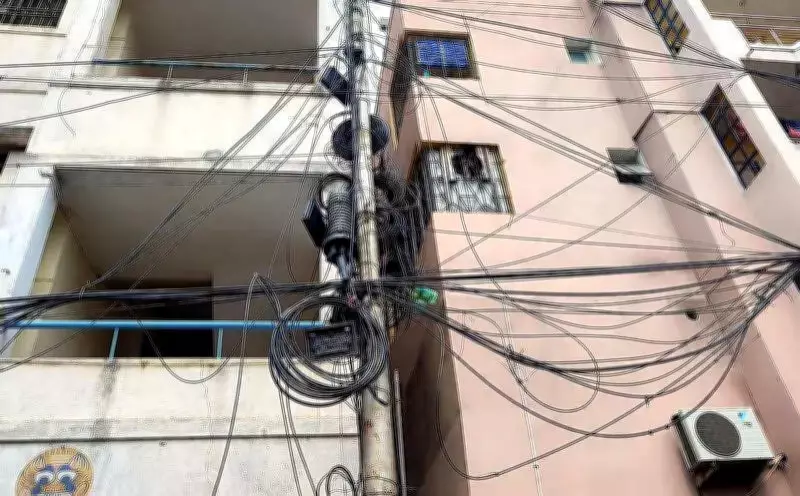
Pune Civic Body Enforces Strict Underground Cable Policy
The Pune Municipal Corporation (PMC) has officially finalized its comprehensive underground first policy, introducing stringent new standard operating procedures for all cable laying activities within the city. This landmark decision imposes a total prohibition on overhead cables across all major roadways, with permissions for hanging wires to be granted only under the most exceptional and rare circumstances.
Decluttering the Skyline and Enhancing Safety
The primary objective of this policy is to declutter Pune's urban skyline while simultaneously streamlining and modernizing the city's essential infrastructure network. PMC Commissioner Naval Kishore Ram emphasized the corporation's commitment on Wednesday, stating, "We will create a safer, more aesthetic, and technically sound utility network by enforcing these regulations and mandating that all new infrastructure follows the underground model."
To ensure technical compliance, the policy makes advanced installation techniques like micro-trenching and horizontal directional drilling mandatory for all new cable installations. Furthermore, the civic body plans to systematically map the entire municipal area into designated red and green zones to facilitate strict adherence and monitoring of the new underground mandate.

Crackdown on Unauthorized Overhead Networks
In a parallel enforcement action, the PMC launched a significant crackdown on unauthorized overhead cables this Wednesday. The drive successfully cleared approximately 12,000 running meters of illegal wiring in the Satara Road area alone. Civic officials highlighted that these overhead cables not only deface the city's appearance but also pose severe risks to public safety due to irregular and haphazard installation practices.
Recent municipal surveys have uncovered a staggering 3,600 kilometers of unauthorized cables crisscrossing within Pune's municipal limits. Activist Vijay Kumbhar of the Surajya Sangharsh Samiti pointed to deeper systemic issues, noting, "The proliferation of overhead cables has increased due to a nexus between cable operators, civic officials, and local politicians. Action must also be taken against the civic staff who are ignoring the spreading network of illegal cables."
Legal Ramifications and Public Response
The policy enforcement is backed by the Maharashtra Prevention of Defacement of Public Property Act, 1995. This legislation provides for punitive action against individuals or entities responsible for defacing public property, which explicitly includes the installation of illegal overhead cables. PMC officials clarified that anyone found guilty of such defacement—whether through unauthorized cables, posters, or banners—faces legal consequences including imprisonment for up to three months, a fine of up to Rs. 2,000, or both.
Officials further warned that broken or low-hanging wires could lead to serious accidents, injuries, or even fatalities. Consequently, operators responsible for laying such hazardous cables could face prosecution for criminal acts of negligence. While residents and civic activists have welcomed the new policy as a positive step, they unanimously stress that its success will hinge entirely on effective and consistent implementation on the ground.






