

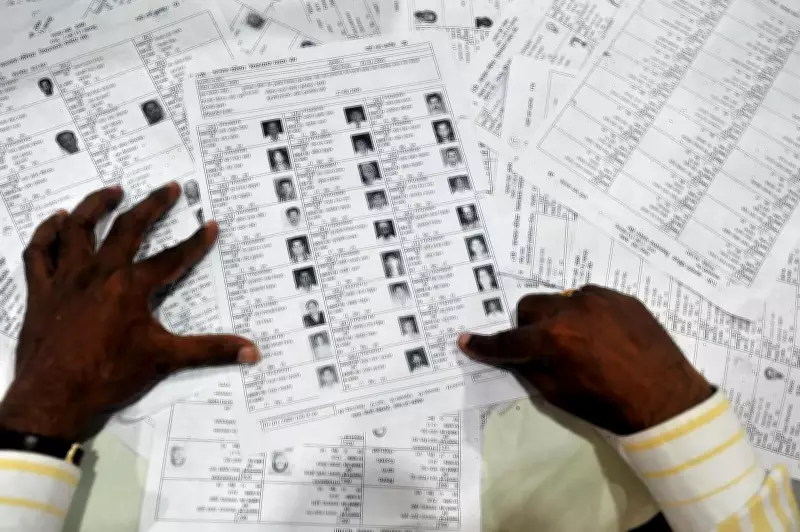
Pune: The district has mapped 54.1% of its electorate under the Election Commission of India’s ongoing Special Intensive Revision (SIR) exercise, with several key urban constituencies in Pune and Pimpri Chinchwad recording some of the lowest coverage levels in the district before intensive field verification begins later this month.
Data from the electors’ mapping report until Thursday shows that 49.15 lakh of Pune’s 90.86 lakh electors have been mapped so far, leaving more than 41.7 lakh voters yet to be covered. The district’s mapping remains significantly below Maharashtra’s average mapping rate of 74.6%.
The figures reveal a sharp urban-rural divide, district election officials said. While constituencies such as Baramati (78.1%), Maval (75.7%), Khed-Alandi (74.4%), Daund (73.9%), Ambegaon (70.2%) and Junnar (70.2%) have recorded substantial progress, several major urban segments continue to lag behind.

Hadapsar has mapped only 34.8% of its 6.51 lakh electors, the lowest in the district, followed by Chinchwad (35.5%), Kothrud (39%), Wadgaon Sheri (41.5%), Khadakwasla (43.5%), Pune Cantonment (43.6%), Purandar (44.5%), Parvati (46.4%) and Pimpri (47.6%).
Among Pune city’s central constituencies, Kasba Peth has achieved 60.1% mapping, Shivajinagar 55.3% and Bhosari 53.6% in Pimpri Chinchwad.
Pune district deputy election officer Minal Kalaskar said, “Duplicacy of voters due to registering at more than one place and not deleting their names at the time of shifting while migrating are among the key reasons why many districts are lagging behind in the SIR mapping.” She added that extensive migration, a growing city and large number of voters are challenges.
Election officials said the current phase is focused on elector mapping and verification of records. The next stage, involving intensive field verification by booth-level officers, is expected to gather pace from the end of June, with authorities likely to concentrate efforts on low-performing urban constituencies where substantial work remains.
Statewide, 7.31 crore of the state’s 9.80 crore electors have been mapped, translating into an overall progress rate of 74.6%. Among the districts, Mumbai Suburban has recorded the lowest mapping percentage at 52.8% with 78.3 lakh voters. Pune follows at 54.1%, behind Thane (56.5%) and Mumbai City (61.9%). Other urban districts have fared better, with Nagpur recording 69.2%, Nashik 73% and Chhatrapati Sambhajinagar 76.4%.
In contrast, several rural districts have already crossed the 90% mark. Hingoli leads the state with 92.4% mapping, followed by Sindhudurg (92%), Ratnagiri (91.2%) and Gadchiroli (91%). Buldhana and Amravati have also crossed the 90% threshold.
The mapping drive aims to update and verify electoral records ahead of the next phase of the SIR exercise. During a review meeting in Pune on Wednesday, Chief Electoral Officer S Chockalingam directed election officials to intensify public awareness efforts and engage with citizens, elected representatives, social organisations and volunteers to ensure wider participation in the revision process.
He said the electoral roll must be made more accurate, transparent and updated without causing inconvenience to citizens and reiterated that no eligible voter should be left out of the rolls under any circumstances.
Chockalingam also called for faster voter-list mapping, booth-wise micro-planning and deployment of additional manpower wherever required, while directing officials to ensure that names are deleted only after proper verification.
Under the SIR exercise, BLOs will conduct door-to-door visits between June 30 and July 29 to distribute and collect pre-printed enumeration forms. Voters’ details, including names, addresses and photographs, will be verified and updated wherever necessary, while entries categorised as absent, shifted, dead and duplicate will also be scrutinised.
Election authorities have appealed to voters to cooperate with BLOs during the verification drive and ensure that their details are correctly recorded, particularly in urban areas where migration, voter mobility and duplicate registrations continue to pose challenges.






