

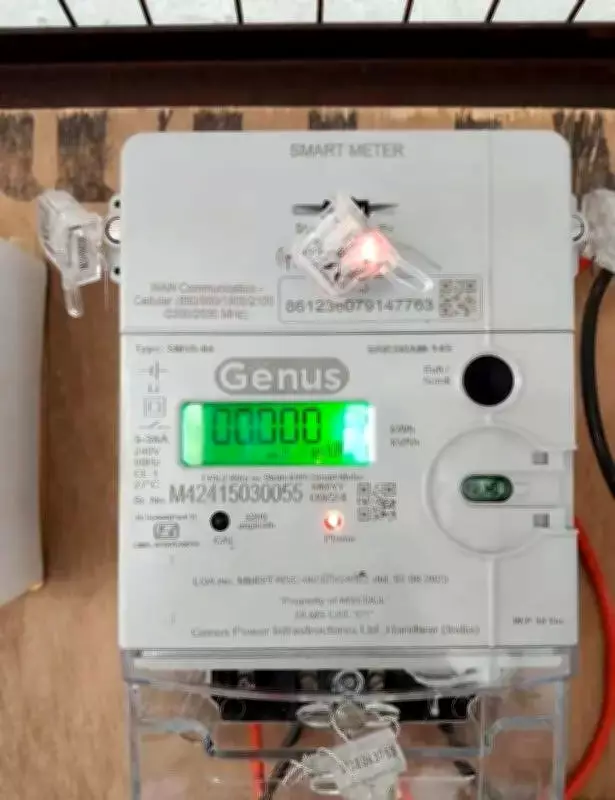
Pune Housing Societies Confront Skyrocketing Electricity Bills Following Smart Meter Rollout
Residents of multiple housing societies in Pune are facing unprecedented electricity bill shocks following the installation of Time of Day (ToD) smart meters by the Maharashtra State Electricity Distribution Company Ltd (MSEDCL). The situation has created widespread confusion and frustration among consumers who report bills increasing dramatically despite maintaining consistent power usage patterns.
Shocking Bill Increases Across Pune Societies
The chairman of Nikash Lawns society in Pashan, Girish Patil, expressed complete bewilderment when his society received an electricity bill of Rs29,000 for common area utilities in November 2025. This represented a staggering increase from their previous monthly average of less than Rs1,200 for operating just three tube lights and an automated main gate.
"Our consumption patterns remained exactly the same," Patil emphasized. "The only change was the installation of the new ToD smart meter in October last year."

Despite MSEDCL officials testing the meter and declaring it functional, the society continued to experience billing anomalies. After initial rectification, they received another unexpectedly high bill of Rs11,000 in February 2026, followed by a normal bill of around Rs1,000 in March, further deepening their confusion about the new billing system.
Widespread Consumer Complaints Across Multiple Areas
This pattern of billing irregularities extends far beyond a single society. Since MSEDCL began installing ToD meters in Pune in 2024, numerous consumers have reported similar experiences:
- In Kondhwa's Bhagyodaynagar locality, approximately 150-160 consumers across four societies have seen bills increase substantially
- Resident Munaf Hasan Shaikh reported monthly bills rising from Rs900 to Rs1,300 despite decreased overall consumption due to increased power cuts
- Residents in Bavdhan and Pimpri Chinchwad areas allege meters were replaced without proper consent or notification
Senior citizen Adolf Pais from Navkar Avenue society in Bavdhan shared his experience: "MSEDCL installed a new digital meter in February 2025, then replaced it with a smart meter less than a year later despite our objections. We received the same Rs1,000 bill for February even though we weren't home for 15 days."
Software engineer Vishal Prajapati from Hadapsar, who has had a smart meter since moving to his residence in January 2025, reported receiving bills exceeding Rs3,500 monthly despite having no air conditioner or heavy appliances. "Other residents with similar electronics get bills around Rs2,000," he noted, highlighting the inconsistency.
Official Perspective and Expert Analysis
Despite the flood of complaints, authorities and energy experts maintain that ToD meters offer significant benefits when properly understood and utilized.
Researcher Shweta Kulkarni from Prayas Energy Group explained: "The sudden bill increases following meter changes often result from faulty readings on old, worn-out meters operating below capacity. New meters increase accuracy and reduce tampering possibilities."
Kulkarni drew parallels to the transition from mechanical to digital meters in 2010-11, when similar concerns arose. "The new ToD meters help consumers analyze usage patterns and identify inefficient devices based on time-of-day consumption. However, awareness about their functioning remains limited."
Awareness Initiatives Show Positive Results
In Chikhali, residents who initially opposed smart meter installation in July last year have changed their stance following awareness sessions with MSEDCL in February 2026. Approximately 1,000 residents from five to eight societies had previously raised concerns about higher bills.
Resident Sanjivan Sangale reported: "After MSEDCL workshops on managing new tariffs, our bills normalized. We now monitor power consumption in real-time and plan appliance usage during daytime hours to benefit from reduced tariffs."

MSEDCL is now conducting awareness sessions across more areas to address consumer concerns and explain the benefits of smart meters. An MSEDCL official stated: "The current perception of inflated bills is largely an adjustment issue that smoothens over time. We're actively educating consumers about smart meter advantages."
Solar Power Integration and Future Benefits
MSEDCL officials explained how the system leverages solar power economics. Electricity generated through solar during daytime hours (9am to 5pm) is significantly cheaper than traditional thermal or hydro power.
- The discount rate was 80 paise per unit during specified daytime hours until March 2026
- This increased to 85 paise per unit from April 1, 2026, with potential future increases to Re1 per unit
- Consumers with smart meters collectively received Rs8.6 crore in discounts between July 2025 and January 2026
"These discounts are directly credited to monthly electricity bills," an official confirmed. "Consumers can maximize benefits by scheduling high-usage activities during solar hours."
Current Installation Status and Official Appeal
For Pune circle's 39.71 lakh consumers, MSEDCL has installed 9.84 lakh ToD meters to date, with installations continuing for meter replacements and new applications. The rollout began with MSEDCL establishments and employee quarters, followed by government offices and residences.
Sunil Kakade, Chief Engineer of MSEDCL Pune circle, addressed the concerns directly: "We've faced opposition from consumers who don't understand smart meter benefits. There's a misconception that bills increase with ToD meters, when in fact they provide higher accuracy. Citizens should seek clarification rather than believing social media rumors."
The utility continues to install smart meters free of cost and appeals for consumer cooperation during this transition period, emphasizing the long-term benefits of accurate billing and potential savings through strategic electricity usage.





