

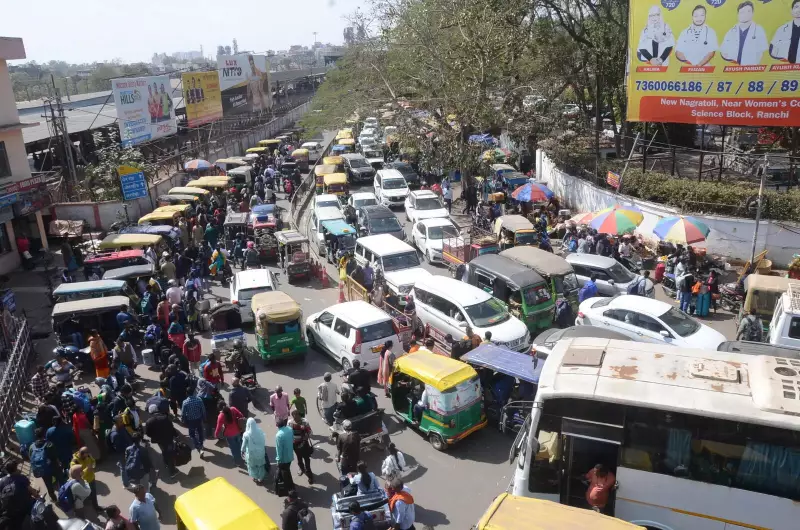
Just days after the Ranchi Municipal Corporation (RMC) cleared several key areas of the city, street vendors have returned to their previous spots, reigniting a persistent civic problem. This swift return underscores a cycle of temporary enforcement that leaves residents frustrated and questioning the effectiveness of the measures.
A Familiar Pattern of Eviction and Return
In the past week, RMC teams actively conducted anti-encroachment drives in areas including Patel Chowk, Naga Baba Khatal, and Doranda. These operations involved removing temporary structures and clearing spaces meant for pedestrians and vehicles. However, the impact was short-lived.
Footpaths and road margins in bustling localities like Lalpur, Kutchery Chowk, Daily Market, Station Road, and parts of Kanke are once again lined with makeshift stalls. These vendors sell a variety of goods, from fruits and vegetables to garments and snacks, reclaiming the spaces they were just removed from.

Residents Voice Frustration Over "Seasonal" Enforcement
Local residents and commuters express exhaustion with what they describe as a predictable and ineffective pattern. Dilip Kumar, a commuter near Lalpur Chowk, shared a common sentiment. He noted that after every drive, the area remains clear for merely a day or two before everything reverts to the original state. This forces pedestrians onto the roads and brings back routine traffic jams, especially during peak hours.
Ramesh Das, a shop owner in Kutchery Chowk, emphasized that the core issue is the lack of a proper system. While acknowledging the vendors' right to earn a livelihood, he pointed out that the current chaos renders footpaths unusable and causes vehicles to crawl as stalls spill onto the roads. The absence of designated vending zones is widely seen as a major factor worsening the problem.
The Vendor's Perspective: Need for Rehabilitation
The vendors themselves highlight a critical gap in the administration's approach. Ram Pravesh, a vegetable seller from Lalpur, explained the dilemma faced by many. He stated that while they are removed during the drives, no alternative location is provided to them. For a permanent solution to encroachment, he argues, the administration must focus on rehabilitation. Without a viable alternative, vendors feel compelled to return to their familiar, high-footfall spots to secure their daily earnings.
In an official statement, the civic body maintained that anti-encroachment drives are conducted regularly across different city parts to ensure smooth traffic flow and pedestrian safety. The RMC reiterated that repeated action would continue against illegal roadside encroachments and that vendors are being advised to operate only in permitted areas. However, the ground reality suggests a significant disconnect between enforcement actions and a lasting resolution to this urban challenge.






