

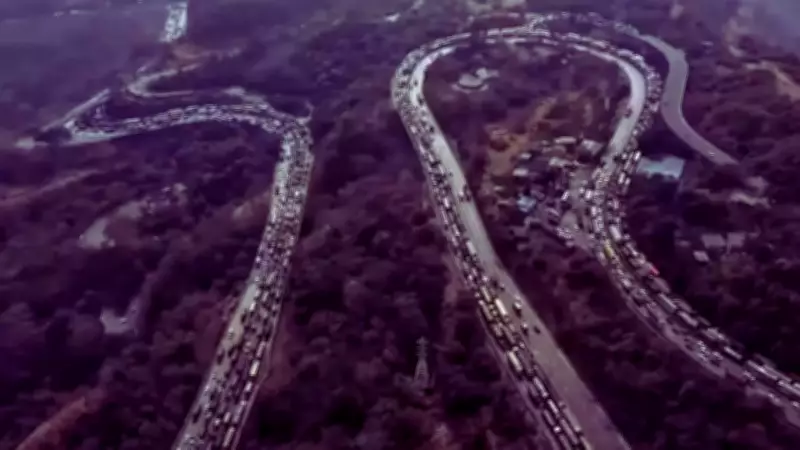
Major Toll Refund Announced for Mumbai-Pune Expressway Commuters After Gridlock
In a significant move addressing public grievances, Maharashtra State Road Development Corporation (MSRDC) officials announced on Saturday that approximately 1.2 lakh commuters will receive refunds totaling Rs 5.16 crore. This reimbursement covers tolls improperly collected during the extensive 32-hour traffic gridlock that paralyzed the Mumbai-Pune Expressway following a gas tanker accident on February 3.
Refund Process and Scope
The refunds will encompass toll charges from both the Mumbai-Pune Expressway and the Pune-Bengaluru highway. An MSRDC official confirmed to TOI that the agency has compiled data of commuters from whom toll was collected despite suspension orders issued after the gas tanker mishap near Khopoli. The refund amounts will be directly credited to the affected commuters' FASTag accounts in the coming week, providing a seamless reimbursement process.
Last week, MSRDC had publicly committed to returning toll money collected during the disruption on the Mumbai leg of the expressway, which lasted over a day. The corporation had requested detailed FASTag deduction data from its concessionaire, IRB Infrastructure, after toll collection was officially halted in response to the accident and resulting massive traffic jam.

Investigation and Accountability
The official elaborated that IRB was instructed to clarify whether toll collection continued despite explicit suspension directives. "It is believed that until the barriers were fully opened, there might have been transactions where funds were deducted from FASTag accounts," he explained. MSRDC specifically sought data on the number of commuters whose money was deducted after the suspension order, ensuring targeted refunds for those affected.
Background of the Gridlock and Public Outcry
The February 3 accident caused severe congestion, stranding thousands of commuters on the expressway without access to basic amenities. Travelers, including vulnerable groups such as senior citizens, women, and children, faced considerable hardships, with many forced to cancel their plans entirely. Public anger intensified when reports surfaced that toll collection persisted at the Khalapur plaza for some duration during the crisis.
Opposition politicians, notably MNS chief Raj Thackeray, demanded that MSRDC, IRB, and traffic police ensure refunds to all affected commuters. The incident also exposed critical deficiencies in expressway infrastructure, including inadequate amenities and poor emergency response mechanisms. Critics accused authorities of prioritizing toll collection over commuter welfare during the emergency.
Legal Actions and Policy Demands
Activist organizations, including Akhil Bharatiya Grahak Panchayat and All India Consumer Rights Organisation, have escalated the matter by issuing legal notices to MSRDC and disaster management officials. These notices seek accountability for the failure to provide essential facilities to commuters during the 32-hour standstill. Representative Vijay Sagar told TOI that the notices aim to establish responsibility and recommend the formulation of clear policies and concrete measures to prevent similar hardships in the future, not only on the Mumbai-Pune Expressway but on highways across India.
The mishap has sparked broader discussions about highway management and commuter rights, highlighting the need for improved emergency protocols and transparent toll collection practices during disruptions.






