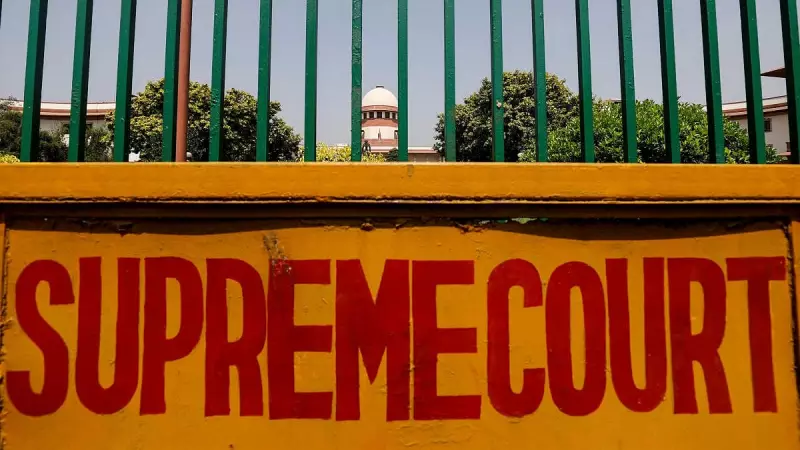
In a significant move to combat air pollution in the National Capital Region (NCR), the Supreme Court has granted explicit permission to the Delhi government to act against older vehicles that fail to meet modern emission standards.
Court's Directive on Vehicular Pollution
The apex court has reinforced its stance by directing the transport departments of all states within the NCR to enforce a ban on the plying of old vehicles on roads. The order specifically targets diesel vehicles that are more than 10 years old and petrol vehicles that are more than 15 years old. This directive aligns with previous orders issued by the National Green Tribunal (NGT), aiming to curb one of the major sources of toxic air in the densely populated region.
What the Ruling Means for Delhi
With this authorization, the Delhi government's transport department can now proceed with stricter enforcement measures against non-compliant vehicles. The focus is on phasing out vehicles that are not Bharat Stage-IV (BS-IV) compliant, as these older models emit significantly higher levels of pollutants compared to newer BS-VI standards. The court's decision, reported on 17 December 2025, provides the necessary legal backing for ground-level action, which may include fines, impounding, or restricting the movement of such vehicles.

Broader Impact and Future Steps
The Supreme Court's intervention highlights the persistent and severe air quality crisis in Delhi and its surrounding areas. By upholding the NGT's order, the court has emphasized a uniform approach across the NCR states, which is crucial as air pollution does not respect political boundaries. The enforcement of this ban is expected to:
- Reduce the concentration of harmful particulate matter (PM2.5 and PM10) from vehicle exhausts.
- Accelerate the transition towards a cleaner, more modern vehicle fleet in the capital.
- Set a precedent for other Indian cities grappling with similar pollution challenges.
While the move is a positive step for public health and environmental sustainability, its success will depend on rigorous implementation and the availability of affordable public transport alternatives for citizens affected by the phase-out.