

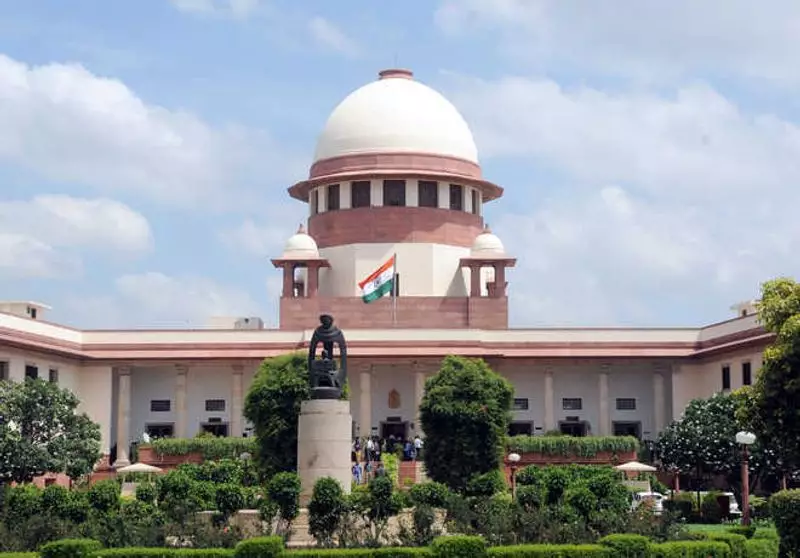
In a significant move to combat the capital's persistent air pollution crisis, the Supreme Court has granted permission to the Delhi government to take decisive action against older, more polluting vehicles plying on the city's roads.
Supreme Court's Green Signal for Cleaner Air
The apex court, in an order passed on a Monday, has allowed the Delhi administration to proceed with the deregistration and eventual scrapping of vehicles that do not comply with the BS-IV emission standards. This decision empowers authorities to target petrol vehicles older than 15 years and diesel vehicles that have crossed the 10-year mark, which are currently banned from operating in Delhi but have remained registered.
The bench, comprising Justice Abhay S Oka and Justice Ujjal Bhuyan, clarified that the deregistration process should not be applied to vehicles that are already involved in court proceedings. This directive came during the hearing of a plea filed by the Delhi government, which sought the court's nod to cancel the registration certificates of these ageing, polluting vehicles.

Implementing the Scrappage Policy
The court's approval paves the way for the full implementation of the Delhi government's own vehicle scrappage policy. The policy, which was notified earlier, had been stalled pending this judicial clearance. With the Supreme Court's order, the transport department can now move forward with the systematic process of removing these vehicles from the official records and sending them to authorized scrapping facilities.
This action is expected to have a tangible impact on the city's air quality. Old vehicles, particularly diesel ones, are known to emit disproportionately high levels of particulate matter (PM) and nitrogen oxides (NOx), which are major contributors to Delhi's toxic smog, especially during the winter months.
The Road Ahead for Delhi's Transport
The deregistration of non-BS-IV compliant vehicles is a critical step in a larger battle. It signals a stricter enforcement of existing bans and aligns with the national push for cleaner mobility. The move is likely to accelerate the transition towards newer, cleaner vehicles that meet modern emission norms, thereby reducing the overall vehicular pollution load.
For vehicle owners, this means that petrol vehicles registered before 2007 and diesel vehicles registered before 2013 now face mandatory scrapping if found operating in Delhi. The government is expected to outline the detailed procedure for owners to voluntarily surrender their old vehicles for scrapping and possibly avail of any incentives under the policy.
Environmental experts and clean air advocates have welcomed the Supreme Court's decision, viewing it as a necessary enforcement action that complements other measures like the promotion of electric vehicles and the expansion of public transport. The ruling underscores the judiciary's active role in addressing the public health emergency posed by air pollution in the National Capital Region.






