

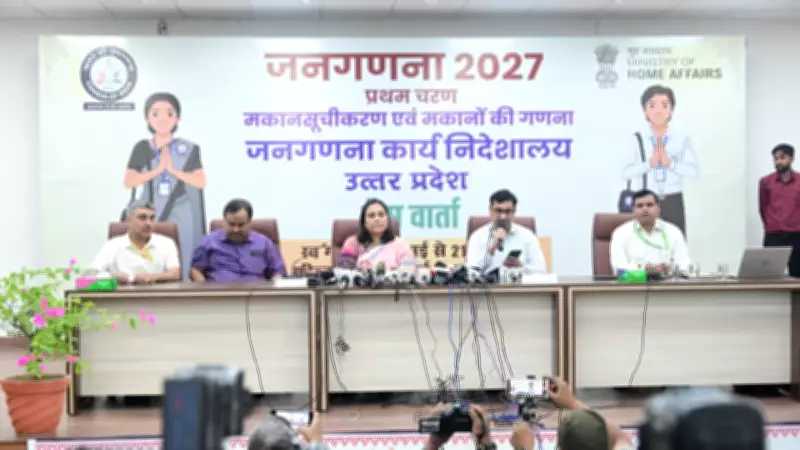
LUCKNOW: Uttar Pradesh will carry out the Census 2027 exercise in two distinct phases, beginning in May 2026, with one of the largest administrative deployments in the country involving nearly five lakh enumerators and supervisors. The scale of the operation will span across 75 districts, more than 1.04 lakh villages, and 783 towns.
Phase One: Houselisting and Housing Data
According to Sheetal Verma, Director of Census Operations and Director of Citizen Registration in Uttar Pradesh, the first phase will focus on houselisting and housing data collection. This phase is scheduled between May 22 and June 20, 2026. During this period, enumerators will visit every household to gather information on housing conditions, availability of amenities, and household assets through a structured questionnaire, the 2007 batch IAS officer said.
Digital Innovation: Self-Enumeration Portal
Ahead of the field exercise, the Census of India has introduced a major digital innovation. For the first time, residents will have the option to self-enumerate through an online portal between May 7 and May 21, 2026. Households can submit their details digitally and generate a unique ID, which will later be verified by enumerators during door-to-door visits. While this facility is optional, we expect it to improve efficiency and reduce data duplication, said Verma.

Phase Two: Population Enumeration
The second phase of the census will be conducted in February 2027 and will involve population enumeration at the individual level. This phase will capture detailed demographic data, including age, gender, education, migration, and economic activity. Notably, Census 2027 will also include caste enumeration at the individual level for the first time since 1931, marking a significant shift in the scope of data collection, added the director.
Logistical Scale and Structure
The scale of operations in Uttar Pradesh underscores the logistical complexity of the exercise. The state has been divided into approximately 3.9 lakh houselisting blocks, each covering an average population of 700 to 800 people to ensure complete coverage without duplication. These blocks form the primary units of data collection and are digitally mapped to maintain accuracy, added Verma.
To execute the census, a multi-tier administrative structure has been put in place, ranging from state-level officials to field-level staff. Nearly five lakh personnel, including enumerators and supervisors, will be deployed across rural and urban areas. Each supervisor will oversee a group of enumerators to maintain data quality and ensure adherence to defined boundaries.
Reference Date and Boundary Freeze
The reference date for Census 2027 has been fixed as 00:00 hours of March 1, 2027, meaning all population data will correspond to that specific point in time. Administrative boundaries have already been frozen as of December 31, 2025, to ensure consistency during enumeration.
Importance for Policy Planning
Officials emphasised that the census is not merely a headcount exercise but a comprehensive data collection process that forms the backbone of policy planning. It provides granular data at the village, town, and ward level on housing, literacy, economic activity, migration, and social composition, which is crucial for targeted development programmes.






