

Uttar Pradesh Government Mandates Expiry Date Stamping on Eggs from April 1
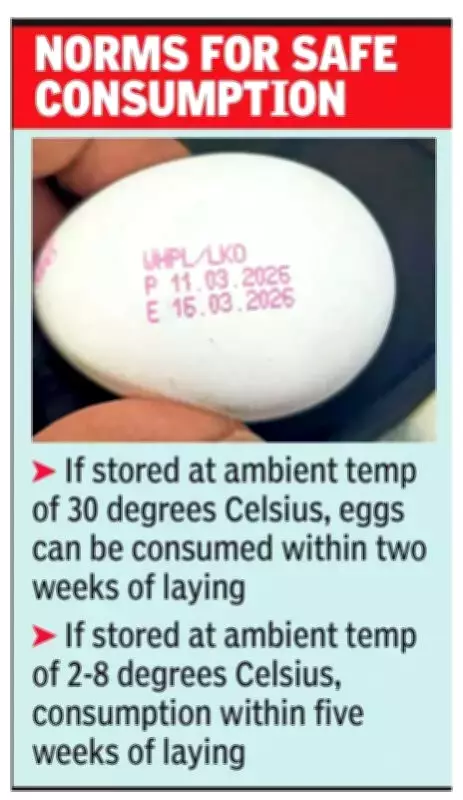
The Uttar Pradesh government has announced a significant new regulation aimed at enhancing food safety for consumers across the state. Starting April 1, it will become mandatory for all egg producers to stamp each egg with its expiry date, providing clear information on freshness and safe consumption periods.
New Regulations for Egg Producers and Traders
Officials from the animal husbandry department have confirmed that every egg sold in Uttar Pradesh must now carry two crucial dates: the date the egg was laid and the date by which it remains safe to consume. This initiative comes as a response to widespread non-compliance with existing food safety rules that has put consumers at risk.
Mukesh Meshram, Additional Chief Secretary of Animal Husbandry and Dairy, emphasized that the Food Safety and Drug Administration (FSDA) has established clear guidelines for egg storage that many traders have been ignoring. "Consumers were completely unaware of these violations, which unscrupulous traders and shopkeepers were exploiting for profit," Meshram stated.

Strict Penalties for Non-Compliance
The government has outlined severe consequences for those who fail to adhere to the new regulations. Traders and farmers who do not implement the date stamping system will face two possible outcomes: their entire produce may be destroyed, or the eggs will be stamped with "not fit for human consumption" markings, rendering them unsellable.
Meshram clarified that the printing process adds minimal cost to production. "The stamping on each egg will cost just 3-4 paisa, and there will be no significant price escalation for consumers. Many farms have already begun implementing this printing work in anticipation of the deadline," he explained.
Enhanced Monitoring and Enforcement
The FSDA and animal husbandry department will conduct regular inspections at farms throughout Uttar Pradesh, with particular focus on eggs entering the state from other regions. "We previously encountered issues with traders from outside Uttar Pradesh, and they too have been instructed to follow this rule. If they fail to comply, their eggs will either be destroyed or marked as unsafe," Meshram warned.
Action against violators will be taken according to established FSDA regulations, ensuring consistent enforcement across the state.
Scientific Basis for Egg Safety Standards
The new regulations are grounded in scientific food safety principles. An egg remains safe for consumption within two weeks of laying when stored at ambient temperatures around 30 degrees Celsius. When properly refrigerated at 2-8 degrees Celsius, this safe consumption window extends to five weeks.
FSDA rules specifically prohibit storing eggs in cold storage facilities alongside vegetables, as these products require different temperature conditions. Currently, Uttar Pradesh has only two dedicated egg cold storage facilities—one in Agra and another in Jhansi.
Addressing Storage Violations
Despite these clear guidelines, traders—particularly those from other states—have been storing eggs inappropriately in cold storage facilities across Uttar Pradesh. The government has already conducted raids to prevent this dangerous practice and plans additional enforcement actions in the coming days.
Future Infrastructure Development
Looking ahead, the Uttar Pradesh government is working to increase the state's egg production capacity while simultaneously expanding storage infrastructure. "We are developing plans to provide proper storage facilities to traders that meet all safety requirements," Meshram revealed, indicating a comprehensive approach to food safety that extends beyond mere regulation.
This landmark initiative represents one of the most significant consumer protection measures in Uttar Pradesh's food safety history, potentially setting a precedent for other states to follow in ensuring transparency and safety in egg distribution and sales.






