Uttarakhand to Deploy Advanced Weather Tech for Disaster Management
The Uttarakhand State Disaster Management Authority (USDMA) is embarking on a significant initiative to bolster the state's early warning capabilities. Over the coming months, modern, technology-driven equipment will be installed across various districts to enhance weather forecasting accuracy and mitigate the loss of life and property during natural calamities.
Automated Weather Stations Across Ten Districts
Vinod Kumar Suman, Secretary of the Disaster Management and Rehabilitation Department, announced that the Defence Geoinformatics Research Establishment (DGRE) will set up Automated Weather Stations (AWS) in ten districts. These stations are designed to deliver precise, real-time meteorological data, facilitating timely alerts for impending weather threats.
The distribution of AWS units is as follows:

- Uttarkashi and Tehri districts will receive the highest allocation, with eight AWS each.
- Pauri district will be equipped with seven stations.
- Dehradun will have five AWS installations.
- Rudraprayag and Bageshwar districts will each get three stations.
- Almora will be outfitted with two AWS units.
- Nainital and Haridwar will each receive one station.
Doppler Radars for Enhanced Monitoring
In a complementary move, the India Meteorological Department (IMD) will install Doppler radars in Dehradun, Almora, Champawat, and Chamoli. These advanced systems will significantly improve real-time surveillance of rainfall patterns, cloud movements, and overall weather activity, providing a more comprehensive monitoring framework.
District administrations have been instructed to promptly identify suitable land parcels and submit formal proposals to the government to expedite the installation of both AWS and Doppler radar systems.
Strengthening Administrative and Communication Frameworks
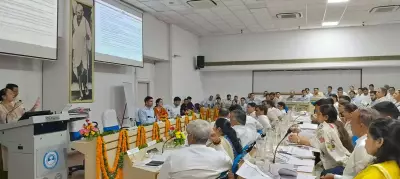
During a recent review meeting with officials from all thirteen districts, Secretary Suman emphasized the importance of transparency and efficient monitoring. He directed district authorities to upload all expenditure details related to disaster management onto the National Disaster Management Authority's (NDMA) National Disaster Management Information System (NDMIS) portal.
Additionally, Suman mandated that all disaster management equipment across districts be GIS-mapped. Departments are required to upload inventory details to the India Disaster Resource Network (IDRN) portal before the monsoon season to ensure a faster and more coordinated emergency response.
To further enhance communication capabilities, Disaster Dedicated Radio Network (DDRN) systems will be established in all districts, modeled after the successful implementation in Rudraprayag. Moreover, Tehsil-level Emergency Operation Centres (TEOCs) will be created, similar to existing state and district centres, to enable quicker local responses and improved coordination during disaster events.
Addressing Pending Relief and Documentation Issues
The review meeting also addressed critical humanitarian concerns. Secretary Suman examined cases involving financial assistance and the issuance of death certificates for Nepali-origin individuals who perished in disasters in 2025. He directed district officials to compile and submit detailed reports to facilitate necessary actions at the central government level.
Furthermore, officials were instructed to accelerate the processing of pending cases where missing persons need to be declared deceased. This measure aims to ensure that affected families receive relief and support without unnecessary delays, providing crucial aid during times of distress.