

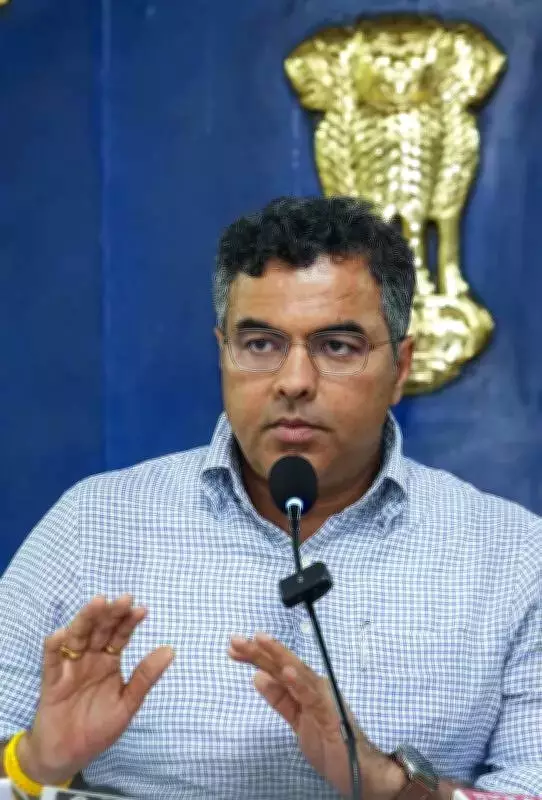
Minister Verma Directs DPCC to Intensify Yamuna Pollution Monitoring
In a decisive move to combat pollution in the Yamuna River, Minister Parvesh Verma on Wednesday issued strict directives to officials of the Delhi Pollution Control Committee (DPCC). He ordered them to intensify monitoring efforts and take immediate action against any source found polluting the river, including illegal discharge points.
"Any source found contributing to pollution will face strict action. Our focus is clear. There will be no compromise," Verma emphasized, underscoring the government's unwavering commitment to environmental protection.
Joint Inspection and Review of Treatment Plants
This directive follows a joint inspection conducted by Verma on Tuesday at Kalindi Kunj and nearby areas, prompted by the recent appearance of froth on the river surface. During the inspection, he reviewed the performance and upgrade status of sewage treatment plants (STPs) and common effluent treatment plants (CETPs).

Officials from the Delhi Jal Board (DJB) and other relevant departments were instructed to accelerate work and ensure that all treatment systems operate at full capacity. "We cannot afford half measures. Treatment systems must function efficiently, and accountability will be fixed at every level," Verma stated, highlighting the need for robust operational standards.
Enhancement of Sewage Treatment Capacity
Officials reported that the total STP capacity is being significantly enhanced to 1500 million gallons per day (MGD). In addition to this expansion, several key initiatives are underway:
- Development of decentralised sewage treatment plants (DSTPs) in critical areas to localise treatment efforts.
- Implementation of in-situ treatment at major drains to address pollution at source points.
- Strengthening and expansion of the sewage network to improve the collection, conveyance, and treatment of wastewater.
Inter-State Coordination for Effective Management
Recognising the importance of collaborative efforts, Minister Verma also held discussions with Uttar Pradesh irrigation officials. These talks focused on flow management and structural aspects of the barrage, aiming to foster better inter-state coordination. "This is a shared responsibility. Stronger coordination and technical inputs will help us address such situations more effectively," he remarked, stressing the need for a unified approach to river management.
Verma reiterated the cultural and practical significance of the Yamuna to Delhi's residents, stating, "The Yamuna is deeply connected to the lives of people in Delhi. We remain fully committed to improving its condition." This comprehensive strategy underscores a proactive stance in tackling pollution through enhanced infrastructure, strict enforcement, and regional cooperation.






