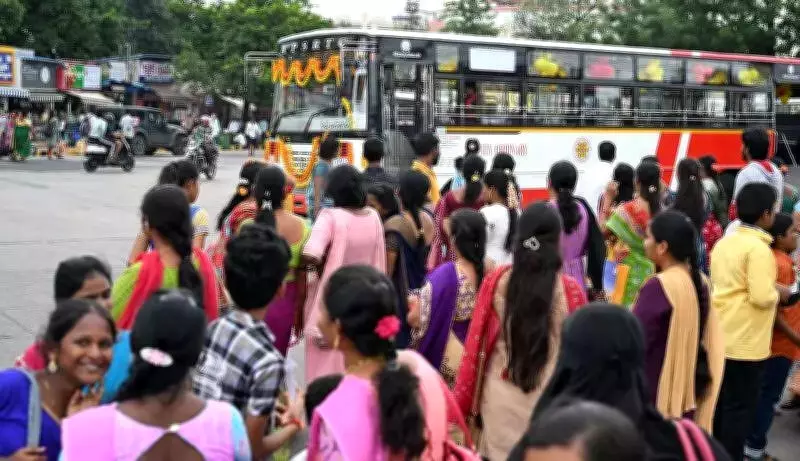
Stree Shakti Scheme Drives Passenger Surge, But Hits RTC Fuel Efficiency in Vijayawada
The Stree Shakti scheme, launched to provide free bus travel for women in Andhra Pradesh, has been hailed by RTC authorities as a significant initiative for financial stability through government reimbursement. However, the Andhra Pradesh State Road Transport Corporation (APSRTC) in Vijayawada has recorded a noticeable decline in fuel efficiency across its fleet, directly linked to the increased ridership.
Fuel Efficiency Dips Below Targets Amid Rising Passenger Numbers
According to official data, the average kilometres per litre (KMPL) for the RTC fleet stood at 5.16 up to December 2025, falling short of the target of 5.27 KMPL set for the 2025–26 financial year. This represents a negative growth of -0.11 KMPL against the annual goal. In comparison, the previous financial year (2024–25) recorded 5.19 KMPL up to December, indicating a -0.03 KMPL decline this year.
An RTC official, speaking on condition of anonymity, explained the trend: "The sudden drop in fuel efficiency can be attributed to the surge in passengers, especially women, on RTC buses across five categories of services since free travel was implemented on August 15, 2025. As passenger load increases, coupled with extended waiting times for boarding and alighting at bus stations and stops, fuel efficiency is impacted, raising the diesel burden on the corporation."

Monthly Data Reveals Steady Decline Post-Scheme Launch
A detailed monthly analysis shows:
- From April to July 2025, average KMPL hovered between 5.23 and 5.22.
- In August 2025, following the scheme's introduction, it dipped to 5.14 KMPL.
- By October and November 2025, it further decreased to 5.08 KMPL.
This pattern underscores the correlation between the Stree Shakti scheme and reduced fuel performance, as buses operate with higher occupancy and more frequent stops.
Breakdown Rates Improve Despite Fuel Challenges
Despite the fuel efficiency setbacks, the RTC has managed to achieve better outcomes in reducing breakdown rates within its fleet. The official added: "RTC overcame breakdown problems by ensuring adequate supply of accessories and spares at garages and workshops. This enabled periodic maintenance and timely replacement of bus parts, directly contributing to fewer bus breakdowns."
This improvement highlights the corporation's proactive measures in fleet management, even as it navigates the operational challenges posed by increased passenger volumes.
The situation in Vijayawada reflects a broader dynamic where social welfare initiatives like the Stree Shakti scheme bring tangible benefits to women's mobility and financial security, yet necessitate adjustments in public transport logistics to maintain efficiency and sustainability.