

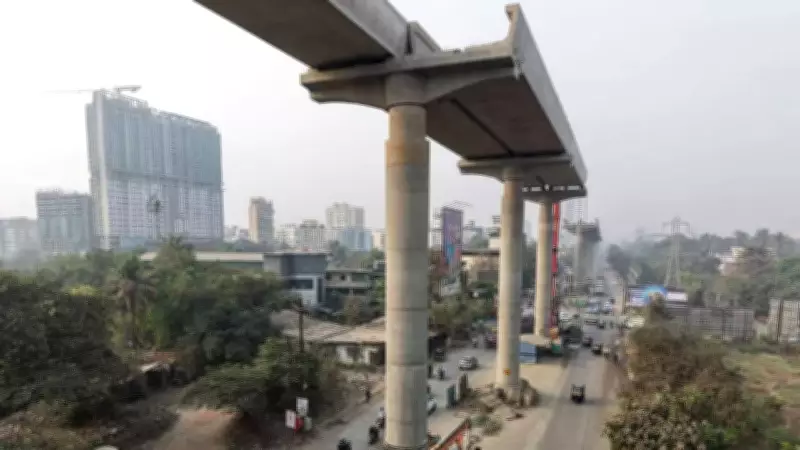
Maharashtra Government Unveils Major Infrastructure Funding for Kalyan-Badlapur Corridor
In response to rapid urban expansion and escalating commuter stress across Thane district's satellite cities, the Maharashtra state government has announced a substantial financial allocation to accelerate critical metro and road infrastructure projects in the vital Kalyan–Badlapur corridor. This strategic investment, channeled through the Mumbai Metropolitan Region Development Authority (MMRDA), is specifically designed to alleviate congestion on overcrowded suburban rail routes while significantly strengthening regional connectivity networks.
Budget Announcement and Funding Details
The significant provision of ₹4,897.19 crore was formally announced during the presentation of MMRDA's 2026–27 budget at a high-level meeting chaired by Deputy Chief Minister Eknath Shinde. Government officials emphasized that this substantial allocation directly addresses the urgent need for long-term mobility solutions as relentless population growth, industrial development, and increasing vehicular traffic continue to place immense strain on the region's existing infrastructure framework.
According to detailed budget documents, a major portion of these funds will be dedicated to expanding the metro network across the corridor. The comprehensive funding breakdown includes:

- Metro Line 5 (Thane–Bhiwandi–Kalyan): ₹1,309.30 crore
- Metro Line 5A (Durgadi–Ulhasnagar extension): ₹183.35 crore
- Metro Line 12 (Kalyan–Taloja): ₹1,054.54 crore
- Metro Line 14 (Kanjurmarg–Badlapur): ₹500 crore
- Kalyan–Shilphata Junction to Bhiwandi flyover: ₹150 crore
- Kalyan Ring Road: ₹600 crore
- Vitthalwadi–Kalyan Ahilyanagar elevated road: ₹200 crore
- Airoli–Katai Freeway (Phase 3): ₹900 crore
Key Projects and Expected Impact
Among the most significant announcements is the ₹500 crore sanction for Metro Line 14 (Kanjurmarg–Badlapur). This crucial corridor is anticipated to provide substantial relief to hundreds of thousands of daily railway commuters who currently travel to Mumbai and Thane from Badlapur, Ambernath, Kalyan, and Dombivli, many of whom endure dangerously packed suburban trains during peak hours. Transport planners and urban development experts believe this line will emerge as a vital alternative transportation mode, offering faster, safer, and more comfortable connectivity across the entire Badlapur to Thane and Mumbai belt.
Similarly, the Metro Line 5A extension up to Ulhasnagar is being viewed as another potential game-changer for regional mobility. By linking Ulhasnagar more directly with Metro Line 5 (Kalyan-Bhiwandi-Thane) and further connecting to Mumbai's extensive metro network, this project is expected to dramatically improve last-mile connectivity, reduce chronic road congestion, and strengthen integration with the broader metropolitan transportation system.
Political Response and Expert Analysis
MP Dr. Shrikant Shinde, who represents the Kalyan Lok Sabha constituency, warmly welcomed the allocation and credited sustained follow-up efforts with the state government and MMRDA for securing these critical funds. He expressed gratitude to Chief Minister Devendra Fadnavis and Deputy Chief Minister Eknath Shinde, noting that multiple projects are already underway and that this fresh funding infusion will help ensure their timely completion according to established schedules.
Urban development specialists and infrastructure analysts say the combined metro and road investments represent a pivotal step towards structured urbanisation in the Kalyan–Badlapur belt. Once fully operational, these comprehensive projects are expected to fundamentally reshape commuting patterns, stimulate enhanced economic activity, and significantly improve quality of life for residents across one of the fastest-growing suburban corridors within the expansive Mumbai Metropolitan Region.

Public Reception and Community Benefits
Local citizens and community representatives have broadly welcomed the state government's decisive infrastructure decisions, expressing optimism that these developments will bring major relief to commuters who currently depend almost exclusively on the overburdened rail network for daily transportation. Many residents currently risk their safety traveling in dangerously packed trains, and they anticipate that the new metro lines and improved road infrastructure will provide safer, more reliable alternatives for their daily travel needs across the region.





