Government Plans AI-Driven Overhaul of Rural Drainage Systems
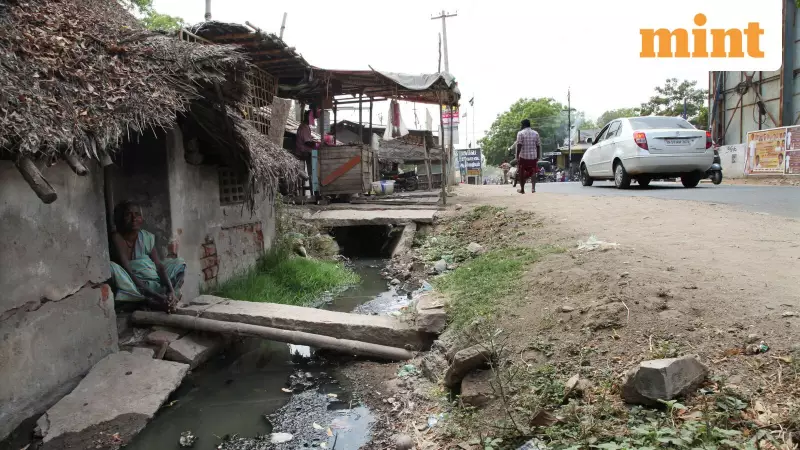
The Centre has announced an ambitious initiative to deploy artificial intelligence technology for improving rural drainage infrastructure across India. This strategic move aims to address long-standing civic issues including waterlogging, waste management, and inadequate drainage systems that have plagued rural communities for decades.
Pilot Project in Varanasi Villages Shows Promise
According to Panchayati Raj secretary Vivek Bharadwaj, a successful pilot project has already been conducted in seven villages within Uttar Pradesh's Varanasi district. These villages, which fall under Prime Minister Narendra Modi's Lok Sabha constituency, include:
- Poore
- Kuruhua
- Jayapur
- Nagepur
- Bariyar
- Parampur
- Khakhariya
The pilot demonstrated how AI can effectively analyze multiple data sources to create scientific drainage plans at the village level.

Comprehensive Data Integration for Scientific Planning
The initiative leverages sophisticated data integration from multiple sources:
- Satellite imagery for comprehensive area mapping
- Drone-based point-cloud data collected under the SVAMITVA scheme
- Orthomosaic imagery for accurate surface-feature interpretation
- Hydrometeorological datasets including rainfall patterns
- Local survey data for ground validation
Karnataka-based startup Deepmatrix Pvt. Ltd conducted the proof-of-concept, processing high-resolution geospatial data to create accurate ground-level maps showing natural rainwater movement patterns.
Addressing Critical Health and Infrastructure Challenges
The initiative comes at a crucial time when communicable and water-borne diseases continue to represent a significant portion of India's disease burden, particularly in rural areas. Government data reveals stark disparities:
- 86.43% of 587,045 villages have some form of drainage system
- Communicable diseases account for 40-45% of total disease burden in rural areas
- Urban areas show only 25-30% burden from similar diseases
- Approximately 37.7 million Indians suffer from waterborne diseases annually
"In urban areas, lifestyle-related diseases such as diabetes and cardiovascular conditions are more common, whereas rural regions continue to be more affected by malnutrition and infectious diseases," noted Dr. Suranjit Chatterjee, senior consultant at Apollo Hospitals.
Technical Approach and Future Expansion
The AI-based analysis integrates multiple factors to create effective drainage solutions:
- Road network mapping to determine drain alignments
- Soil type and land use analysis for runoff estimation
- Historical rainfall data assessment
- Waterlogging hotspot identification
- Integrated roadside drainage planning with appropriate drain sizes
Kaustubh Tripathi, co-founder and CTO of Deepmatrix, explained: "An AI-based study was carried out for the seven villages to propose improved drainage networks along village roads, with the aim of reducing waterlogging during the monsoon."
Broader Implications and National Rollout
The government plans to eventually extend this initiative to cover 255,000 gram panchayats nationwide. This expansion aims to achieve multiple objectives:
- Improved planning efficiency for rural infrastructure
- Reduced response times for drainage issues
- Better utilization of allocated funds
- Enhanced convergence between various government schemes including SBM-G, MGNREGA, and Jal Jeevan Mission
Vijay Kuzur, a social activist from Jharkhand, emphasized: "A proper drainage system is vital for villages as it prevents waterlogging and protects homes, roads, and farmlands from damage. Efficient drainage helps prevent the spread of waterborne diseases."
The initiative represents a significant shift from traditional infrastructure approaches that often prioritized physical targets over technical soundness, resulting in improper designs and inadequate slopes that have compromised rural drainage effectiveness for years.