Andhra Pradesh Government Implements Two-Phase Water Regulation for KC Canal Ayacut
The Andhra Pradesh state government has announced a strategic decision to regulate irrigation water supply to the KC canal ayacut in two distinct phases. This move aims to support standing Rabi crops while addressing critical infrastructure developments and water management challenges.
Background: Central Water Commission's Decision and Storage Constraints
This regulatory action comes in response to the Central Water Commission's decision to install new crest gates at the Tungabhadra dam. Consequently, the reservoir's storage capacity has been capped at 80 TMC (thousand million cubic feet) for the 2025-26 period. This limitation has rendered it impossible to provide water for a second crop through the KC canal under normal allocation frameworks.
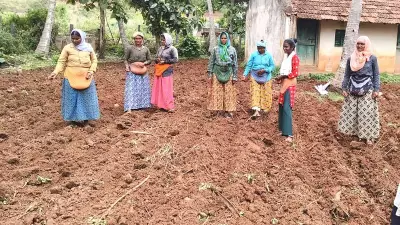
The state administration has explicitly communicated that supplying water for the second Rabi crop is not feasible in the ayacut area spanning 0-150 km along the KC canal. Despite this directive, farmers in the constituencies of Nandikotkur, Panyam, and Srisailam have already sown Rabi crops across nearly 40,000 acres of land.

Humanitarian Intervention: Two-Phase Water Release
With the welfare of these farmers as a priority, local MLAs — Gitta Jayasurya, Gauru Charitha Reddy, and Budda Rajasekhar Reddy — appealed to Chief Minister N Chandrababu Naidu and Water Resources Minister Nimmala Ramanaidu. They urged the release of water from Malyala and Machumarri sources to meet urgent irrigation needs.
Following a comprehensive assessment of current storage levels in the Srisailam and Nagarjunasagar reservoirs, and adhering strictly to the quota allocated by the Krishna River Management Board (KRMB), the government evaluated the water required to save standing crops and fulfill drinking water needs until July.
Despite low overall reserves, authorities have decided to release water in two spells, each lasting 20 days, on humanitarian grounds. This measure is designed to prevent total crop loss for farmers who have already sown under the KC canal, demonstrating a balanced approach to resource management.
Implementation and Oversight Measures
To ensure the effective and judicious use of the released water, district collectors, along with officials from the revenue, police, and water resources departments, have been instructed to maintain strict supervision. This coordinated effort aims to optimize water distribution and minimize wastage during the critical irrigation periods.
Water Resources Minister Nimmala Ramanaidu emphasized, "This decision reflects our government's priority to balance limited water availability with farmer support amid ongoing infrastructure works at Tungabhadra and inter-state water-sharing constraints." This statement underscores the administration's commitment to navigating complex hydrological and agricultural challenges.
Broader Implications and Future Considerations
The government's directive also includes raising awareness among farmers about the water regulation measures. District collectors and public representatives are tasked with communicating the rationale behind these decisions, fostering understanding and cooperation within the agricultural community.
This situation highlights the intricate balance between infrastructure development, water resource management, and agricultural sustainability. As the state progresses with the Tungabhadra dam upgrades, ongoing assessments and adaptive strategies will be essential to support farming communities while ensuring long-term water security.