

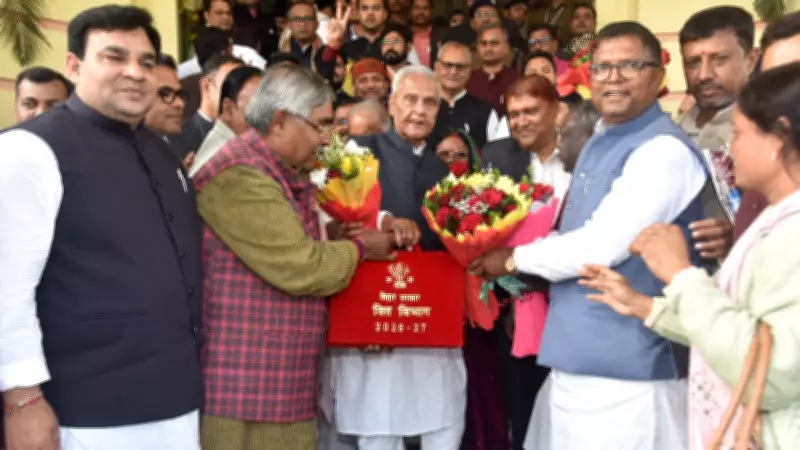
Bihar has unveiled a massive Rs 3.48 lakh crore budget for the fiscal year 2026-27, marking a significant increase of nearly 10 percent from the previous year. Presented by Finance Minister Bijendra Yadav at the State Assembly in Patna, this budget reflects the Nitish Kumar government's strategic priorities, emphasizing rural development, free electricity, women's empowerment, and industrial growth. However, it also involves reallocations that impact several infrastructure and water-related sectors, highlighting both gains and losses in state spending.
Key Highlights and Major Allocations
The budget introduces several flagship initiatives aimed at boosting social welfare and economic development. A standout feature is the provision of 125 units of free electricity for all households, a move expected to alleviate energy costs for millions. Additionally, the Mukhyamantri Mahila Rozgar Scheme offers Rs 2 lakh to women, targeting employment generation and financial independence. These measures are part of a broader goal to create 1 crore jobs, underscoring the government's focus on inclusive growth.
Education Sector Maintains Dominance
Education continues to receive the lion's share of the budget, with an allocation of Rs 60,205 crore, accounting for 17.32 percent of total spending. Although this represents a slight decrease of Rs 760 crore from the previous year, the newly separated Higher Education Department receives Rs 8,012 crore. Combined, the education and higher education sectors total Rs 68,217 crore, up by Rs 7,252 crore, and their share rises from 19.24 percent to 19.63 percent, reinforcing the state's commitment to academic advancement.

Significant Increases in Priority Areas
Several departments have seen substantial budget hikes, aligning with the government's focus areas:
- Pensions: Allocated Rs 35,170 crore, up by Rs 1,781 crore, reflecting increased beneficiary numbers and a raise in monthly amounts from Rs 400 to Rs 1,100.
- Rural Development: Receives Rs 23,701 crore, an increase of Rs 7,608 crore, with its share rising from 5.08 percent to 6.82 percent, partly to support the Mahila Rozgar Scheme.
- Energy: Gets Rs 18,737 crore, up by Rs 5,253 crore, to fund the free electricity scheme and sector advancements.
- Urban Development and Housing: Allocated Rs 15,237 crore, an increase of Rs 3,255 crore, likely to bolster smart city projects.
- Industries: Receives Rs 3,338 crore, up by Rs 1,371 crore, as noted by Finance Department Secretary Anand Kishor, who emphasized the budget's focus on industrialisation.
Other Notable Gains
Additional increases include the home department under Deputy Chief Minister Samrat Chaudhary, which rises by Rs 2,302 crore to Rs 20,133 crore, and revenue and land reforms under Deputy Chief Minister Vijay Sinha, up by Rs 234 crore to Rs 2,190 crore. Sectors like SC and ST welfare, dairy, fisheries, youth employment, environment, civil aviation, sugar industries, minorities welfare, and prohibition also see modest boosts.
Departments Facing Budget Cuts
Despite overall growth, several areas experience reductions, potentially affecting key services:

- Water Resources: Down by Rs 324 crore to Rs 7,127 crore, a concerning cut given Bihar's annual flood challenges.
- Building Construction: Reduced by Rs 741 crore to Rs 6,154 crore, with its share dropping from 2.18 percent to 1.77 percent, which may slow infrastructure projects.
- Disaster Management: Decreased by Rs 168 crore to Rs 4,799 crore, impacting flood control measures.
- Social Welfare: Down by Rs 305 crore to Rs 8,470 crore, despite its role in managing social security pensions.
- Tourism, Labour Resources, and Agriculture: Also face cuts, with reductions in panchayati raj, public health engineering, science and technology, and other sectors.
Analysis of Reallocations
In total, 30 departments have recorded budget increases, while 25 have seen decreases. Some sectors, like road construction, show a marginal share dip despite an absolute gain of Rs 598 crore to Rs 7,405 crore. This indicates a strategic reallocation of funds towards priority areas such as rural development, energy, urban infrastructure, and industrial growth, while administrative and less emphasized sectors face reductions. The budget's design aims to balance immediate social welfare needs with long-term economic goals, though the cuts in water and disaster management raise questions about resilience against natural calamities.
Overall, Bihar's Rs 3.48 lakh crore budget for 2026-27 sets a clear direction for the state's development, with winners in education, rural initiatives, and energy, but losers in infrastructure and water-related sectors. The Nitish Kumar government's emphasis on women's employment and free electricity highlights its populist approach, while the reallocations reflect a nuanced fiscal strategy to drive growth amidst challenges.





