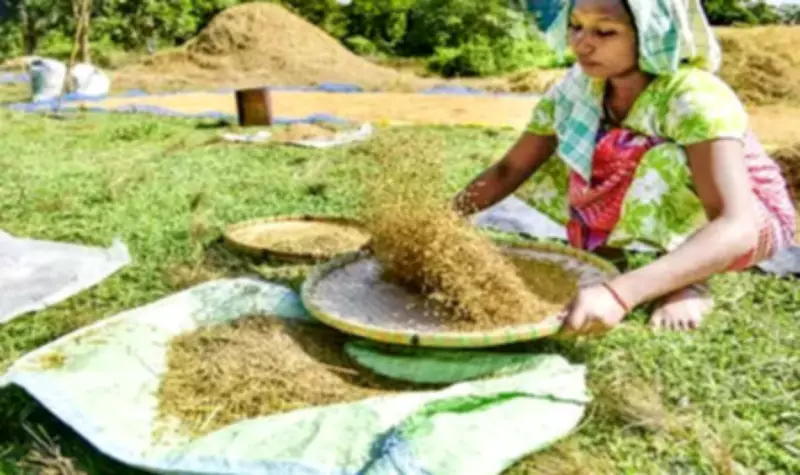
Bihar Paddy Procurement Grinds to Halt Amid Fortified Rice Kernels Shortage
In a significant setback to agricultural operations in Bihar, the state's paddy procurement process has been severely disrupted by an acute shortage of fortified rice kernels (FRK), according to RJD Member of Parliament from Buxar, Sudhakar Singh. The crisis has effectively halted weighing and purchasing activities at Primary Agricultural Credit Societies (PACS) and other procurement centers across multiple districts, leaving countless farmers stranded with their harvested produce and deepening their financial distress.
Understanding the Fortified Rice Kernels (FRK) Mechanism
Singh explained that FRK represents a crucial multi-vitamin nutrient mixture that is blended with rice during the milling process at a standardized ratio of one kilogram per quintal of rice. This blending process is mandatory for the rice to receive the official FRK certification tag, which has become a requirement under the central government's rice fortification policy aimed at enhancing nutritional value.
Supply Chain Breakdown and Administrative Failures
The RJD parliamentarian detailed how the procurement system has collapsed due to a critical supply chain failure. The government had assigned a specific company based in Uttar Pradesh with the responsibility of supplying FRK to the State Food Corporation (SFC), which would then distribute the fortified kernels to millers across Bihar. However, this designated company has abruptly stopped supplying FRK to the SFC, causing the entire procurement chain to disintegrate.

Singh described this situation as a clear case of administrative negligence and a joint failure of both the central and state governments. While the Centre implemented the mandatory FRK requirement through its rice fortification policy, it failed to ensure adequate and timely supply of the essential kernels. Simultaneously, the Bihar state government did not establish proper arrangements to guarantee uninterrupted FRK availability during the crucial procurement period.
Farmer Distress and Financial Implications
The consequences of this supply disruption have been devastating for farmers across Bihar. With procurement centers halting operations once their limited FRK stocks are exhausted, farmers are being forced to transport their produce from one center to another in search of functioning facilities. This movement significantly increases transportation costs, further exacerbating their financial difficulties during what should be their primary earning season.
"Who will compensate farmers for the losses they are suffering until supplies are restored?" Singh questioned, highlighting the immediate economic impact on agricultural communities.
Procurement Targets and Government Response
According to Singh's assessment, Bihar's paddy procurement target for the current season was established at 36.85 lakh tonnes, but only 18.76 lakh tonnes have been procured so far. The MP alleged that the target was deliberately kept low and that even basic arrangements to achieve this reduced goal were not properly implemented by authorities.
In response to the growing crisis, Singh has taken multiple actions:
- Written directly to Prime Minister Narendra Modi, highlighting the severity of the situation and requesting immediate intervention
- Met with the Secretary of the Ministry of Consumer Affairs, Food and Public Distribution on Tuesday
- Received assurances that FRK supplies would be restored by February 15
Broader Implications for Agricultural Policy
This procurement crisis raises serious questions about the implementation of nutritional enhancement policies in India's agricultural sector. While the intention behind rice fortification is commendable for addressing malnutrition, the execution has revealed significant gaps in supply chain management and inter-governmental coordination.
The situation in Bihar serves as a cautionary example of how well-intentioned policies can create unintended consequences when proper implementation mechanisms are not established. It underscores the need for:

- Better supply chain resilience for essential agricultural inputs
- Improved coordination between central and state governments
- Contingency planning for policy implementation
- More responsive mechanisms to address farmer distress during policy transitions
As farmers continue to wait with their produce, the resolution of this FRK shortage will determine not only their immediate financial recovery but also the credibility of agricultural procurement systems in one of India's most important farming states.