

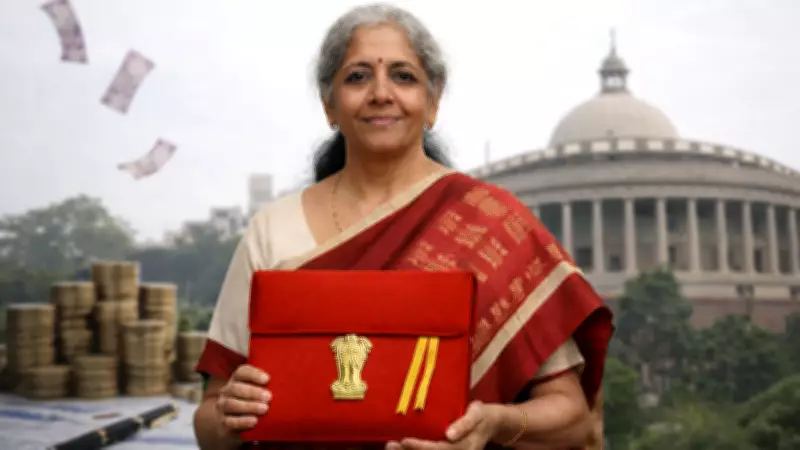
Union Budget 2026-27 Set for February 1 Presentation by FM Sitharaman
In a significant announcement, the Union Budget for the fiscal year 2026-27 is scheduled to be presented on February 1, which falls on a Sunday. Finance Minister Nirmala Sitharaman will table this crucial financial document in Parliament, marking her ninth consecutive budget presentation. This event represents a historic moment as it will be the first time in recent memory that the Union Budget is unveiled on a Sunday.
Budget Session and Economic Significance
The Budget Session of Parliament commenced on January 28 and is slated to continue until April 2. The Union Budget serves as the Centre's comprehensive statement of accounts, detailing economic priorities, fiscal strategies, and policy directions. It provides vital signals regarding sectors that may receive enhanced support and those that could face increased scrutiny in the coming year.
Beyond mere numbers, the budget charts the Union government's economic roadmap and outlines its approach to optimal resource allocation. This document offers a broader blueprint for India's growth trajectory, influencing various aspects of the nation's development.

Historical Context and Evolution of Budget Dates
The tradition of presenting the budget on February 1 is relatively recent. Until 2017, the budget was traditionally presented on the last working day of February. The change was implemented under the Modi government, with then-finance minister Arun Jaitley advancing the date to ensure faster implementation of budgetary measures within the same financial year.
In contrast, the first budget of independent India was presented on November 26, 1947, by the country's inaugural finance minister, R K Shanmukham Chetty. This historical perspective highlights how budget presentation practices have evolved over time to meet contemporary administrative needs.
Pre-Budget Buzz and Government Vision
The anticipation surrounding the budget gained momentum with the commencement of the Parliament session and President Droupadi Murmu's address to the joint sitting of both Houses. In her speech, the President outlined the government's vision of a "Viksit Bharat" and highlighted achievements across multiple domains:
- Social justice initiatives
- Economic growth milestonesInfrastructure development projects
- National security enhancements
- Global engagement efforts
A day later, Prime Minister Narendra Modi, in his pre-budget remarks, emphasized India's growth momentum. He described the nation as self-confident and characterized it as a "ray of hope for the world today."
Understanding the Union Budget: Components and Importance
The Union Budget represents a yearly record of the government's accounts and financial transactions for a fiscal year, which in India runs from April 1 to March 31. Prepared by the finance ministry, this document sets forth the government's financial roadmap and policy priorities for the upcoming year.
What Constitutes the Union Budget?
The Union Budget details how much money the government expects to earn and how it plans to allocate those resources during the financial year. Defined under Article 112 of the Constitution, this document—also known as the annual financial statement—requires the government to present estimated income and expenditure.
Revenue Budget Explained
The Revenue Budget addresses the government's regular income and daily expenses. Key elements include:
- Revenue receipts: Money earned through taxes (income tax, GST) and non-tax income (fees, interest)
- Revenue expenditure: Spending on salaries, pensions, subsidies, welfare schemes, and public services
A revenue deficit occurs when the government's revenue spending exceeds its revenue income.
Capital Budget Overview
The Capital Budget focuses on the government's long-term finances, including:

- Capital receipts: Loans from the public, foreign governments, and institutions like the Reserve Bank of India
- Capital expenditure: Investments in long-term development projects such as roads, railways, hospitals, schools, and infrastructure
A fiscal deficit arises when the government's total expenditure surpasses its total income.
Why the Union Budget Matters
The Union Budget plays a pivotal role in the government's functioning, presented annually to set the country's economic direction. It demonstrates government priorities and financial goals while explaining resource allocation across critical sectors:
- Healthcare and public health initiatives
- Education and skill development programs
- Defense and national security provisions
- Infrastructure development projects
- Social welfare schemes
The budget signals which industries may receive support and which might face tighter controls, assisting businesses and investors in planning their strategic decisions.
Budget Impact on Citizens and Special Circumstances
The budget directly influences citizens' daily lives through announcements regarding:
- Changes in income tax slabs and rates
- Tax deductions and calculation methods
- Household financial planning considerations
These decisions affect savings, spending patterns, and overall financial planning for the coming year.
During election years when Lok Sabha elections occur, the government presents an Interim Budget instead of a full budget. Following elections, the new government presents the complete Union Budget, as witnessed during the 2024-25 financial year due to Lok Sabha elections.
The Budget Process: Constitutional Framework
The budget process formally begins with the President's involvement. Under Article 87 of the Constitution, the President addresses a joint sitting of the Lok Sabha and Rajya Sabha at the start of the Budget Session. This address outlines government policies, achievements, and plans for the year ahead. Although delivered by the President, the speech is prepared by the Union Cabinet.
Following the President's address, a Motion of Thanks is moved in both Houses of Parliament. Members debate the speech and vote on it, formally approving the government's roadmap. With the new Parliament building, this joint sitting now occurs in the new chamber.
The President plays a crucial constitutional role in the budget process. As head of the executive and legislature, the President's recommendation is required for Money Bills, including the Union Budget. This makes presidential approval an essential step before budget presentation in Parliament.





