The Union Budget for the fiscal year 2026-27 has been unveiled, charting a comprehensive financial roadmap with a grand total expenditure of Rs 53.47 lakh crore. This substantial outlay is strategically divided into revenue expenditure amounting to Rs 41.25 lakh crore and capital expenditure of Rs 12.22 lakh crore, reflecting the government's dual focus on immediate operational needs and long-term infrastructure development.
A Yuva Shakti-Driven Budget with Three-Fold Kartavya Framework
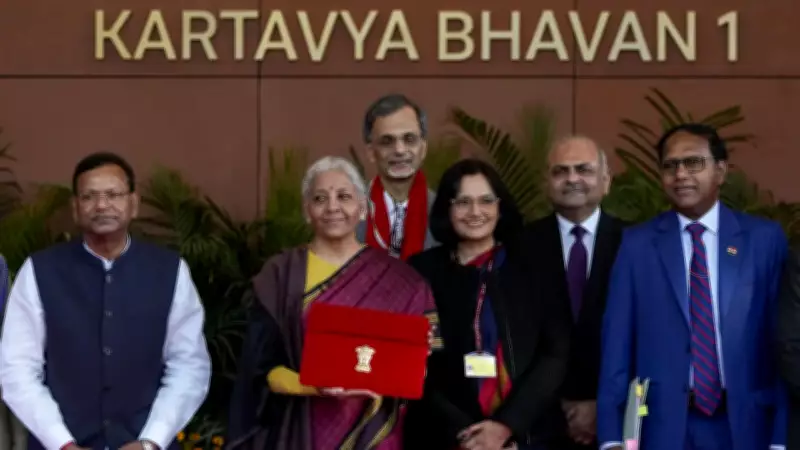
Presenting what she termed a Yuva Shakti–driven Budget, Finance Minister Nirmala Sitharaman emphasized that the allocations embody the government's sankalp to prioritize the poor, underprivileged, and disadvantaged sections of society. The budget reinforces the administration's commitment to growth, inclusion, and long-term capacity building under its three-fold kartavya framework, aiming to sustain economic momentum while strengthening India's resilience in a challenging global environment.
Ministry-Wise Allocation Breakdown
Here is a detailed look at how the budgetary pie has been distributed among key ministries:

- Finance Ministry: Receiving the largest share of Rs 19.72 lakh crore, including Rs 17.22 lakh crore for revenue expenditure and Rs 2.50 lakh crore for capital expenditure. This allocation covers interest payments, subsidies, and transfers to states, with the fiscal deficit pegged at 4.3% of GDP for 2026-27.
- Defence Ministry: Allocated Rs 7.85 lakh crore, comprising Rs 5.54 lakh crore in revenue expenditure and Rs 2.31 lakh crore in capital outlay. This underscores the focus on military modernisation, operational preparedness, pensions, and indigenisation under Aatmanirbhar Bharat.
- Home Affairs Ministry: Granted Rs 2.55 lakh crore to support central armed police forces, internal security, border management, disaster response, and policing infrastructure modernisation.
- Agriculture and Farmers Welfare Ministry: Allocated Rs 1.40 lakh crore for farmer income enhancement, agri-tech initiatives like Bharat-VISTAAR, crop diversification, and rural livelihoods.
- Consumer Affairs, Food and Public Distribution Ministry: With Rs 2.40 lakh crore, it remains a major social-sector spender, supporting food subsidies and the public distribution system.
- Rural Development Ministry: Receives Rs 1.97 lakh crore for flagship schemes including rural housing and livelihood programmes.
- Jal Shakti Ministry: Allocated Rs 94,80 crore for drinking water supply, sanitation, and irrigation projects.
- Education Ministry: Granted Rs 1.39 lakh crore, largely for revenue expenditure on schools, higher education, research, and initiatives like girls' hostels and STEM education.
- Health and Family Welfare Ministry: Receives Rs 1.07 lakh crore to bolster healthcare delivery systems and public health infrastructure.
- Road Transport and Highways Ministry: Allocated Rs 3.10 lakh crore, with a capital expenditure push for highways and logistics efficiency.
- Railways Ministry: Granted Rs 2.81 lakh crore for network expansion, station redevelopment, and modernisation.
- Housing and Urban Affairs Ministry: Receives Rs 85,522 crore for urban transport, housing, sanitation, and city infrastructure.
- Chemicals and Fertilisers Ministry: Allocated Rs 1.77 lakh crore, largely for fertiliser subsidies.
Focus on Energy, Technology, and Social Equity
The budget also highlights allocations for critical sectors driving India's future growth:

- Power and Renewable Energy: The Ministry of Power gets Rs 29,996 crore, while the Ministry of New and Renewable Energy receives Rs 32,914 crore to support energy security and clean power transition.
- Electronics and Information Technology: Allocated Rs 21,632 crore for digital public infrastructure, electronics manufacturing, and technology-driven governance.
- Commerce and Industry: Receives Rs 17,843 crore to align with export promotion, industrial growth, and manufacturing support.
In a continued emphasis on social equity and inclusion, targeted allocations have been made to ministries working with vulnerable groups:
- Women and Child Development Ministry: Rs 28,183 crore for nutrition, maternal and child welfare, and women's empowerment.
- Tribal Affairs Ministry: Rs 15,421 crore to strengthen education, livelihoods, and welfare initiatives for tribal communities.
- Social Justice and Empowerment Ministry: Rs 15,357 crore for various empowerment programmes.
- Youth Affairs and Sports Ministry: Rs 4,479 crore, and the Ministry of Skill Development and Entrepreneurship receives Rs 9,885 crore to support skilling, employability, and youth-focused programmes.
This budget, while facing criticism from some quarters like West Bengal Chief Minister Mamata Banerjee who termed it a Humpty Dumpty budget with nothing for the common man, aims to balance fiscal prudence with developmental aspirations. It sets the stage for discussions on income tax slabs, cost implications for consumers, and the broader economic trajectory for the coming year.