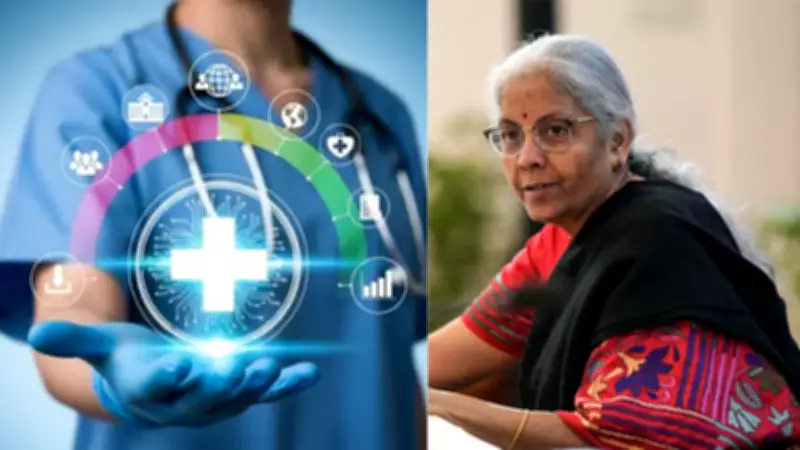
Finance Minister Nirmala Sitharaman, while presenting the Union Budget for the fiscal year 2026–27 on Sunday, unveiled significant initiatives aimed at strengthening India's healthcare and pharmaceutical sectors. The budget announcements included a major biopharma push and substantial expansion of traditional medicine infrastructure to meet growing global demand.
Biopharma Shakti: A Rs 10,000 Crore Boost
To bolster India's position as a global biopharma hub, the Budget proposed Biopharma Shakti, a new initiative with an outlay of Rs 10,000 crore over five years. This ambitious program is designed to boost research, manufacturing, and innovation in the biotechnology and pharmaceutical sectors, positioning India as a key player in the global healthcare market.
Strengthening Ayurveda and Traditional Medicine
The Budget also announced comprehensive plans to strengthen institutions for allied health professionals, with particular focus on traditional medicine systems. Sitharaman specifically proposed:

- Setting up three new All India Institutes of Ayurveda
- Upgrading Ayush pharmacies and drug testing laboratories
- Enhancing availability of skilled professionals in traditional medicine
- Upgrading the WHO Global Traditional Medicine Centre in Jamnagar
Sitharaman emphasized that these measures are crucial for meeting the growing global demand for traditional medicine and establishing India's leadership in this domain.
Healthcare Spending Trends
Healthcare allocations under the Department of Health and Family Welfare and the Department of Health Research have shown a gradual increase over the past five years:
- Rs 80,694 crore in FY21
- Rs 84,471 crore in FY22
- Rs 75,731 crore in FY23
- Rs 83,149 crore in FY24
- Revised estimate of Rs 89,974 crore in FY25
- Budget estimate of Rs 99,859 crore for FY26
Budget Context and Historical Significance
Finance Minister Nirmala Sitharaman presented her ninth consecutive Union Budget, becoming the first finance minister in India to achieve this milestone. This was also the first Union Budget presented on a Sunday, marking a departure from traditional scheduling.
The Economic Survey tabled ahead of the Budget projected India's economic growth at 6.8–7.2 per cent in FY27, providing the broader macroeconomic context for social sector spending and healthcare investments.
Public Health Advocacy and Challenges
Public health advocates have previously pointed out that Union government health spending declined in the post-Covid period as a share of GDP and as a proportion of total government expenditure. A network of over 350 organizations and individuals had demanded that the health budget be at least doubled, noting that public health spending stood at around 1.15 per cent of GDP—well below the 2.5 per cent target set under the National Health Policy.
The Budget 2026-27 initiatives represent a significant step toward addressing these concerns while simultaneously positioning India as a global leader in both modern biopharmaceuticals and traditional medicine systems.