

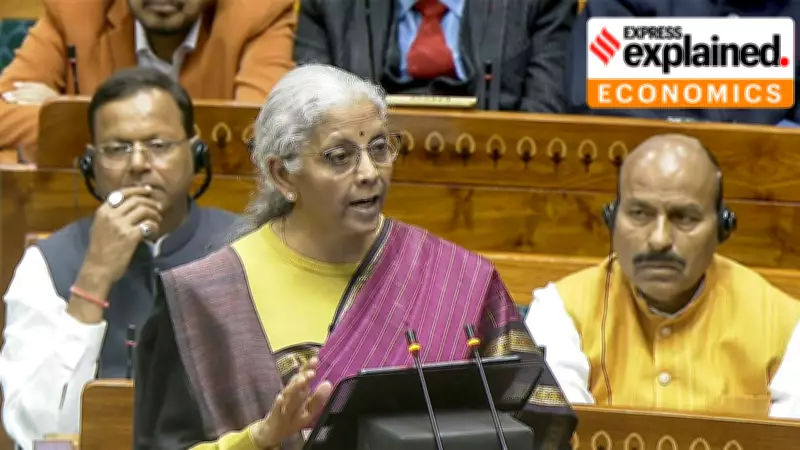
Union Budget 2026 Introduces Transformative Biopharma SHAKTI Initiative
Finance Minister Nirmala Sitharaman has unveiled a groundbreaking healthcare initiative as part of the Union Budget 2026, positioning India for leadership in advanced pharmaceutical manufacturing. The Biopharma SHAKTI scheme represents a strategic investment in the nation's healthcare future with significant implications for both domestic health outcomes and global pharmaceutical markets.
Comprehensive Strategy for Healthcare Advancement
The newly announced Biopharma SHAKTI (Strategy for Healthcare Advancement through Knowledge, Technology and Innovation) scheme carries an impressive outlay of ₹10,000 crores to be implemented over the next five years. This substantial financial commitment underscores the government's recognition of India's evolving healthcare challenges and opportunities in the biopharmaceutical sector.
Minister Sitharaman emphasized the changing disease landscape during her budget speech, noting that "India's disease burden is shifting toward non-communicable diseases like diabetes, cancer, and autoimmune disorders." She highlighted that biological medicines represent a crucial pathway to achieving both longevity and quality of life at affordable costs for Indian citizens.

Focus on Advanced Biological Medicines
The scheme specifically targets the development of India's capacity in producing complex biological medications, which include:
- Biologics: Complex medicines derived from living organisms or their components such as proteins and genes
- Biosimilars: Highly similar but not identical versions of existing biological drugs
These advanced medications are essential for treating severe conditions including various cancers, autoimmune diseases (such as arthritis, inflammatory bowel disease, and psoriasis), and genetic disorders. Their production requires sophisticated purification, processing, and manufacturing capabilities that the scheme aims to develop domestically.
Infrastructure and Regulatory Enhancements
The Biopharma SHAKTI initiative includes comprehensive infrastructure development components:
- Establishment of three new National Institutes of Pharmaceutical Education and Research (NIPER)
- Upgradation of seven existing institutes to create a specialized biopharma-focused network
- Creation of a network exceeding 1,000 accredited clinical trial sites across India
- Strengthening of the Central Drugs Standard Control Organisation with dedicated scientific review cadres and specialists to meet global standards
Addressing India's Healthcare Challenges
The scheme responds directly to India's significant non-communicable disease burden. According to United Nations data, NCDs account for approximately 63% of all deaths in India, with cardiovascular diseases responsible for 27% of overall mortality, followed by chronic respiratory diseases (11%), cancers (9%), and diabetes (3%).
Strategic Response to Global Trade Dynamics
The timing of this initiative is particularly significant given recent international trade developments. Following US President Donald Trump's October 2025 announcement of 100% tariffs on imports of branded and patented pharmaceutical drugs, India's pharmaceutical sector faces new challenges. These tariffs emerged from a Section 232 investigation examining whether pharmaceutical imports endanger national security.
While India has largely avoided immediate impact due to the exclusion of generic drugs and existing US manufacturing facilities of Indian companies, the uncertainty has already affected trade. Indian pharmaceutical exports to the US declined by 23.7% year-over-year in October 2025, though they recovered to show 9.8% growth the following month.

With potential tariff increases reaching up to 250%, the Biopharma SHAKTI scheme represents a strategic pivot toward higher-value biological and biosimilar medicines that would help protect India's pharmaceutical sector from drug-specific tariffs while elevating the country's status from "pharmacy of the world" to a global hub for complex biological medicine manufacturing.
India's Pharmaceutical Sector Context
India's pharmaceutical industry represents the third-largest globally, meeting approximately 20% of worldwide demand for generic medicines. The sector exported products to 191 countries in FY25, with over 50% of exports directed toward highly regulated markets including the United States and Europe.
Key achievements of India's pharmaceutical sector include:
- Global leadership in low-cost vaccine supply, providing the majority of the world's DPT, BCG, and measles vaccines
- Annual turnover reaching ₹4.72 lakh crore in FY25
- Export growth at a 7% compound annual growth rate over the last decade (FY15 to FY25)
- Expansion into sophisticated medical devices including MRI and CT scanners, linear accelerators, cardiac stents, and ventilators exported to 187 countries
The Biopharma SHAKTI scheme builds upon this strong foundation while addressing emerging challenges and opportunities in the global healthcare landscape. By focusing on advanced biological medicines, India aims to secure its pharmaceutical future while improving healthcare outcomes for its citizens and strengthening its position in international markets.





