

Union Budget 2026-27 Delivers Major Boost to Gujarat's Dairy Cooperative Sector
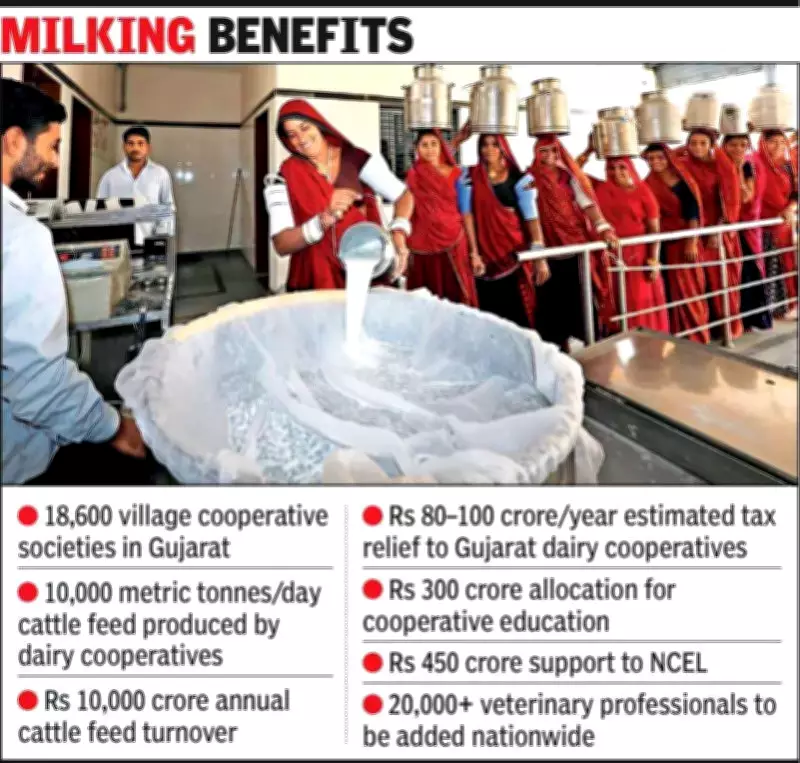
The Union Budget for the fiscal year 2026-27 has delivered a substantial boost to Gujarat's dairy cooperative sector, introducing key measures aimed at enhancing operational efficiency and financial viability. These initiatives are set to directly benefit over 18,600 village cooperative societies across the state, improving farmer payouts and strengthening milk logistics infrastructure.
Tax Deductions Extended to Cattle Feed and Cotton Seed
A significant relief measure in the budget is the extension of income-tax deductions to cattle feed and cotton seed produced by members of primary cooperative societies. Gujarat's dairy cooperatives are major players in this domain, manufacturing and marketing nearly 10,000 metric tonnes of cattle feed daily, which translates to an annual turnover of approximately Rs 10,000 crore. This move is expected to simplify accounting processes and ease tax compliance for thousands of village-level cooperatives, reducing administrative burdens and fostering growth.
Addressing Double Taxation on Inter-Cooperative Dividends
The budget has also tackled the long-standing issue of double taxation within cooperative structures by allowing inter-cooperative dividend income as a deductible expense under the new tax regime. This reform is estimated to provide an annual financial relief of Rs 80–100 crore to dairy cooperatives in Gujarat, freeing up funds that can be redirected towards enhancing farmer payments and investing in critical infrastructure development. Additionally, a three-year exemption on dividend income has been announced for notified national cooperative federations for investments made up to January 31, 2026, further incentivizing cooperative growth.

Infrastructure and Logistics Enhancements
On the infrastructure front, the proposed Dedicated Freight Corridor connecting Surat in the West to Dankuni in the East is poised to revolutionize milk transportation. This corridor is expected to enable faster movement of milk, significantly reducing logistics costs and minimizing spoilage, thereby strengthening the national milk grid and ensuring fresher products reach consumers.
Additional Incentives and Allocations
The budget further incentivizes sustainable practices by promoting biogas and bio-CNG projects, encouraging dung-based energy initiatives that align with environmental goals. In terms of education and export support, the government has allocated Rs 300 crore for cooperative education, including the establishment of Tribhuvan Sahkari University in Anand, and Rs 450 crore to the National Cooperative Exports Limited (NCEL) to boost cooperative exports. These measures are complemented by plans to add over 20,000 veterinary professionals nationwide, enhancing animal healthcare and productivity.
Industry Response and Future Outlook
Jayen Mehta, Managing Director of the Gujarat Cooperative Milk Marketing Federation, welcomed the budget, stating that it addresses long-pending demands of the cooperative sector. "The cooperative taxation reforms will significantly ease compliance for village societies and enable higher surplus distribution to farmers, fully aligning with the vision of Sahakar se Samriddhi," Mehta said. These comprehensive measures are expected to not only improve the financial health of cooperatives but also contribute to the overall prosperity of farmers in Gujarat, reinforcing the state's position as a leader in the dairy industry.






